

What if the standard six-month wait to sell your home wasn't a requirement, but a choice? In 2026, the average Irish property sale still takes between three and six months to reach completion. That is a long time to remain in limbo whilst property chains wobble and solicitor delays mount. You're likely exhausted by the prospect of endless viewings and the sting of estate agent fees. It's frustrating to feel stuck when you're searching for how to sell property fast in Ireland but find only bureaucratic hurdles.
This guide provides a comprehensive checklist to navigate the market and secure a guaranteed sale without the traditional wait. We offer a clear path to immediate relief from property-related debt and responsibility. You'll learn how to bypass the open market, avoid public viewings, and finalise your sale on your own terms. We focus on a straightforward process that puts you back in control. By the end of this article, you will have a step-by-step plan to secure a certain exit and a guaranteed closing date.
Key Takeaways
- Identify the primary "speed killers" in the 2026 Irish market and learn how to bypass the typical six-to-nine-month waiting period.
- Master the "paperwork first" approach to discover how to sell property fast in Ireland by securing your title deeds before you even find a buyer.
- Weigh the benefits of traditional property presentation against the simplicity of an "as-is" sale that requires zero investment in repairs or BER upgrades.
- Navigate different sale routes to find the path that offers a certain exit, free from the uncertainty of bidding wars or property chains.
- Understand the process of receiving a professional 24-hour offer and the freedom of choosing a closing date that suits your specific timeline.
The Reality of the Irish Property Market: Why "Fast" is Relative
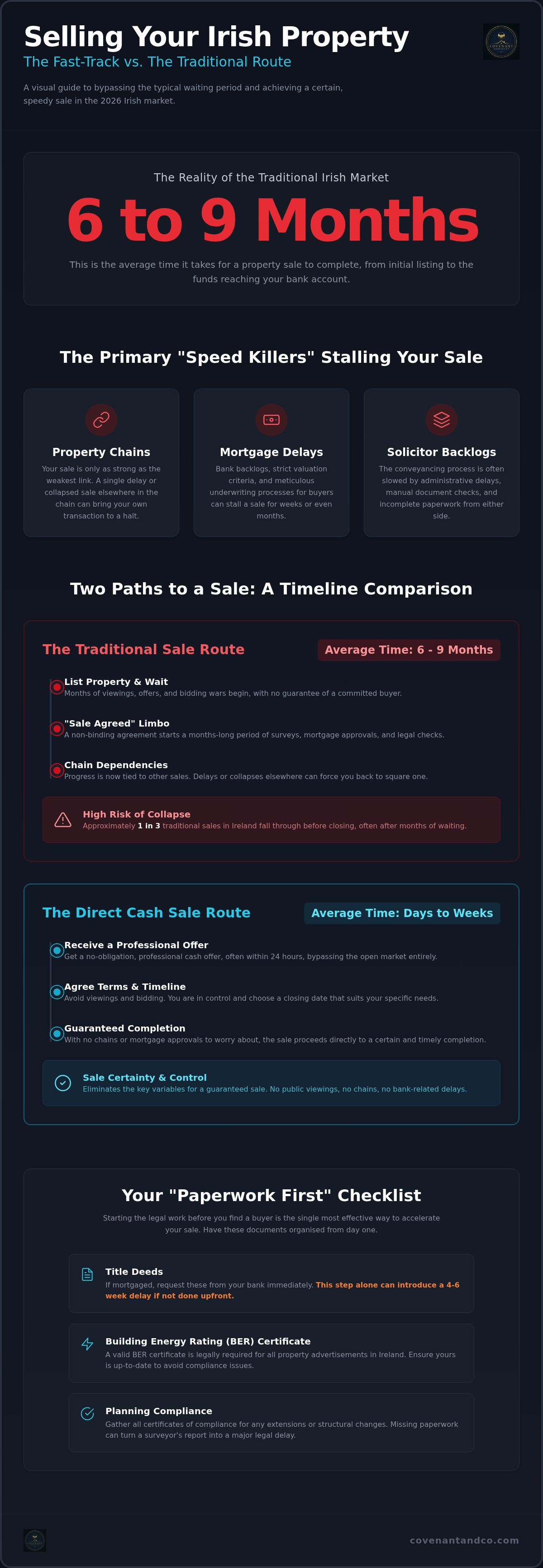
In the 2026 Irish property landscape, "fast" is a word used loosely by estate agents. For most sellers on the open market, the journey from listing to keys-in-hand currently averages between six and nine months. It's a marathon, not a sprint. If you're searching for how to sell property fast in Ireland, you first need to understand the structural roadblocks that keep the system moving at a crawl. The traditional route is designed for maximum price, not maximum speed.
The primary "speed killers" that stall transactions include:
- Property Chains: Your sale is only as strong as the weakest link in a long line of buyers and sellers.
- Mortgage Delays: Bank backlogs and strict valuation criteria can stall a sale for weeks.
- Solicitor Backlogs: The conveyancing process is often slowed by administrative delays and manual document checks.
Traditional sales rely on a delicate sequence of events that must align perfectly. Most transactions are part of a property chain, where your progress depends on the success of several other strangers. If one buyer's mortgage is delayed or a survey reveals an issue three houses down the line, your sale stalls. Banks are increasingly meticulous; their valuation requirements can add significant friction to an otherwise simple deal.
The Hidden Delays in Traditional Sales
Reaching "Sale Agreed" feels like a victory, but it's often just the start of a period of stagnation. This status is not legally binding in Ireland. During this months-long limbo, surveys are conducted and titles are scrutinised. It's a time of high anxiety where roughly 1 in 3 traditional sales fall through before closing. Property chains are particularly fragile; a single break can reset your timeline to zero. These complexities are deeply ingrained in the system. Irish land ownership has a long history, with roots stretching back to Early Irish property laws, and today's bureaucratic conveyancing process reflects that inherited complexity.
Defining a Truly Fast Sale
A fast sale isn't just about finding a buyer quickly. It's about how soon the funds reach your bank account. There's a massive difference between a quick listing and a quick closing. The open market prioritises the bidding war, which often ends with a buyer who is still waiting on a bank's letter of offer. If you need to know how to sell property fast in Ireland, the answer lies in eliminating variables. This is why the Direct Cash Purchase route has become the preferred alternative for those seeking Sale Certainty.
A cash buyer removes the two biggest obstacles: bank valuations and mortgage approvals. There is no chain to manage and no survey-related renegotiations. You don't have to wait for a buyer to sell their own house before they can buy yours. This route offers a certain exit, allowing you to bypass the months of uncertainty that define the traditional Irish market. It moves the focus from "maybe" to "done".
Phase 1: The "Paperwork First" Checklist
Conveyancing is the legal process of transferring property ownership from a seller to a buyer in Ireland. Whilst most sellers wait for a "Sale Agreed" sign to call their solicitor, this is a common mistake that causes unnecessary delays. If you want to know how to sell property fast in Ireland, you must start the legal work before the first viewing. Incomplete documentation is the leading cause of sale collapse in the current market. Being "sale ready" means having a complete contract pack on your solicitor's desk from day one.
The most critical document is your Title Deed. If you have a mortgage, your bank holds these deeds as security. It can take between four and six weeks for a bank to process a request and release them to your solicitor. This is a significant bottleneck that many sellers ignore until they have an offer. Don't wait for a buyer. Request your deeds immediately. You also need a valid Building Energy Rating (BER) certificate. Since the simplified A0 to G scale came into effect on 24th May 2026, all advertisements must clearly display this rating to remain legally compliant.
Legal Documentation Essentials
Your solicitor cannot draft a Contract for Sale without proof of planning compliance. If you've added an extension, converted an attic, or made structural changes, you'll need certificates of compliance from a qualified architect or engineer. You should also consult Property Services Regulatory Authority publications to ensure your chosen agent follows the latest statutory standards. Having these documents ready prevents a surveyor's report from turning into a three-month legal battle over technicalities.
Tax and Utility Clearances
Tax issues are silent speed killers in the Irish market. Local Property Tax (LPT) for 2026 is based on the valuation from November 2025 and must be paid in full before a sale can close. This valuation remains fixed until 2030, but any arrears will halt the conveyancing process instantly. You also need a discharge certificate for the Non-Principal Private Residence (NPPR) charge if the property was not your primary home during the relevant liability years. Finally, gather final utility readings and ensure Irish Water accounts are clear. Small outstanding balances can block a closing date at the final hour. If the thought of managing this bureaucracy feels overwhelming, you might prefer a direct property sale that bypasses the traditional paperwork hurdles.
Phase 2: Property Presentation vs. Selling "As-Is"
Traditional wisdom suggests you must spend money to make money. This usually involves a "Kerb Appeal" checklist: painting the front door, decluttering the hallway, and tidying the garden. In 2026, buyers are particularly sensitive to energy efficiency. Properties with a BER rating of B2 or higher command a 10-15% price premium because they qualify for "Green Mortgages". However, achieving this rating often requires significant capital and months of renovation work. If you are researching how to sell property fast in Ireland, you must decide if these upgrades are a help or a hindrance to your specific timeline.
The Costs of Traditional Preparation
Hiring contractors for a "freshen up" is increasingly difficult. Trade shortages mean waiting weeks for a simple painting job. Beyond the financial cost, there is the hidden emotional toll of maintaining a "show house" condition. You must keep every room pristine for unscheduled viewings. It's an exhausting cycle of cleaning and tidying that can last for months. For many, the return on investment simply doesn't justify the delay. You can learn more about how to sell house fast Ireland without spending a single Euro on repairs or staging.
The "As-Is" Sale Checklist
Selling "as-is" means the buyer accepts the property in its current state. This includes structural issues, fire damage, or even sitting tenants. It is the ultimate route for speed. Professional buyers like Covenant Properties are unfazed by un-modernised assets or messy interiors. You don't need to clear out the attic or fix the leaking tap. This approach is ideal for several scenarios:
- Inherited Properties: Avoid the stress of clearing a lifetime of belongings or managing an estate from a distance.
- Structural Problems: Sell without the need for expensive remedial works or engineering reports.
- Rental Divestment: Exit a commercial or residential investment whilst keeping tenants in place.
This route offers immediate relief. You walk away with a certain price and a fixed closing date. There are no "subject to survey" clauses that might lead to last-minute price drops. It's a transparent, straightforward alternative to the open market's demands for perfection. You trade a potential price premium for the certainty of a completed transaction.
Phase 3: Choosing the Right Sale Route for Speed
Speed in the Irish market is a choice of route, not a result of rushing a broken process. Many sellers assume an estate agent is the only option, but traditional agencies are incentivised by price, not pace. If you need to know how to sell property fast in Ireland, you must evaluate the three main paths: traditional agents, public auctions, and direct cash buyers. Each offers a different balance of control and speed.
Estate agents rely on a "Bidding War" model. This can drive up the price, but it also adds weeks to the marketing period. Even after an offer is accepted, the "Sale Agreed" status offers no legal protection. Public auctions are faster, providing a binding 28-day contract once the hammer falls. However, auctions are public, unpredictable, and require significant upfront legal costs without a guaranteed result. You can sell home without estate agent Ireland by choosing a more direct path that prioritises your timeline over public market fluctuations.
Evaluating Estate Agent Timelines
The "Sale Agreed" period is the most common point of failure. In 2026, this stage often stretches to 12 or 16 weeks whilst the buyer's solicitor reviews the contract pack. Agents cannot guarantee a closing date because they are at the mercy of the buyer's mortgage provider. When interviewing agents, don't just ask about their valuation. Ask for their average "speed to close" over the last six months. If their average is over 20 weeks, they aren't the right partner for a fast exit.
The Direct Cash Buyer Advantage
A direct acquisition firm operates as a professional buyer, not an intermediary. This removes the "middleman" delay. Because there is no mortgage valuation required, the sale doesn't depend on a bank's surveyor or a slow letter of offer. This route is discreet; there are no "For Sale" signs or public viewings to manage. Covenant Properties provides a certain exit for residential and commercial owners. This approach is built for those who value their time and privacy as much as the sale price itself. If you want a certain closing date without the stress of an open market listing, you can request a direct cash purchase offer to see if it fits your needs.
The Final Close: Moving from Offer to Cash in Bank
Closing is the finish line, but in the traditional Irish market, it's often where the most anxiety occurs. Many sellers find that even after months of waiting, the final exchange of contracts is fraught with administrative delays and poor communication between solicitors. If you're focusing on how to sell property fast in Ireland, the closing stage is where you finally regain your freedom. A professional buyer provides a 24-hour offer after an initial property review, moving you from uncertainty to a clear exit strategy almost immediately. You aren't just accepting a price; you're choosing a guaranteed result and a timeline that you control.
The final seven days of a transaction should be a period of quiet preparation, not frantic phone calls. This is when your solicitor finalises the transfer of funds and ensures all legal undertakings are satisfied. When the balance of funds is received into your solicitor's client account, the sale is complete. You simply hand over the keys and walk away. This immediate relief from property-related debt or responsibility is the ultimate outcome of a fast-track sale.
Securing the Binding Commitment
In Irish law, a verbal offer is not binding. Stagnation often occurs because a "Sale Agreed" status doesn't stop a buyer from pulling out at the eleventh hour. A truly fast sale moves quickly to the signed "Contracts for Sale" stage. Once these are executed and a deposit is paid, the commitment is legally secure. A non-refundable deposit, common in direct cash sales, provides immediate peace of mind by ensuring the buyer is fully committed. Your solicitor will then prepare the Closing Statement. This document outlines the final balance of funds, including any mortgage redemption amounts or Local Property Tax adjustments. During the final week, the focus remains on ensuring the path is clear for the electronic transfer of funds, avoiding the common "closing day stall" caused by bank clearances.
The Covenant Properties Simplified Process
We've stripped away the complexity of the open market to create a path that prioritises your peace of mind. Our process is methodical and designed to be as low-pressure as possible.
- Step 1: Submit your property details for a professional review. We acquire residential, commercial, and land assets across Ireland.
- Step 2: Receive a fair, no-obligation cash offer whilst avoiding the open market and the stress of public viewings.
- Step 3: Agree on a closing date that suits your specific timeline. You decide when the sale completes, giving you total flexibility for your next move.
Ready to skip the stress? Contact Covenant Properties for a direct cash offer today.
Secure Your Certain Exit Today
Selling a home doesn't have to be a months-long marathon defined by uncertainty and broken chains. By preparing your paperwork early and choosing an "as-is" route, you bypass the most common bottlenecks in the 2026 market. You now understand how to sell property fast in Ireland by prioritising sale certainty over the traditional, bureaucratic open market process. Whether you're managing an inherited estate or divesting from a rental property, the power to choose your own timeline is finally in your hands.
Covenant Properties provides a professional and discreet acquisition service for residential and commercial assets across the country. You can avoid estate agent fees, skip public viewings, and select a flexible closing date that suits your specific situation. It's about moving from a state of stress to one of total clarity. Get a certain, cash offer for your Irish property today and take the first step toward a hassle-free closing. You deserve a straightforward path to your next chapter.
Frequently Asked Questions
How long does it typically take to sell a property in Ireland in 2026?
Typically, a traditional property sale takes between three and six months to reach completion. This timeline includes the marketing period and the lengthy conveyancing stage. If you need to know how to sell property fast in Ireland, choosing a direct sale route can reduce this period significantly. Professional buyers often provide an offer within 24 hours, allowing you to close on a date that suits your specific needs rather than waiting for bank approvals.
Can I sell my house fast in Ireland if it is in poor condition?
Yes, you can sell a property in poor condition without investing in costly repairs or modernisations. Traditional buyers often require a property to be mortgageable, which can be difficult if there are structural issues or fire damage. Professional acquisition firms like Covenant Properties specialise in as-is purchases. This means you don't have to worry about painting, decluttering, or upgrading your Building Energy Rating (BER) before the sale. It provides immediate relief from responsibility.
What are the main costs involved in selling a property in Ireland?
The primary costs include estate agent fees, which typically range from 1% to 2.5% plus VAT, and solicitor fees of around €1,500 to €1,700 plus VAT. You must also account for Capital Gains Tax at 33% on any profit above the €1,270 annual exemption, unless it's your primary residence. Other costs include the Local Property Tax and obtaining a valid BER certificate. A direct cash sale to a professional firm eliminates estate agent fees entirely.
Do I need an estate agent to sell my property legally?
No, you aren't legally required to use an estate agent to sell your property in Ireland. Whilst agents are the traditional route for the open market, many owners now choose direct sales to save on commission and marketing costs. You will, however, always need a qualified solicitor to handle the conveyancing and legal transfer of the title. This ensures the transaction is binding and protects your interests throughout the process. It's a simpler, more direct approach.
How does a cash property buyer differ from a traditional buyer?
A cash buyer has the funds readily available and doesn't rely on mortgage approvals or bank valuations. This removes the risk of the sale falling through due to financing issues. Unlike traditional buyers who are often part of a complex property chain, a professional cash buyer offers a certain exit. This is a key strategy for how to sell property fast in Ireland, as it bypasses the most common delays. It moves you from uncertainty to clarity.
What happens to my mortgage if I sell my house for cash?
If you have an outstanding mortgage, it's paid off directly from the sale proceeds upon completion. Your solicitor will request a redemption figure from your lender, which is the total amount needed to clear the debt. Once the cash buyer transfers the funds, your solicitor settles the mortgage and any remaining balance is paid to you. This process is the same as a traditional sale but often happens much faster since there is no mortgage chain.
Can I sell a commercial property as quickly as a residential one?
Yes, commercial assets can be sold just as quickly as residential ones when dealing with a professional firm. Traditional commercial sales often stall for months whilst buyers secure complex business financing or conduct environmental surveys. By choosing a direct cash purchase, you avoid these hurdles. This route is ideal for retail units, offices, or industrial assets where a swift and discreet disposal is preferred over a long, public marketing period. It's a clean exit.
How do I sell an inherited property that is still in probate?
You can agree to a sale whilst probate is ongoing, but the legal transfer cannot complete until the Grant of Probate is issued. Many sellers use this time to secure a buyer and finalise the contract pack. A professional buyer can provide a certain offer now, giving you peace of mind whilst the legalities are settled. This allows you to move immediately once the probate office finishes its review. It simplifies an otherwise complex and emotional process.


