

The agent-led sale isn’t automatically the simplest route. If you’ve searched “Commercial property without agent Ireland”, the short answer is yes: you can sell a commercial property in Ireland without an estate agent. You’ll manage the marketing, viewings and negotiations yourself, while a solicitor handles the legal transfer.
It’s worth weighing that responsibility against the time and extra steps an agent-led sale may involve. A direct sale to a buyer is another option. The right route depends on the property, your circumstances and what matters most to you, whether that’s control over the process, discretion or a clear way to consider an offer.
This guide explains the practical differences between selling through an agent and selling directly, including how a direct purchase from a buyer such as Covenant Properties works. You’ll also find out what information to prepare, from title and planning documents to a BER certificate and lease details if the property has tenants. Use the guidance to assess an offer and decide on a sensible next step.
Key Takeaways
- Commercial property without agent Ireland can mean privately marketing the property yourself or considering a direct sale to a purchaser. The routes differ in owner involvement and market exposure.
- A direct sale generally moves from sharing property information to considering an offer, then to solicitor-led conveyancing if both parties want to proceed.
- Compare a direct purchase with agent-led marketing by looking at exposure, enquiries and offer discussions. Neither route guarantees a particular price.
- Gather key property and ownership records before discussing a sale. Separate confirmed details from estimates or matters that need professional review.
- Covenant Properties directly purchases office, retail and industrial properties across Ireland, giving owners another route to consider.
Selling commercial property without an agent in Ireland: what are your options?
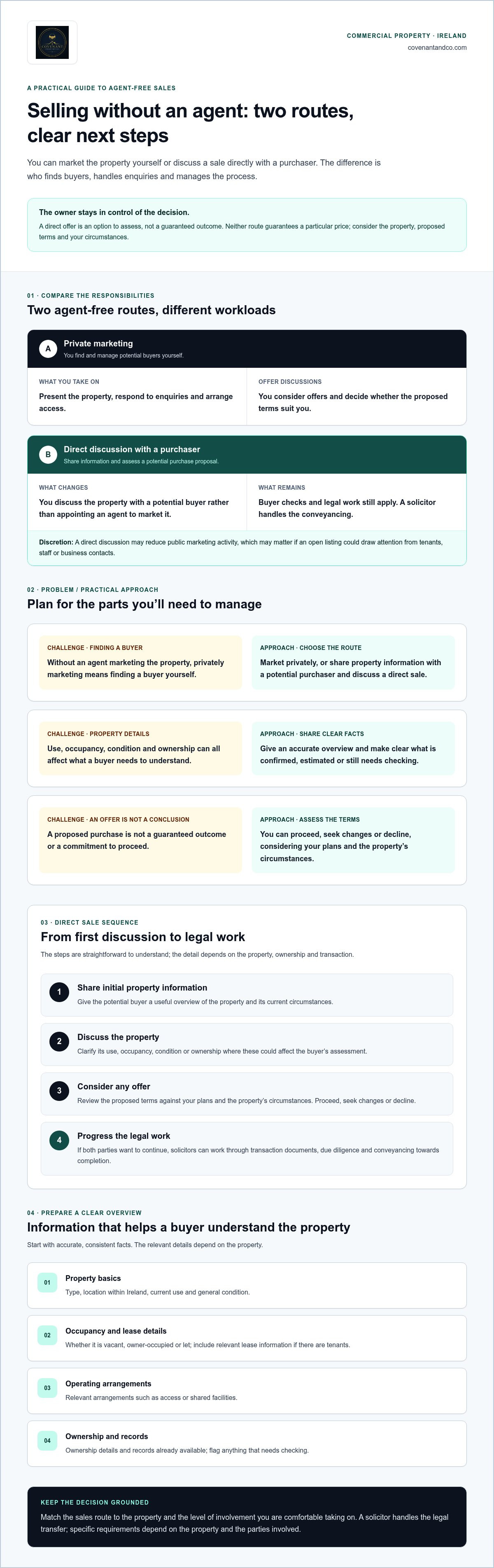
In Ireland, an owner can sell commercial property without appointing an estate agent to market it. There are two main agent-free routes: market the property privately yourself, or discuss a sale directly with a purchaser. They differ in who finds potential buyers, how enquiries are handled and how much of the process you manage.
The property’s circumstances also shape the sale. An office, retail unit or industrial building may be vacant, owner-occupied or let to a tenant. Its condition, permitted use, lease arrangements and ownership structure can all affect what information a buyer needs and what steps are involved. The broad range of commercial buildings in the Republic of Ireland shows why one sales approach won’t suit every asset.
What does selling commercial property without an agent mean?
Without a marketing agent, you take responsibility for the sale route. If you market privately, you decide how to present the property, respond to enquiries, arrange access and consider offers. You can still use professional support for specific parts of the process. Private marketing means finding a buyer yourself. It’s different from selling directly to a buyer who approaches you or makes a direct purchase proposal.
In a direct sale, you share property information with a potential purchaser and assess whether their offer and proposed terms suit your circumstances. Covenant Properties directly purchases commercial property in Ireland, including office, retail and industrial assets. A direct discussion may reduce public marketing activity, but it doesn’t remove buyer checks or the legal work needed to transfer ownership. A solicitor handles the conveyancing, and the specific requirements depend on the property and the parties involved.
Which commercial property owners might consider a direct sale?
A direct sale may suit owners of an office, shop or industrial property who would prefer not to advertise it openly. Discretion may be a priority if a public listing could draw attention from tenants, staff or business contacts. You may also prefer a defined discussion with a potential purchaser to managing a wider marketing campaign yourself.
Owners might consider this route when their plans change, a property no longer fits their business needs, or they’re weighing a sale against continued ownership. A direct buyer provides an option to assess, not a guaranteed outcome. Consider the proposed terms alongside the property’s use, occupancy and condition. For example, an occupied property may involve lease details that shape a buyer’s assessment, while a vacant building may prompt different questions about condition and future use.
There’s no universal answer to whether selling without an agent is the better choice. This route can involve less public-facing marketing, but you’ll still need to make informed decisions and support the transaction with appropriate documents. Match the approach to the asset and the level of involvement you’re comfortable taking on. A direct offer is one option to weigh against private marketing and an agent-led sale.
How a direct commercial property sale works from first discussion to completion
A direct sale usually starts with a clear picture of the property, followed by a discussion with a potential buyer. If both sides want to explore the sale, you can consider an offer and your solicitors can progress the legal work. The steps are straightforward to understand, but the detail depends on the property, its ownership and the circumstances of the transaction.
A direct commercial property sale is a transaction in which an owner discusses selling their property directly with a potential purchaser, rather than appointing an agent to market it. This describes the route, not a guaranteed outcome or timescale. You decide whether the proposed terms suit you and whether to proceed, subject to the terms agreed by both parties.
- Share initial property information. Give the potential buyer a useful overview of the property and its current circumstances.
- Discuss the property. Clarify details about its use, occupancy, condition or ownership that could affect the buyer’s assessment.
- Consider any offer. Review the proposed terms against your plans and the property’s circumstances. You can proceed, seek changes or decline.
- Progress the legal work. If you and the buyer want to continue, your solicitors can work through the transaction documents, due diligence and conveyancing towards completion.
What information helps a buyer understand the property?
Start with accurate, consistent facts. A concise overview keeps early discussions focused and helps identify gaps before they become obstacles. Depending on the property, useful information may include:
- Property type, location within Ireland, current use and general condition.
- Whether it is vacant, owner-occupied or let, with relevant lease information if there are tenants.
- Known operating arrangements, such as access or shared facilities, where relevant.
- Ownership details and records already available, with anything that needs checking clearly noted.
Separate confirmed information from estimates or assumptions. This is a practical starting point, not legal advice or a substitute for documents requested during conveyancing.
What happens after an offer is discussed?
An offer is a proposal to assess, not a decision you must accept. Review all the terms, including any conditions and the proposed arrangements for progressing the sale. If something is unclear, note the question so it can be addressed before you decide. Your solicitor can advise on the legal documents and implications of the terms.
If both parties choose to proceed, their solicitors handle the conveyancing and transaction documents. The buyer’s checks and the documents required depend on the asset and ownership. Title, planning or building records, leases and other property details may form part of the enquiries. Further questions can arise as those records are reviewed, so the steps and timing vary between sales.
Covenant Properties purchases commercial property across Ireland, including office, retail and industrial assets. Read about Covenant Properties’ commercial property purchases to understand the direct-sale route alongside your priorities.
Direct buyer or estate agent: compare the routes before choosing
Neither route is automatically better. The main difference is how you reach a buyer and how much of the sale process you manage. An agent-led sale can seek wider market exposure. A direct sale focuses on discussions with a potential purchaser without a public listing. Neither guarantees a particular price or outcome.
Use this comparison to identify what matters most for your property and circumstances:
| Consideration | Agent-led sale | Direct sale |
|---|---|---|
| Marketing exposure | Marketing can reach a broader pool of potential buyers. | Discussion takes place with a potential buyer without a public listing. |
| Owner involvement | You make decisions and coordinate marketing, viewings and enquiries. | You share property information and engage directly in the sale discussion. |
| Offer discussions | Offers are considered as part of an agent-led marketing process. | You assess the potential buyer’s offer and proposed terms directly. |
| Process | Marketing activity is part of the route, alongside legal conveyancing. | There may be fewer marketing steps, but due diligence and conveyancing remain. |
An agent-led sale centres on marketing the property to the market, while a direct sale centres on negotiating with a potential buyer. The difference is the process, not a promise that either route will secure a higher price, a suitable offer or a particular completion date.
When might an agent-led sale fit your priorities?
If testing buyer interest through public marketing matters to you, an agent-led route may be worth considering. Wider exposure can put the property in front of a broader audience, although it can’t guarantee interest or an offer. You’ll still decide how to present the asset, arrange access for viewings and respond as enquiries and offers come in.
Consider how much time and coordination you can give the process. Viewings may need to fit around business operations or tenants, while feedback and offers need your attention. The benefit of this route is the opportunity to seek market exposure, not certainty about the final price.
When might a direct sale be worth considering?
A direct buyer may suit you if you’d prefer a more contained discussion, want to avoid publicly listing the property or value a clear point of contact for considering an offer. Covenant Properties directly purchases commercial property across Ireland, including office, retail and industrial assets. Whether this route suits you depends on the property, the proposed terms and your priorities.
Before choosing, decide what you want from the process. Are you looking for broader market exposure, or would you rather assess a direct proposal? Selling without an agent doesn’t mean skipping careful review. You’ll still need to consider the offer and complete the appropriate legal steps. For more detail on the direct route, see the commercial property sale guide.
Prepare your commercial property for sale without an agent
Good preparation makes an early sale discussion clearer. You don’t need to resolve every detail before speaking with a potential buyer. Start by collecting the records you have, describing the property consistently and flagging anything that is an estimate or needs professional review. This helps you explain what is known without presenting assumptions as confirmed facts.
Organise property, ownership and occupancy information
Create a simple folder of records and a short summary of the asset. Not every document applies to every commercial sale, so use this as a starting checklist rather than a definitive legal list.
- Property basics: property type, address, current use and a plain description of its condition. Note known repairs or issues without guessing at their cause or cost.
- Ownership and plans: gather available title documents and plans. Flag any details about boundaries or ownership that you’re unsure about for review.
- Occupancy: note whether the property is vacant, used by your business or occupied by tenants. If it’s let, gather available lease and tenancy records, including known information about rent, term and repair responsibilities.
- Building information: collect relevant records you already hold, such as planning or building compliance documents. For a commercial building offered for sale in Ireland, check that there is a valid Building Energy Rating (BER) certificate.
- Operating arrangements: summarise known access arrangements, shared facilities or other practical details that affect how the property is used.
Keep a separate note of estimates and open questions. For example, distinguish a documented lease end date from an informal assumption, or a visible maintenance issue from a professional assessment of its condition. Clear information about use, occupation and condition gives a buyer a useful basis for discussion and helps identify where further checks may be needed. This checklist is practical guidance, not legal advice.
Set your priorities before reviewing an offer
Before considering terms, decide what matters most to you. Is privacy important? Do you want broad market exposure, or would you prefer a more contained discussion? Do you have a preferred timeframe, or does flexibility matter more? Your priorities help you compare an offer with the wider circumstances of the sale.
Look beyond the headline figure. Consider the proposed terms, any conditions and how they fit your plans for the property and its occupants. If an estimate or document could affect your decision, mark it for review rather than relying on an assumption. A solicitor can advise on the legal implications of transaction terms and documents.
If you’re researching “Commercial property without agent Ireland”, keep any residential comparison in perspective. The considerations for a commercial property depend on factors such as its use, occupancy, leases and ownership. Apply guidance to the type of property you’re selling.
Once you have the key facts together, you can discuss a direct sale with a clearer picture of the property and your priorities. Learn about discussing a direct commercial property sale with Covenant Properties as one route for an office, retail or industrial property.
Explore a direct commercial property sale with Covenant Properties
Covenant Properties is an Irish firm that directly purchases commercial property from owners across Ireland. Its commercial acquisitions include office, retail and industrial assets. If you’re considering a sale without public marketing, a direct discussion is another route to assess alongside an agent-led sale or private marketing.
An initial conversation doesn’t commit you to proceed. It gives you a chance to explain the property and your circumstances, then decide whether you want to explore a direct sale further. You can outline what you own, how it’s used and what has prompted you to consider selling.
What a direct discussion with Covenant Properties can cover
A discussion can begin with practical context rather than a decision. Share the property type, its occupancy and condition, along with any known details that may shape a sale. It’s also useful to explain what matters to you, such as privacy or how you’d like the process to work. Keep confirmed facts separate from estimates or points you’re still checking.
The focus is on the asset and your preferred route. For example, an owner considering the sale of a tenanted retail unit may want to describe the occupancy arrangements, while an industrial property owner may outline its current use and known condition. Each property has its own circumstances, so the same considerations won’t apply to every sale.
When considering commercial property without an agent in Ireland, the key question isn’t simply whether you can avoid appointing a marketing agent. It’s whether a direct purchase suits your property, priorities and the proposed terms. You decide whether to take discussions further. Any sale that proceeds still involves the appropriate legal work and transaction checks.
Decide on your next step with clarity
Before choosing a route, return to your priorities. Do you value wider market exposure, a more contained discussion, privacy or a particular level of involvement? Consider those preferences alongside the property’s use, occupancy and condition. A direct sale is an option, not a requirement. An initial discussion doesn’t oblige you to accept an offer or proceed.
The commercial property sale guide provides more detail on the direct-sale steps. Use it to prepare for a conversation and identify the points you’d like to discuss.
You can read more about starting a conversation with Covenant Properties regarding your commercial property and circumstances. Share what you know and note the questions that matter to you, then take time to consider whether a direct route feels right.
Choose a next step that feels right for you
A sale decision doesn’t have to begin with a commitment. Consider what you need from the process, which details still need attention and what would make a proposal worth exploring. That can turn “Commercial property without agent Ireland” from a broad search into a practical choice based on your circumstances.
If a direct discussion would help you decide whether this route fits, you can share the basics and take it from there. You don’t need to have every answer ready before starting a conversation. Weigh any proposed terms carefully before deciding whether to proceed.
Discuss a direct commercial property sale with Covenant Properties when you’re ready to explore the option. Start with a conversation, ask the questions that matter to you and make your decision at your own pace.
Frequently Asked Questions
Is it legal to sell commercial property without an agent in Ireland?
Yes, you can sell commercial property in Ireland without appointing an estate agent. You’ll manage the marketing and buyer discussions yourself, while a solicitor handles the legal transfer. Avoiding an agent doesn’t remove the need for conveyancing. A solicitor can prepare the contract for sale, deal with title documents and respond to enquiries from the buyer’s solicitor.
Can I sell a tenanted commercial property without an agent?
Yes, you can sell a tenanted commercial property without an agent, and the sale can proceed with the tenant in place. The tenant’s rights under the existing lease remain protected. A buyer will typically review the lease terms, including rent, the length of the term and repair obligations. Having the current lease and relevant tenancy records available helps explain the occupancy arrangements during discussions.
What documents are usually needed to sell a commercial property in Ireland?
Documents vary by property, but commonly relevant records include title deeds, planning and building compliance documents, boundary information and lease records if the property is let. A valid Building Energy Rating (BER) certificate is required when a commercial building is offered for sale in Ireland. Your solicitor can help assemble the Contracts for Sale pack and identify which records apply to your property. Keep original documents and copies organised for review.
How long does it take to sell commercial property without an agent?
There’s no single timeframe. The process depends on factors such as the property’s ownership, the completeness of its records, its occupancy and the buyer’s due diligence. For example, queries about title, planning or an existing lease may need attention before the sale can progress. A direct route avoids public marketing activity, but doesn’t guarantee a faster completion. Your solicitor can explain the likely steps for your circumstances.
Can I sell an office, retail unit or industrial property directly to a buyer?
Yes. You can discuss selling an office, retail unit or industrial property directly with a potential buyer, without publicly listing it through an agent. The buyer will consider the asset’s use, condition, occupancy and other relevant details before deciding whether to proceed. Covenant Properties directly purchases these types of commercial property across Ireland. Any proposed sale remains subject to the buyer’s assessment and terms acceptable to both parties.
Do I still need a solicitor when selling commercial property without an agent?
Yes. In Ireland, a solicitor is required for the legal transfer, even if you find and negotiate with the buyer yourself. The solicitor can prepare the contract for sale, compile title documents, handle enquiries from the buyer’s solicitor and manage legal completion. Their role is separate from marketing the property. Instructing a solicitor early can help identify missing records and clarify what needs to happen before contracts and completion.
What happens if I receive an offer but decide not to proceed?
You can decide not to proceed with an offer, but the position may depend on what has already been agreed or signed. Discussing an offer isn’t the same as completing a sale, yet written terms or signed documents can have legal implications. Before accepting, rejecting or withdrawing from an offer, ask your solicitor to review the relevant correspondence and paperwork. This can clarify your position before you take the next step.


