

What if a title defect changes the route to sale rather than making a sale impossible? If you’re looking to sell property with title defects in Ireland, it’s understandable to worry that a boundary mismatch, missing paperwork or unrecorded right of way could complicate your plans. The practical effect depends on the issue and the evidence available.
Some defects may be clarified or corrected before a sale. Others may need a different approach, such as considering title indemnity insurance with legal advice. A solicitor can explain what applies to your property and which decisions need professional guidance.
This guide explains common title issues, what documents to gather and how an unresolved defect may affect a sale. It compares investigating the issue before marketing with proceeding while it remains unresolved, and outlines a direct cash purchase as another route. Covenant Properties buys residential and commercial property directly across Ireland, as well as land and development sites. Sharing a clear account of the property and the known title issue can help you weigh your options without assuming the defect is either a dead end or an easy fix.
Key Takeaways
- Title defects vary. Establish whether the concern is missing paperwork or a more substantial question about ownership, rights or boundaries.
- To sell property with title defects in Ireland, gather relevant deeds, maps and correspondence, then discuss the issue with your solicitor.
- Compare resolving the issue before sale with disclosing it and proceeding. Consider the evidence available and the uncertainty each route may involve.
- A direct sale offers an alternative to open-market marketing. Clear information about the property and known title issue helps a purchaser understand the situation.
- Covenant Properties purchases residential and commercial property, land and development sites directly for cash. Share the property details and available title information to discuss a sale.
What does a title defect mean when selling property in Ireland?
A title defect is a discrepancy, missing document or unresolved issue that may affect the records showing who owns a property, what rights apply to it or whether ownership can be transferred as expected. The term covers different situations. A missing deed is not the same as a boundary dispute, and neither automatically means a sale is impossible.
In Ireland, property registration records and title documents help establish ownership and relevant rights. Tailte Éireann is the state agency responsible for property registration. A title entry or apparent mismatch is a starting point for investigation, not a conclusion about the legal effect. That depends on the documents and circumstances.
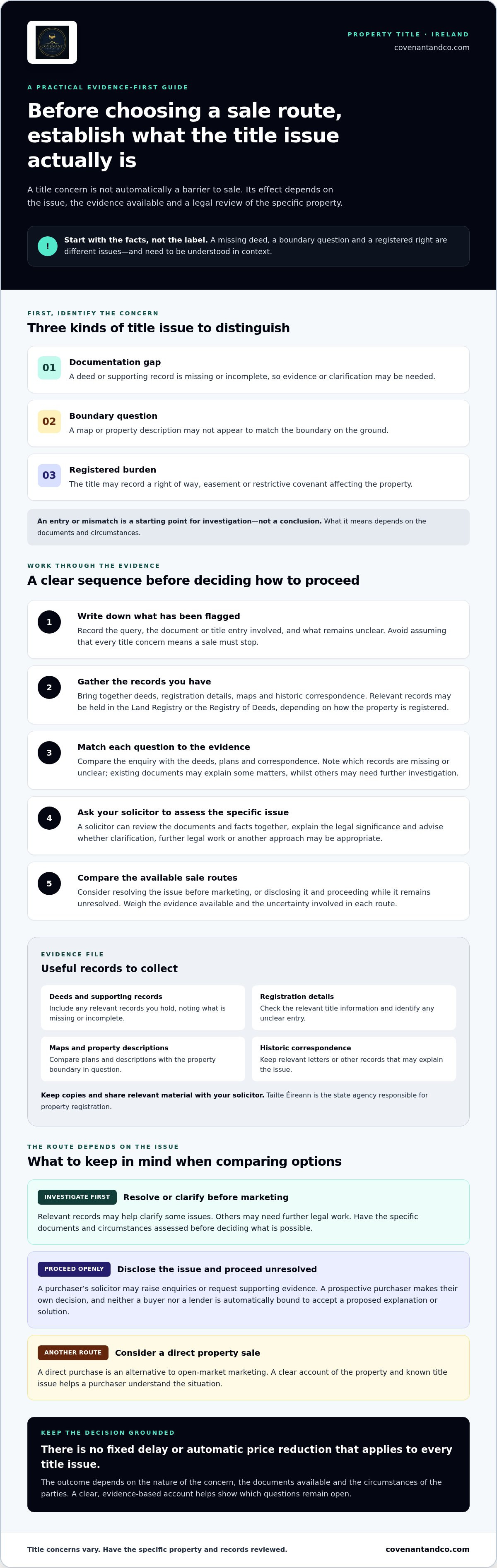
- Documentation gap: A deed or other supporting record is missing or incomplete, so evidence or clarification may be needed.
- Boundary question: The map or property description may not appear to match the boundary on the ground.
- Registered burden: The title may record a right of way, easement or restrictive covenant affecting the property.
These examples are not interchangeable. An entry on a title is not automatically an error, and its consequences depend on what it says and how it relates to the property. First establish the precise issue, using the relevant records, before deciding how to proceed.
Which title issues might come to light during a sale?
A purchaser’s solicitor may ask for clarification if deeds are missing, names differ across documents, or plans and property descriptions appear inconsistent. Title records may also show easements, rights of way or restrictions on use. Compare the query with the deeds, plans and correspondence you hold, then ask your solicitor to explain any mismatch. Some matters can be explained with existing records; others need further investigation. The label alone does not tell you how serious the issue is.
Why do title problems emerge during conveyancing?
A legal review for a sale can bring older paperwork into focus. An earlier transaction may have left incomplete records, or documents created at different times may describe the property differently. The concern may not have been obvious during everyday ownership. A qualified solicitor reviewing the specific deeds, plans and correspondence is the right person to assess its legal significance.
If you’re asking whether you can sell property with title defects in Ireland, the practical answer depends on the issue and the available evidence. Start by identifying what has been flagged rather than assuming the sale must stop. A concise record of the query, the document or entry involved, and any supporting paperwork gives your solicitor a clearer starting point.
How can a title defect affect an Irish property sale?
A title issue can prompt the purchaser’s solicitor to raise further enquiries, request supporting evidence or carry out additional legal work. That may add steps to the transaction, but there’s no fixed delay or automatic price reduction that applies to every case. The outcome depends on the nature of the defect, the documents available and the parties’ circumstances.
A missing document that can be explained by other records is different from a substantive question about ownership, a right affecting the property or a boundary. The first may be clarified with evidence. The second could require closer investigation or further action. Neither a buyer nor any lender is automatically bound to accept a particular explanation or proposed solution.
What checks and documents may be involved?
The purchaser’s solicitor reviews the title and may ask questions about an unclear entry or inconsistency. Depending on how the property is registered, relevant records may be held in the Land Registry or the Registry of Deeds. Deeds, registration details, maps and historic correspondence can help explain what happened and how the current property relates to earlier records. Match each enquiry to the documents you have, and note which records are missing or unclear.
The Land and Conveyancing Law Reform Act 2009 forms part of Ireland’s property-law framework, but legislation alone won’t resolve a question about a specific title. The documents and facts need to be considered together. Keep copies of anything relevant and give them to your solicitor to review.
Does every title defect stop a sale?
No. Don’t assume that every title concern prevents a sale. Some issues may be clarified through existing documents or records; others may call for further legal work or a different approach. A solicitor can assess what the issue means for your transaction, while a prospective purchaser makes their own decision based on the information and advice available to them.
The effect of a title defect depends on the issue itself, the evidence available and the legal review of the specific property. An early, clear account of what has been identified helps everyone understand which questions remain open. If you’re searching “Sell property with title defects Ireland”, focus first on establishing the nature of the concern rather than assuming the sale has to stop.
Once you have gathered the relevant information, weigh an open-market sale against other routes. A direct property purchase from Covenant Properties is an alternative to public marketing. The company purchases residential and commercial property, land and development sites directly for cash.
Resolve the title defect first or sell with it unresolved?
There isn’t one route that suits every title issue. The right choice depends on what the defect is, whether useful evidence exists and what your solicitor advises. Resolving a clear, specific concern before marketing may make it easier to explain. Proceeding with it unresolved may also be possible, but the issue needs to be understood and dealt with transparently.
Use this comparison to frame the discussion with your solicitor. It isn’t a substitute for advice on your property or a guarantee that a purchaser will accept a particular approach.
| Route | Preparation and information | Uncertainty and suitability |
|---|---|---|
| Investigate and resolve first | Gather the relevant deeds, plans, registration details and correspondence. Your solicitor can assess whether clarification or correction may be possible. | May make the title position easier to explain, though further work or unanswered questions may remain. Could suit an issue that is clearly evidenced and has a defined path to clarification. |
| Proceed with the issue disclosed | Be ready to provide the available records and explain what is known. Your solicitor can advise on disclosure obligations and the defect’s legal effect. | The purchaser may raise enquiries or seek further information. This route may suit a seller who wants to explore a sale before attempting a resolution, but acceptance depends on the transaction. |
| Discuss a direct sale | Outline the property, the known issue and the supporting documents available to a direct purchaser. | Offers an alternative to public marketing, but doesn’t remove the need to understand the title issue. A purchase or completion isn’t guaranteed. |
When might resolving the issue before marketing make sense?
If the concern is well documented and the question to be answered is clear, investigating it before marketing may help you present the title position more clearly to prospective purchasers. Your solicitor can explain whether a correction or other step is appropriate. Don’t assume a particular remedy is available or suitable without advice on the documents and facts.
When might a direct sale be worth considering?
A direct purchaser offers another route for owners weighing up whether to market publicly. Covenant Properties purchases residential and commercial property, land and development sites directly for cash, including complex property situations. The known defect and relevant records still need to be understood as part of the transaction. For broader context, read this guide to cash buyers in Ireland.
Whichever route you consider, ask your solicitor about the legal effect of the specific defect and what you may need to disclose. The Irish property purchasing process also involves legal checks by the purchaser. If you’re deciding how to sell property with title defects in Ireland, clear information and informed advice are a practical place to start.
What should you do before selling property with a title defect?
A clear preparation process can make the issue easier to explain and help you decide what to do next. Start with what you know, keep the paperwork together and get legal advice before making claims about the title. General guidance can outline possible routes, but the right steps depend on your property and documents.
- Identify the concern. Note what has been flagged, who raised it and when you first became aware of it.
- Gather relevant records. Collect deeds, Land Registry or Registry of Deeds information, maps, plans and related correspondence.
- Seek legal advice. Ask the solicitor handling the conveyance to review the documents, identify missing evidence and explain any unresolved legal questions.
- Decide how to proceed. With that advice, consider whether to investigate further, address the issue before marketing or explore a sale with the matter unresolved.
Keep original documents safe and prepare copies for review. Don’t write on originals or send them away without agreeing how they’ll be handled. A simple record of the issue, the date it came to light and any enquiries already made can also help keep the facts straight.
Gather the information that explains the title concern
Put the paperwork in one place, even if you’re not sure which items matter. Include earlier deeds, available registration details, maps or plans, and letters or emails about the property. Then ask your solicitor what further evidence may be needed. Avoid filling gaps with assumptions: a missing record and an unanswered legal question are not necessarily the same thing.
Agree how to present the issue to a prospective purchaser
Clear, consistent information helps a purchaser understand what’s being considered. Work through the explanation with your solicitor and distinguish confirmed facts from points that still need investigation. Don’t conceal a known concern or offer a legal assurance that hasn’t been reviewed by your solicitor. They can advise on what should be communicated and how it relates to your sale.
For wider preparation, see this property sale preparation checklist. If you’re also weighing up a direct route, Covenant Properties purchases residential and commercial property, land and development sites directly for cash. Share the property details, the known title issue and the records you have to discuss a direct purchase. Discuss a direct property purchase.
How a direct property sale with Covenant Properties can work
A direct sale is an alternative to advertising a property on the open market. Covenant Properties purchases residential and commercial properties, land and development sites directly for cash. If you want to sell property with title defects in Ireland, outline the issue and share the information available so the property can be considered in context.
This route is another option to weigh alongside resolving the concern first or exploring an open-market sale. The title issue still needs to be understood as part of the transaction.
What information helps start a direct-sale discussion?
Begin with a clear description of the property and the ownership context. Explain what title concern has come to light, when you became aware of it and what, if anything, has already been done to investigate it. Keep the account factual, including what is known and what remains unresolved.
Relevant records may help explain the situation. These could include deeds, maps, registration details or correspondence about the issue. You can start by sharing what you have and being clear about any gaps. That gives a purchaser a fuller picture of the property and the title question.
What should you expect from the next steps?
Start with a straightforward discussion about the property and the title information available. The property and circumstances can then be considered in more detail. Be open about the concern from the outset; clear information supports a more informed conversation and helps avoid relying on assumptions.
A direct purchase does not remove the legal work involved in transferring property in Ireland. Your solicitor remains important for reviewing the title, advising you on the defect and handling the legal aspects of the transfer. Covenant Properties does not provide legal advice, so keep decisions about the defect and any disclosure obligations with your solicitor.
Compare this route with investigating or resolving the issue before sale. To explain your situation and discuss a property sale with Covenant Properties, share the property details, what you know about the issue and any supporting documents you have.
Choose a clear next step for your property sale
A title defect can raise questions, but it doesn’t automatically rule out a sale. Its effect depends on the issue, the evidence available and legal review of your specific circumstances. Gather the relevant records and ask your solicitor to explain the options, including whether to address the concern first or explore a sale with it unresolved.
If you’re considering how to sell property with title defects in Ireland, a direct sale is another route to weigh. Covenant Properties purchases residential and commercial properties, land and development sites directly for cash across Ireland. The company handles a broad range of assets, including complex commercial buildings and development sites.
Outline the property, explain what you know about the title concern and share any supporting documents available. Discuss a direct property sale with Covenant Properties and compare this route with resolving the issue first. With clear information and the right legal advice, you can take the next step with greater confidence.
Frequently Asked Questions
What is a title defect on a property in Ireland?
A title defect is a problem or uncertainty in the documents or records used to establish ownership and transfer a property. It might involve missing paperwork, a mismatch in a property description or a right affecting the property. The phrase covers different situations and doesn’t, by itself, show how serious the issue is. A solicitor needs to review the specific title and available evidence to assess its significance.
Can I sell a property in Ireland if it has a title defect?
A title concern doesn’t automatically make a sale impossible. The effect depends on the issue, what evidence is available and whether it can be explained or addressed during conveyancing. A purchaser may raise enquiries, so get legal advice before choosing how to proceed. If you’re considering how to sell property with title defects in Ireland, discuss both an open-market sale and a direct-purchase route once you understand the concern.
Do I have to fix a title defect before selling?
There isn’t one answer for every title issue. Some concerns may be clarified by finding documents or explaining a difference between records; others may call for further investigation or legal steps. Ask your solicitor to assess the specific defect, available evidence and any disclosure responsibilities. Don’t assume a correction is always necessary or that a purchaser will proceed without one. First establish the legal position and the options that apply to your circumstances.
What happens if a title defect is found during conveyancing?
The parties’ legal representatives may seek further information, documents or clarification about the issue. What happens next depends on the defect and the evidence available; discovery alone doesn’t determine the outcome or mean there will be a particular delay. Keep relevant records together and respond accurately through your solicitor. Don’t conceal a known concern or make assurances about resolving it unless your solicitor has advised you on the position.
How much can a title defect reduce a property’s value?
There’s no fixed reduction that applies to every title defect. Any effect on value depends on the property, the nature of the issue, the evidence supporting the title and how a prospective purchaser assesses the concern. A valuation doesn’t determine the legal position. Ask the relevant professionals to consider your property and circumstances rather than relying on a generic percentage or assuming the defect will lead to a particular change in value.
Can a cash property buyer consider a property with a title defect?
A direct cash purchase is one option to explore, but the title concern still needs to be understood as part of the proposed transaction. Covenant Properties purchases residential and commercial properties, land and development sites directly for cash. Share a clear account of the issue and any supporting documents available. Legal review remains relevant, and each property and title issue is considered on its own details.
How do I prepare to sell a property with a title defect?
Gather deeds, registration details, maps and correspondence connected with the issue, keeping originals safe and preparing copies. Make a brief record of what you know and any steps already taken to investigate it. Then ask your solicitor to explain the legal position, evidence gaps and any disclosure responsibilities. Once the issue is clearer, compare possible sale routes and make sure information shared with prospective purchasers is accurate and handled through the appropriate representatives.


