

Could a property be yours to occupy, yet still not yours to sell? If you’re facing a title issue, the question behind “Property with adverse possession sale Ireland” is who has the legal right to transfer ownership. A person claiming rights through adverse possession isn’t automatically the registered owner, and an unresolved claim can complicate a sale or leave a buyer’s solicitor unable to proceed.
That uncertainty can be unsettling, particularly when old boundaries, informal agreements or long-term occupation don’t match the property records. Establish the title position before choosing how to sell. A claim is not the same as registered ownership, and the relevant facts and documents matter.
This 2026 guide explains what adverse possession may mean for an Irish property sale, what records and legal questions to prepare for an Irish property solicitor, and how an ongoing claim could affect a conventional market sale. It also compares that route with a direct property acquisition from Covenant Properties, which you can consider once the title position is understood. You’ll have a clearer basis for deciding what to do next.
Key Takeaways
- Physical occupation alone doesn’t establish registered ownership or the legal right to sell.
- An adverse-possession claim may affect title, and the details need legal assessment.
- Compare clarifying the title, a conventional market sale and a direct acquisition discussion by considering readiness, information needs and likely complexity.
- Gather title documents, maps or plans, an occupation timeline, relevant correspondence and details of any proceedings before seeking legal advice.
- Organise your records, get legal clarity, then consider which sale route best fits the property and your circumstances.
Can you sell property affected by adverse possession in Ireland?
A sale depends on who has the legal right to sell and the property’s title position. Someone occupying land may claim rights through adverse possession, but occupation alone doesn’t establish ownership or the right to sell. Equally, a claim doesn’t automatically mean the registered owner has lost ownership or cannot proceed with a sale. The facts and title records need careful review.
Adverse possession is a factual situation, not an automatic shortcut to ownership. It describes someone possessing land in a way that may, if legal requirements are met, support a claim to title. Physical occupation, an application to register a claim and an officially recorded change in title are separate stages. The Squatter's rights in Ireland overview provides background on the concept, but it can’t determine the legal position of a particular property.
What does adverse possession mean in an Irish property context?
Occupation might include using or controlling land over time, but its legal significance depends on the circumstances. The land’s history, the exact boundaries, the nature and continuity of occupation, any permission given by the owner, and the title records may all matter. A fence or long-standing use, for example, may raise questions about a boundary without proving that ownership has changed.
For privately owned land, the general limitation period associated with an adverse-possession claim is 12 years under the Statute of Limitations 1957. That figure isn’t a stand-alone test or a guarantee of success. The rules and how they apply can vary with the type of land and the facts, so an Irish property solicitor should verify the relevant period and circumstances.
Does a claim mean the registered owner cannot sell?
Not necessarily, but an unresolved claim can make a transaction difficult. A buyer and their solicitor will need to understand what is being sold and whether the title can be transferred as proposed. Evidence supporting or challenging the claim, any registration application, objections or legal proceedings may affect whether a buyer is willing or able to proceed.
Keep these stages separate:
- A claim: someone asserts a right based on their possession.
- An application or dispute: the claim is being considered or challenged.
- A recorded title change: the relevant registration has been completed.
These stages aren’t interchangeable, and an allegation by itself doesn’t prove ownership has transferred. Before marketing or agreeing a sale, ask an Irish property solicitor to assess the title, the status of any claim and the proposed transaction. That legal clarity is the first step when considering a Property with adverse possession sale Ireland, whether through a conventional sale or another route.
How an adverse-possession claim can affect Irish property title
Work through a title concern in stages. Establish what occupation is alleged and what evidence exists, then have the facts assessed against the title documents and relevant Irish law. If a claim is pursued, an application or dispute may follow. Once the matter is dealt with, its implications for the title records can be assessed. Occupation for a particular period alone doesn’t settle ownership or guarantee that a registration application will succeed.
What facts and records can matter to a claim?
Put together a clear account of the land’s history. Note when occupation may have started, which parts of the property are involved, how boundaries have been treated, and how access or use has changed over time. Gather relevant letters, agreements, photographs, plans and other records that may help explain what happened.
These materials can support a solicitor’s assessment, but none proves entitlement on its own. Their meaning depends on the full circumstances, including whether the occupation was permitted and how it relates to the owner’s title. Avoid treating an old fence, a period of use or a boundary map as a legal conclusion.
How can land registration records affect a proposed sale?
In Ireland, the Land Registry records registered ownership, while the Registry of Deeds records certain deeds and documents affecting property that isn’t registered in the Land Registry. Tailte Éireann includes the Property Registration Authority and is responsible for the land registration system. Which records matter, and how they should be searched and interpreted, depends on the property and its history. A solicitor can review the relevant register entries and supporting documents together.
If someone seeks to register title based on adverse possession, an application may bring the issue into the registration process, where it can be examined and potentially contested. That is different from a completed change in the title record. Tax requirements may also be relevant to registration. Revenue explains them in its Tax Implications of Adverse Possession guidance. The steps and time limits depend on the land and circumstances, so ask an Irish property solicitor to verify what applies before making decisions about a sale.
Once you have a clearer picture of the records and any outstanding issue, you can compare sale routes. Covenant Properties directly acquires residential and commercial property, land and development sites across Ireland. A direct property acquisition discussion is one option to consider after the title position has been assessed. It doesn’t determine or resolve a claim.
Resolving title first or discussing a direct property sale?
There isn’t one best route for every property. If ownership, boundaries or an active claim remain unclear, clarifying the title with an Irish property solicitor before marketing can help you understand what can be offered for sale and prepare for buyer enquiries. If the title position is sufficiently clear, compare a conventional market sale with a direct acquisition discussion.
Choose the sale route after assessing the title, not as a substitute for that assessment. Use the comparison below to frame the decision.
| Route | Title readiness | Information needed | Buyer expectations and complexity |
|---|---|---|---|
| Clarify title first | Useful where ownership, boundaries or a claim is unresolved. | Title records, maps or plans, occupation history and details of any dispute for legal review. | May help identify the issue before marketing. The steps needed depend on the facts and legal advice. |
| Conventional market sale | A buyer’s solicitor will need to understand the title being transferred. | Sale documents and clear information about any claim, application or boundary concern. | Enquiries and due diligence can bring uncertainty into focus. An unresolved issue may complicate progress. |
| Direct acquisition discussion | The title position still matters and must be understood. | Available property and title information, plus an honest account of any claim or proceedings. | A direct route avoids public marketing, but doesn’t remove title or transfer requirements. Whether a purchase can proceed depends on the circumstances. |
When might it make sense to clarify the title before marketing?
Consider seeking legal clarity first if the registered description doesn’t seem to match the land on the ground, a neighbour or occupier asserts rights, or an application or dispute is active. An early review may help you answer questions consistently and avoid presenting uncertain boundaries or ownership as settled. A solicitor can advise which steps are appropriate for the particular property.
What does a direct acquisition route change, and what doesn’t it?
A direct acquisition discussion with Covenant Properties offers an alternative to a public listing. Covenant Properties directly acquires residential and commercial property, land and development sites across Ireland. The company’s direct acquisition service provides a route to discuss a property outside the open market. A direct sale doesn’t resolve disputed title or remove the legal requirements for transferring ownership.
For a broader comparison of direct and conventional options, read the cash buyers for houses in Ireland guide. When considering a Property with adverse possession sale Ireland, use that comparison after reviewing what the title records and legal advice establish.
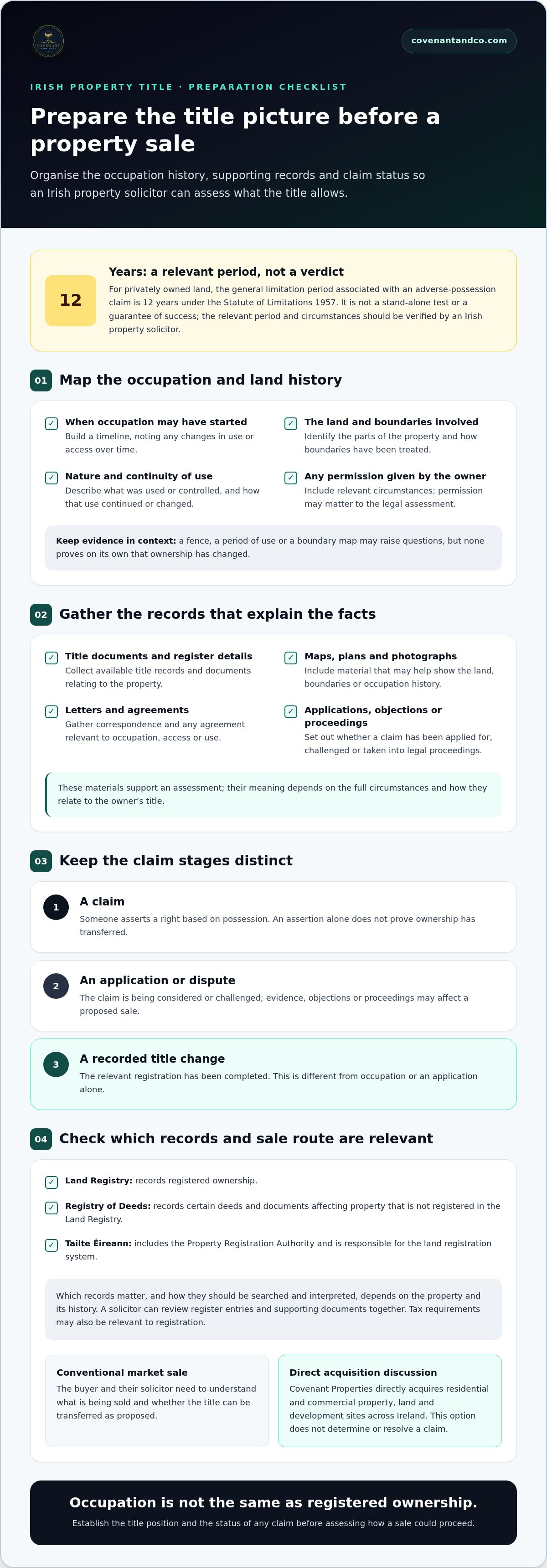
What to gather before discussing an adverse-possession property sale
A well-organised file can make an initial legal review more focused. It won’t decide who owns the property: gathering documents is preparation, not proof of entitlement. The records needed may differ depending on whether the land is registered and on its history.
Which property and occupation records should you organise?
Collect what you already have and keep originals safe. A useful starting file may include:
- Title information: available title documents, folio details, deeds and correspondence about ownership.
- Maps and plans: copies showing the property or disputed area, including older versions if available.
- An occupation timeline: dates or approximate periods of occupation, access, maintenance and changes in use.
- Relevant communications: letters, emails, agreements or messages between owners, occupiers, neighbours or other interested parties.
- Proceedings or applications: notices and documents relating to any claim, registration application, objection or court process.
Keep the timeline factual. If you’re unsure when something happened, mark it as an estimate or unknown rather than filling gaps with assumptions. A photograph, plan or letter may help explain the history, but its legal meaning needs to be considered alongside the other evidence.
What should you ask a solicitor to assess?
Ask an Irish property solicitor to review the registered ownership or other title records, the nature and status of the alleged claim, and which limitation rules may apply to the specific land. Share details of any proceedings or registration application and ask what further evidence or steps may be relevant. The appropriate legal approach depends on the individual case.
Before choosing a sale route, ask the solicitor whether the title position supports the proposed transaction and what issues a buyer may need addressed. This separates documents you can organise from questions that require legal judgement. It also gives you a clearer starting point for a Property with adverse possession sale Ireland, whether you’re considering a conventional listing or a direct acquisition discussion.
For broader sale preparation, see the fast property sale checklist for Ireland. Once your records are organised and you’ve obtained legal advice, you can discuss a direct property acquisition as one route to compare. Gathering paperwork is a practical first step, not a guarantee that a sale can proceed.
Choosing your next step: legal clarity and a considered sale route
An unclear title can make the next move feel difficult. Break it into three steps: organise the records, get legal advice, then compare sale routes. This order helps you move from scattered details to a clearer view of what is known, what remains uncertain and which options may be worth discussing.
How to move from an unclear title position to an informed decision
Start with a short, factual summary of the property. Note the ownership shown in the documents you hold, the area or boundary in question, the history of occupation and any claim, application or proceedings. Mark dates or details you can’t verify as uncertain. A clearly identified gap is more useful than an assumption presented as fact.
Next, ask an Irish property solicitor to assess the title and the specific adverse-possession concern. Their advice can help you understand what the records and evidence mean, which legal questions need attention and whether the proposed sale route fits the title position. Don’t rely on occupation alone, an informal account or an assumption about ownership when deciding what you can sell.
With that assessment, later discussions can be more focused. Explain what is documented, what is disputed and what remains to be clarified. For anyone considering a Property with adverse possession sale Ireland, this distinction matters: comparing sale routes is useful, but it can’t replace legal clarity about the property.
Discussing a direct acquisition without pressure
A direct purchase is an alternative to offering a property through a public market listing. Covenant Properties directly acquires residential and commercial properties, land and development sites across Ireland. Any acquisition discussion takes account of the property and its circumstances. A direct route doesn’t determine ownership or remove an unresolved title issue, and it doesn’t guarantee that a transaction can proceed.
If the property is residential, you can also read the complete guide to selling a house fast in Ireland for wider sale preparation. Once you have a clearer account of the title position, you can discuss your property with Covenant Properties as one option to compare. A discussion doesn’t commit you to selling; it gives you a way to consider a possible route alongside the advice you’ve received.
Take the next step with a clearer view of your options
A claim based on adverse possession isn’t the same as registered ownership, and occupation alone doesn’t establish who can sell. Gather the relevant records, ask an Irish property solicitor to assess the title and any unresolved claim, then compare sale routes based on the facts. That’s the sound starting point for a Property with adverse possession sale Ireland.
Covenant Properties directly acquires residential and commercial property across Ireland, as well as land and development sites, with or without planning permission. A direct sale can be an alternative to a public market listing, but it doesn’t settle a title dispute or guarantee an acquisition. The property and its circumstances matter.
When you’re ready to consider a direct sale, discuss your property with Covenant Properties.
Frequently Asked Questions
Can you sell a property with adverse possession in Ireland?
A sale may be possible, but only someone with the legal authority to sell can transfer the property. An unresolved adverse-possession claim isn’t the same as a completed change in ownership or title registration. Whether a sale can proceed depends on the records, claim status, evidence and applicable Irish law. Before agreeing a transaction, have an Irish property solicitor review the specific title and explain what it means for the proposed sale.
How long does adverse possession take in Ireland?
There isn’t one period that can be applied safely to every property. A 12-year limitation period is commonly cited for privately owned land, but its application depends on the land, title and circumstances, and exceptions or procedural details may matter. Treat that period as a starting point for questions, not a conclusion about ownership. Ask an Irish solicitor to verify the applicable rules against the occupation dates and title records.
What evidence can support an adverse-possession claim in Ireland?
Potentially relevant material includes dates and accounts of occupation, maps showing boundaries, information about access, correspondence, maintenance records and land documents. These records may help explain how the land was used and what the owner or occupier knew. No single item automatically establishes ownership, and evidence must be assessed in context. Organise what’s available, note any gaps, and ask a solicitor how it relates to the specific land and title.
Can a property be sold while an adverse-possession claim is unresolved?
An unresolved claim may affect a buyer’s understanding of the title and whether the proposed transaction can proceed, but it doesn’t mean every sale is automatically possible or impossible. The registered owner’s position, the claim’s status and the available evidence all matter. Before committing to a sale route or making assurances to a buyer, ask an Irish property solicitor to assess the title and advise on the particular circumstances.
Does adverse possession automatically transfer ownership of land in Ireland?
No. Occupation alone shouldn’t be treated as automatic proof that ownership has transferred. The legal requirements, evidence, relevant time limits and any registration or dispute process need to be assessed in context. A general article can’t determine who owns particular land or whether a claim will succeed. Don’t rely on an assumed period of occupation as a conclusion. Get advice from an Irish property solicitor familiar with the title and facts.
Which records should I gather before selling property affected by adverse possession?
Start with available title documents, folio or deed details, maps and plans. Add a dated account of occupation and access, relevant correspondence, and information about any application, objection or other proceedings. This is a practical starting point, not proof of ownership or a complete checklist for every property. What else is needed can depend on the land’s registration and history, so ask a solicitor to review the records and identify any gaps.
Can I sell directly to a property buyer if the title is disputed?
A direct buyer offers another route to discuss, but a direct sale doesn’t remove the need to understand the title and transfer requirements. The property’s circumstances and legal position affect whether a transaction can proceed. A direct acquisition discussion is an option to compare, not a guarantee of an offer or outcome while title remains disputed.


