

The repair you assume is essential before a sale may not be the best first step. If you’re searching for “Sell property in poor condition Ireland”, the right approach depends on the home’s condition, your budget and how much time you can give the process.
It’s understandable to worry that buyers will be put off by a property needing work, or that repairs could cost more than they add to the sale. Before committing to work, compare selling as-is with repairing the home first.
This guide explains how to weigh those options and prepare a property for sale in Ireland. You’ll learn what to consider before arranging repairs, what an as-is sale may involve, and how to compare an open-market sale with a direct purchase. The right route depends on your property and circumstances, so assess the trade-offs before deciding.
Key Takeaways
- Separate cosmetic wear from more serious defects to assess the property’s condition clearly.
- Compare repairing first, selling as-is on the open market and discussing a direct purchase.
- When you sell property in poor condition Ireland, weigh your circumstances and priorities before committing to work.
- Record known issues, organise relevant documents and avoid over-investing in preparation.
- Review offers carefully and ask a solicitor about the sale process before deciding.
How to Sell Property in Poor Condition Ireland: Key Repairs
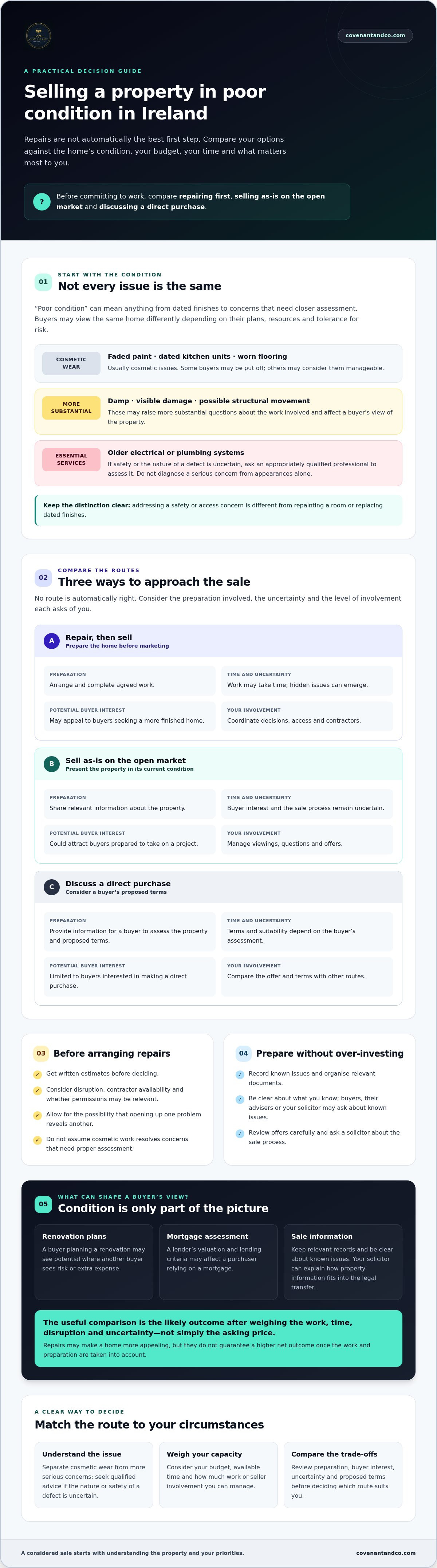
A home that needs work can still have several possible sale routes. You could repair it before listing, offer it as-is on the open market, or discuss a direct purchase. The right choice depends on the property, your circumstances and what matters most to you, such as limiting the work or reaching a wider pool of buyers.
“Poor condition” covers a wide range. Faded paint, dated kitchen units and worn flooring are usually cosmetic issues. Damp, visible damage, possible structural movement, or old electrical and plumbing systems may raise more substantial questions. Don’t try to diagnose a serious concern from appearances alone. If safety or the nature of a defect is uncertain, ask an appropriately qualified professional to assess it.
Condition can affect buyer interest and the price buyers are prepared to offer. Someone planning a renovation may see potential where another buyer sees risk or extra expense. A lender’s valuation and lending criteria may also affect a purchaser relying on a mortgage. Buyers, their advisers or your solicitor may ask about known issues, so keep relevant records and be clear about what you know.
What does poor condition mean when selling a home?
There’s no single label that determines how a property will be viewed. A dated interior may put off some buyers but be manageable for others. Damage, damp or concerns about essential services can prompt closer checks and change a buyer’s view of the work involved. Buyers assess the same home differently according to their plans, resources and tolerance for risk.
If you’re unsure about a concern, get suitable advice rather than describing it as harmless or assuming the worst. This can help you understand what information to keep and share. Your solicitor can guide you through the sale’s legal transfer, known as what conveyancing is, and explain how property information fits into that process.
Does a home need to be repaired before it goes on the market?
No. Selling as-is can be an option, subject to buyer interest and the agreed sale terms. Whether to repair depends on the issue, your intended sale route, and the time, money and capacity you can commit. Addressing a safety or access concern is different from repainting a room or replacing dated finishes to improve presentation.
Before starting work, consider whether it could resolve a genuine barrier to sale or whether a buyer might prefer to take on the project. If you’re deciding how to sell property in poor condition Ireland, compare an as-is open-market sale with repairs and a direct purchase discussion. Neither route is automatically right. The trade-offs depend on your home and priorities.
Repair first or sell as-is? Compare your options before committing
There’s no universal answer. Compare the likely work with the time, disruption and uncertainty it could involve, then consider what each sale route asks of you. Repairs may make a home more appealing, but they don’t guarantee a higher net outcome once the work and preparation are taken into account.
| Option | Preparation | Time and uncertainty | Buyer pool | Seller involvement |
|---|---|---|---|---|
| Repair, then sell | Arrange and complete agreed work before marketing. | Work may take time, and hidden issues can emerge. | May appeal to buyers seeking a more finished home. | Coordinate decisions, access and contractors. |
| Sell as-is on the open market | Present the property in its current condition and share relevant information. | Buyer interest and the sale process remain uncertain. | Could attract buyers prepared to take on a project. | Manage viewings, questions and offers. |
| Discuss a direct purchase | Provide information for a buyer to assess the property and proposed terms. | Terms and suitability depend on the buyer’s assessment. | Limited to buyers interested in making a direct purchase. | Compare the offer and terms with other routes. |
When might repairing or renovating before a sale make sense?
Repairs may be worth exploring if the issue is understood, manageable and realistic for your circumstances. Get written estimates before deciding. Allow for disruption, contractor availability, permissions where relevant, and the possibility that opening up one problem reveals another. Don’t assume cosmetic work will resolve concerns that need proper assessment.
If the property is vacant or derelict, check whether the Vacant Property Refurbishment Grant could be relevant to a refurbishment plan. Eligibility and conditions apply, so verify the current details before including a grant in your calculations.
When might an as-is or direct sale suit the owner better?
If you can’t manage repairs, maintain a vacant property or oversee lengthy preparation, selling as-is may be more practical. A direct buyer assesses the property and proposed sale terms, but an offer isn’t automatically the best fit. Compare it with the likely open-market alternative, including the work and involvement each route requires. For more context, read this guide to selling a house as-is in Ireland and guide to cash buyers for houses in Ireland. Owners considering a direct purchase can also review Covenant Properties’ direct purchase option, subject to establishing suitability.
How to prepare a poor-condition property for sale without over-investing
Preparing a property doesn’t have to mean renovating the whole home. First, establish what needs attention, gather the information you already have and decide what you can reasonably take on. Then choose a sale route. This can help you avoid spending time or money on work that may not suit your plans.
Which repairs or preparation tasks should come first?
Start with immediate safety, access and weather protection. Note hazards that could affect someone entering the property, areas that are difficult to reach, or openings that may allow further water damage. If a concern could affect safety, insurance or a buyer’s decision, ask an appropriately qualified professional to assess it rather than trying to diagnose it yourself.
Next, separate necessary work from optional decoration. Clearing a safe route through a room may help a viewing; repainting every wall is a different decision. Cosmetic changes don’t guarantee stronger offers. Make a written list of possible tasks and why you’re considering each one before deciding what, if anything, to do.
What information should you gather before speaking to buyers?
Collect the records you have, even if the file is incomplete. These might include title documents, planning or building paperwork, utility information, a BER certificate and records of repairs or other work. Make a separate list of known issues, when you noticed them and any steps already taken. This is a practical starting point, not a complete legal disclosure checklist. Ask your solicitor what information is needed for your sale.
Check what BER documentation is available and confirm current requirements for your circumstances with an Irish solicitor or an authoritative source. Don’t assume that a missing or expired record can be ignored. Establish what needs to be arranged before choosing how and when to market the property.
Be accurate when describing the property’s condition. Share relevant information with your solicitor and prospective buyers, and don’t use fresh paint, furniture or careful photography to disguise a defect. Clear, safe access and an honest view of the property help buyers assess it on a sound basis.
Once you have a clearer picture, set your priorities: what needs professional advice, what you can manage, and what you’d rather leave for a buyer to consider. Compare sale routes before committing to work. For wider preparation steps, see this property sale checklist for Ireland. It can help you organise your next steps as you decide how to sell property in poor condition Ireland.
Selling Poor Condition Property in Ireland: The Process
A clear process helps you compare routes without assuming that a property needing work must be repaired first. Start with the information you have, then decide how you want to seek interest and review any proposal. Selling as-is through the open market and discussing a direct purchase involve different buyer searches and sale terms, but neither removes the need to understand the agreement.
- Gather property information. Collect available ownership, condition and repair records, and note any known issues. Your solicitor can advise what else is needed for your sale.
- Choose how to seek interest. An open-market sale presents the property to prospective buyers, who may arrange viewings and make offers. A direct purchase discussion starts with a potential buyer assessing the property and your circumstances.
- Review proposals in writing. Compare the proposed consideration, conditions, proposed dates and what each party must do. Consider the terms alongside other realistic routes, not just the headline figure.
- Instruct a solicitor. Ask your solicitor to advise on conveyancing, title, contractual terms and your obligations before committing to an agreement.
What happens when you approach a direct property buyer?
An initial discussion may cover who owns the property, its condition, records you can share and the outcome you’re looking for. Any assessment or offer depends on the buyer’s review and the specific terms proposed. Ask what conditions apply, whether any costs fall to you, what dates are proposed and what could change before you accept. A conversation is not a commitment.
Covenant Properties directly purchases residential property for cash across Ireland and offers an alternative to a traditional sale. Suitability depends on the individual property and circumstances, so establish this directly before relying on a potential purchase as your route forward.
What should you check before accepting an offer?
Look beyond the proposed amount. Check what conditions must be met, whether the dates work for you, and what you or the buyer are expected to do. A cash purchase doesn’t make completion automatic or remove legal checks. Your solicitor should explain the contract, title matters and any unresolved issues in plain language before you agree to proceed.
If you’re deciding how to sell property in poor condition Ireland, clarity matters as much as convenience. Keep written proposals and questions together, and ask for unclear terms to be explained before making a decision. The Covenant Properties website has information about discussing a potential direct purchase.
Is a direct cash sale right for your property? Make an informed next move
No single sale route suits every owner. Repairing first may be worth exploring if the work is understood and manageable, and you have the time and capacity to organise it. An as-is open-market sale may suit a property with potential for buyers prepared to take on work. A direct buyer discussion is another option if you’d rather explore a purchase without first preparing the home for the open market.
Timing or greater certainty may matter, particularly if you’re managing a vacant home or dealing with a change in circumstances. But don’t assume a direct-sale offer is automatically the best fit. Compare its written terms with realistic alternatives, including the work and involvement each route could require. A proposed date or headline figure is only part of the decision.
Questions to ask before choosing a sale route
Take stock of what you know and what remains unclear. Which work is genuinely needed? What records are available? Is there a condition issue that needs professional advice? Then consider your priorities: how important is timing, how much involvement can you manage, and who will look after the property while a sale progresses?
Put each option side by side. Review written terms, proposed dates, conditions and what each party must do. Ask your solicitor to explain the agreement and advise on your obligations before accepting an offer. This gives you a clearer basis for comparing a repair-first sale, an as-is market listing and a direct purchase discussion, rather than relying on broad claims about convenience or certainty.
Discuss your property with Covenant Properties
If you searched “Sell property in poor condition Ireland”, the useful next step is to describe your property and circumstances, rather than assume every buyer or route will be suitable. Covenant Properties purchases residential property directly across Ireland. You can explain the condition as you understand it, share your preferred next steps and ask whether a direct purchase may be worth considering. Suitability and any potential outcome depend on the individual property and assessment.
Before deciding, use the Covenant Properties website to find out more about discussing a direct purchase and whether it may fit your circumstances.
Choose a sale route that fits your circumstances
A property needing work may still have several possible routes to sale. Repairing first can make sense when the work is clear and manageable; an as-is sale may suit owners who don’t want to take on those repairs. A direct purchase discussion is another option to compare. In each case, weigh the written terms, likely work, timing and level of involvement, and ask your solicitor to explain the agreement before you commit.
If you’re deciding how to Sell property in poor condition Ireland, understand the alternatives before choosing a route. Covenant Properties purchases residential property directly across Ireland as an alternative to a traditional market listing. The company focuses on certain and efficient transactions, but suitability and outcomes depend on the property and circumstances.
Share your situation and preferred next steps to explore whether a direct purchase may be relevant. Discuss your property and explore your options with Covenant Properties. A clear conversation can help you decide what to do next.
Frequently Asked Questions
Can I sell a house in poor condition in Ireland?
Yes, in many cases you can explore a sale without completing every repair first. If you’re searching for “Sell property in poor condition Ireland”, compare an as-is open-market sale and a direct-purchase discussion with repairing before marketing. The right route depends on the property, buyer interest and your circumstances. Record known issues accurately, share relevant information and ask your solicitor about your obligations before agreeing to a sale.
Do I have to renovate a house before selling it in Ireland?
No, renovation isn’t automatically the only route to sale. Some owners sell in the property’s current condition; others complete selected work before marketing. Compare the likely effort, disruption and uncertainty, and get written estimates before committing to repairs. Improvements don’t guarantee a better net outcome. If the property has a significant defect, seek appropriate professional advice, then ask your solicitor what information should be given to prospective buyers.
Will a buyer purchase a property that needs major repairs?
Some buyers may consider a property needing substantial work, but no buyer is obliged to proceed. Interest can depend on the defects, title, location, intended use and proposed terms. Describe known issues honestly and gather relevant records so a buyer can assess the property. If you approach a direct buyer, explain the condition and confirm whether the specific property may be suitable before relying on a potential offer.
Should I fix damp or structural problems before selling?
Don’t conceal a suspected defect or assume a cosmetic repair resolves it. If there may be a safety or structural concern, ask an appropriately qualified professional to assess it. Share relevant findings with your solicitor and compare repair-first and as-is sale routes. The decision depends on the property, available evidence and your priorities. Be accurate about what you know, and avoid presenting an unconfirmed diagnosis as fact.
Can I sell a property as-is in Ireland?
Yes, selling as-is can mean offering a property without completing every desired repair. It doesn’t remove your legal or contractual responsibilities. Buyers may inspect the home, ask questions and decide whether to proceed under the proposed terms. Keep records of known issues and ask your solicitor how relevant information should be handled. Before accepting, check the buyer’s conditions, proposed dates and what each party is expected to do.
Do I need a BER certificate to sell a property in Ireland?
A valid Building Energy Rating (BER) certificate is required before a property is advertised for sale in Ireland. A property needing work isn’t automatically exempt. Check the current requirements for your circumstances with an Irish solicitor or an authoritative source before marketing. If you already have a BER certificate or related records, gather them for review. Don’t assume an old or missing document will meet the requirements.
Is a cash buyer better than an estate-agent sale for a house needing work?
Neither route is automatically better for every seller. A direct buyer may offer an alternative to a traditional market listing, while an open-market sale may reach a wider pool of prospective buyers. Compare written terms, conditions, proposed dates and the involvement required from you. Covenant Properties purchases residential property directly across Ireland, but suitability depends on the property and circumstances. Take independent legal advice before committing to any offer.


