

What if the best completion date isn’t the earliest one, but the date that gives you room to organise your next move? That’s the question behind a flexible completion property sale in Ireland. If an onward purchase, relocation or other commitment depends on your sale, uncertainty about timing can be stressful. You can discuss a date, but flexibility is not a promise of a quicker or guaranteed sale.
It’s reasonable to want more control over when you hand over the property. At the same time, an open-ended date could cause delays or make the transaction harder to manage. In Ireland, a sale agreed is not legally binding before contracts are signed. Keep expectations realistic and make sure the proposed timetable suits both sides.
This guide explains what flexible completion can mean, which dates and terms may be discussed, and what can affect progress, from legal paperwork to buyer finance or a linked purchase. You’ll also learn how to weigh up your commitments and identify a buyer and sale process that better fit your circumstances.
Key Takeaways
- Understand what completion means in an Irish property sale and how to discuss a suitable date or date range.
- See how property information, contract preparation and solicitor enquiries can affect the timetable, and what to clarify early.
- Compare a fixed target, an agreed date range and a date dependent on outstanding steps to decide which approach fits your plans.
- Use a practical checklist to explain your timing needs, identify what must happen before handover and discuss proposals with your solicitor.
- Learn how a flexible completion property sale in Ireland may be discussed with Covenant Properties as a direct purchaser, without assuming a particular completion date.
What does flexible completion mean in an Irish property sale?
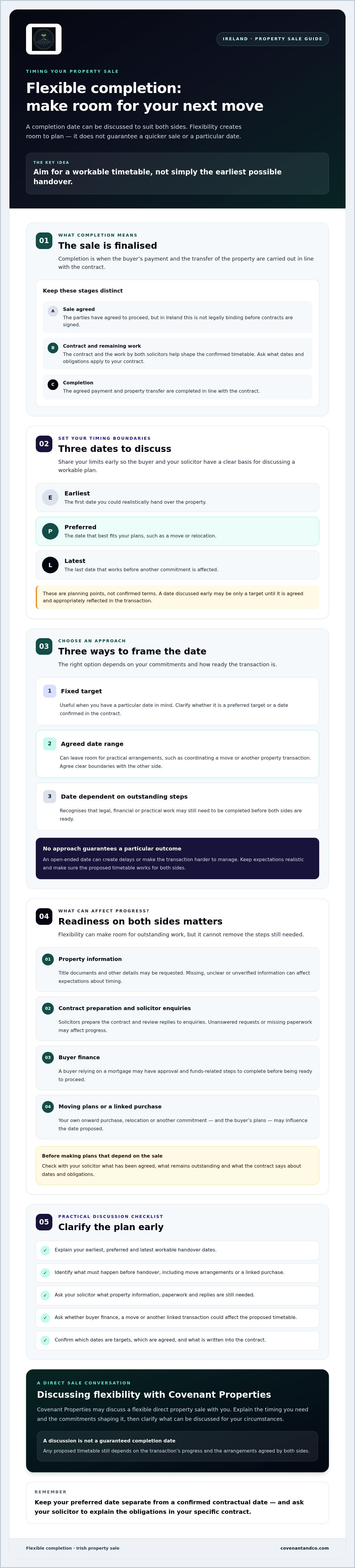
Completion is when the property sale is finalised and the agreed obligations are carried out. In practical terms, the buyer’s payment and the transfer of the property are completed in line with the contract. The legal work leading up to completion is part of the conveyancing process, which helps establish when the sale is ready to complete.
A flexible completion date means discussing a date, or a reasonable date range, that suits both parties and allows time for the transaction to be ready. It isn’t an automatic right to delay, an open-ended arrangement or a promise that the sale will happen sooner. The phrase “flexible completion property sale in Ireland” describes a timetable to agree, not a guaranteed outcome.
Keep a preferred date separate from a confirmed contractual date. A date discussed early on may be a target only. Ask your solicitor which dates are written into the contract, what obligations apply and what would happen if the timetable changes.
Is the completion date the same as the sale agreement date?
No. “Sale agreed” means the parties have agreed to proceed, but it isn’t the same as completing the legal transfer. In Ireland, a sale agreed is not legally binding before contracts are signed. After that, the contract and the remaining work by both solicitors help shape the confirmed timetable. Ask your solicitor to clarify the dates and obligations in your specific contract before arranging a move around them.
What can a seller mean by a flexible completion date?
Flexibility can help if you need time to move or are coordinating the sale with another property transaction. It might mean agreeing a date later than the earliest possible point, or discussing a range that leaves room for practical arrangements. Set clear boundaries so both sides understand what they’re working towards.
Before discussing timing, set out three points:
- Earliest: the first date you could realistically hand over the property.
- Preferred: the date that best fits your plans.
- Latest: the last date that works before another commitment is affected.
These are not confirmed terms until they’re agreed and reflected appropriately in the transaction. Sharing your limits early gives the buyer and your solicitor a clearer basis for discussing a workable timetable.
Flexible completion property sale Ireland: what affects the timetable?
An agreed target date depends on legal, financial and practical readiness. Both parties need to be in a position to proceed, and their solicitors need time to prepare and deal with the work involved. Flexibility can make room for that work, but it can’t remove outstanding steps.
The timetable may depend on the information available about the property, including title documents and other details requested during the transaction. Solicitors also need to prepare the contract and review replies to enquiries. If information is missing, unclear or needs further checking, expectations may need to change. There’s no single delay that applies to every sale.
Discuss possible dates alongside the practical and legal dependencies. DNG Galvin also explains that sellers and buyers may negotiate the closing date, depending on their circumstances. Any proposal still needs to fit the transaction’s progress and be handled through the parties’ solicitors.
How can legal preparation influence the completion date?
Accurate title information and prompt replies to requests can help solicitors progress the sale. The documents needed vary with the property and its circumstances, so ask your solicitor what they need from you and what remains outstanding. Unanswered enquiries or missing paperwork may affect timing. Only your solicitor can explain what matters in your transaction and provide legal advice.
Can a buyer’s finance or moving plans affect flexibility?
Yes. A buyer relying on a mortgage may have approval and funds-related steps to complete before they’re ready to proceed. Their move or another linked transaction may also influence the date they propose. Ask whether any dependencies could change the buyer’s timetable and whether they’ve discussed these with their solicitor.
A buyer’s stated intention to complete on a particular date isn’t the same as a confirmed arrangement coordinated through both solicitors. Before organising removals or making commitments that depend on the sale, check with your solicitor what has been agreed and what still needs to happen. This helps you plan without treating an early target as certain.
If you’re considering a direct sale, you can discuss your preferred property sale timetable with Covenant Properties. It directly purchases residential and commercial property, land and development sites across Ireland. You can discuss your circumstances, but don’t assume a particular completion date before the transaction is ready and terms are agreed.
Flexible completion versus a fixed date: which sale route fits?
The right approach depends on what you need to coordinate. A fixed target can help you organise a move, while a date range leaves room to adjust if plans shift. A date tied to outstanding steps may suit a sale where the next stage depends on something specific being completed. None of these options makes a sale certain or faster by itself.
Use this comparison to identify what to discuss with the buyer and your solicitor:
| Approach | Predictability | Room to coordinate | Risk of change |
|---|---|---|---|
| Fixed target | Clear date to plan around, if both sides can work towards it. | Useful for organising a move or handover around a specific day. | May need review if the transaction isn’t ready. |
| Agreed date range | Gives a defined window rather than one day. | More room to arrange removals or align plans. | The final date still needs agreement and coordination. |
| Date dependent on outstanding steps | Less certain until the steps are complete. | Can reflect the actual progress of the transaction. | May change if a dependency takes longer than expected. |
Whichever route you consider, set out the proposal clearly and ask your solicitor to confirm how it fits the contract. Flexibility needs communication, not guesswork. Both parties should understand the proposed date or range, with any conditions and changes handled through the appropriate legal process.
When might a fixed completion date suit a seller?
A fixed target may suit you if your onward plans or property handover need to be coordinated around a particular day. It gives both sides a practical point to work towards, but it’s useful only if the buyer and both solicitors can progress the sale in time. Treat it as a target until your solicitor confirms the contractual position and explains what has been agreed.
When might a flexible date or direct buyer be worth considering?
If you need room to plan a move or align another transaction, discussing your preferred timing with a direct purchaser may be worth exploring. The buyer’s readiness and the legal work still matter, so a flexible discussion isn’t a guarantee of speed or certainty. For more context on this route, read our guide to cash buyers for houses in Ireland.
When considering a flexible completion property sale in Ireland, weigh the date you want against how much certainty your plans require. A direct buyer may be open to discussing your circumstances, but agree terms through your solicitor before making firm arrangements that depend on completion.
How to agree a workable completion date with a property buyer
A useful date starts with an honest picture of what you need and what the transaction still depends on. Before accepting a proposal, work through these steps with the buyer and your solicitor:
- Define your timing needs. Set out your earliest, preferred and latest workable dates. Consider what must happen before you can hand over the property, such as arranging a move or meeting a tenancy or handover requirement.
- Disclose dependencies. Tell the buyer about commitments that could affect your availability. Ask whether their proposed timing depends on mortgage finance, another sale or other arrangements.
- Compare proposals. Consider whether a fixed target, a date range or a date linked to outstanding steps fits your circumstances. Check how updates will be shared if either party’s plans change.
- Consult your solicitors. Ask your solicitor to explain which terms are binding and which are still provisional. Have expectations and any agreed terms recorded through the appropriate solicitor-managed process.
This approach can help keep discussions clear without treating an early proposal as final. For a broader preparation list, see the fast-track property sale checklist.
What should you ask a buyer before accepting a proposed date?
Ask what the buyer’s timetable depends on. Is mortgage finance involved? Do they need another property sale to progress first? Find out how they’ll communicate if something changes. Then ask your solicitor which parts of the proposed arrangement are contractual and which remain provisional. Clear answers can help you judge whether the date is realistic for both sides.
What information should you prepare before discussing timing?
Gather the title and property documents your solicitor has requested, and flag anything you’re still waiting for. Write down practical requirements that affect when you can hand over the property, including moving arrangements, tenancy matters or other commitments. Your solicitor can advise which documents are needed for your specific sale. If you’re weighing up different ways to sell, our guide to selling without an estate agent covers another route to consider.
The aim of a flexible completion property sale in Ireland is to agree expectations that fit your circumstances and the transaction’s progress. If a direct sale may suit your plans, discuss your property sale and preferred timing with Covenant Properties. Any completion date remains subject to readiness and agreed terms.
How Covenant Properties can discuss a flexible direct property sale
Covenant Properties directly purchases residential and commercial property, land and development sites across Ireland. If your move, onward purchase or another commitment affects timing, explain your circumstances and preferred timetable as part of a discussion about a potential direct sale.
That conversation is a chance to outline what matters to you, not a promise that a particular date will be possible. Any proposed terms remain subject to review and agreement. The transaction still needs to progress, and your own solicitor should review the documentation and explain your legal obligations.
What happens when you discuss a sale with a direct buyer?
You can share details about the property, your ownership position and the dates that would work for you. Be clear about practical dependencies, such as when you can hand over the property. The buyer can then discuss whether a proposed transaction may fit those circumstances. Before relying on any proposed date, ask your solicitor to review the relevant documents and explain what the terms mean.
How can you decide whether this route suits your circumstances?
Consider the balance you want between timing, certainty and sale conditions. Think about whether you’d prefer to sell through the open market or explore a direct purchase. Ask about the proposed process, what it depends on and how your preferred timing would be considered. A clear discussion helps you compare options without committing before you’re ready.
To prepare, gather the property details you can share, explain your timing needs and seek independent legal advice before agreeing to terms. A flexible completion property sale in Ireland discussion can help establish whether your preferred timetable may be workable, but it can’t guarantee a particular outcome or date.
If a direct sale may suit your situation, you’re welcome to discuss a direct property sale with Covenant Properties. Share what you’re selling and the timing you have in mind, then consider any proposed terms with your solicitor. An initial conversation doesn’t commit you to proceeding.
Choose a completion plan that fits your next step
A flexible completion property sale in Ireland is about discussing a workable timetable, not assuming a faster or guaranteed outcome. Your preferred date still depends on both parties being ready and the transaction progressing. Be clear about your earliest, preferred and latest dates, and ask your solicitor to explain what has been agreed before making plans that rely on completion.
If you’re considering a direct sale, Covenant Properties purchases residential and commercial property, land and development sites across Ireland. Outline your circumstances and discuss your preferred timing, then consider any proposed terms with your solicitor. The right route is the one that fits your priorities and gives you a clear understanding of the next steps.
Discuss your property and preferred timetable with Covenant Properties. A straightforward conversation can help you explore your options without committing before you’re ready.
Frequently Asked Questions
Can I choose the completion date when selling a property in Ireland?
You can suggest a date, but it needs to work for the buyer and the transaction. The confirmed date depends on readiness and the terms agreed through the legal process. In Ireland, “sale agreed” is not legally binding before contracts are signed, so don’t make firm plans based only on an early date discussion. Ask your solicitor to clarify what has been agreed and when you can rely on the date.
What does flexible completion mean in a property sale?
Flexible completion means discussing a suitable completion date or date range, rather than assuming one fixed day from the outset. It may help you coordinate a move or another commitment, but it doesn’t mean the date can change without agreement or that completion is guaranteed. In a flexible completion property sale in Ireland, the timetable still depends on both parties’ readiness and the agreed terms.
How long does completion take after agreeing a property sale in Ireland?
There’s no fixed period from agreeing a sale to completion. The research for this guide indicates an overall average of around 3 to 7 months from listing to completion, with the legal conveyancing stage often taking 8 to 12 weeks. These are broad averages, not a promise for an individual sale. Ask your solicitor what remains outstanding and how it may affect your transaction.
Can a cash buyer offer a flexible completion date?
A cash buyer may be willing to discuss your preferred timing, including a target date or date range. Cash funding does not remove the legal work or guarantee that the buyer is ready to complete on a particular day. Ask what the proposed timetable depends on, how the buyer will confirm readiness and how any agreed date will be handled through the solicitors.
What can delay completion of a property sale in Ireland?
Completion may take longer if property or title information is missing, contract preparation is ongoing, or enquiries need further replies. A buyer relying on mortgage finance may also have approval and funds to arrange. A linked sale or move can create additional dependencies. Ask your solicitor which outstanding steps apply to your property, rather than relying on a general estimate to plan your next move.
Is a flexible completion date the same as a guaranteed sale?
No. Flexibility concerns when the parties may be able to complete; it doesn’t guarantee that the sale will proceed or finish by a chosen date. Even after a date is discussed, the transaction must be ready and the terms properly agreed. Check your solicitor’s advice before treating a proposal as certain.
Should I get legal advice before agreeing a completion date?
Yes. Ask your solicitor to explain the contract dates, your obligations and what happens if the proposed timetable changes. They can distinguish a provisional target from terms that have been formally agreed and advise on your specific sale. This is particularly useful before arranging removals, ending a tenancy or committing to another purchase. A buyer’s or agent’s explanation doesn’t replace advice from your own solicitor.


