

Could a crack, sloping floor or sticking door really prevent you from selling your home? Not necessarily. If you’re searching for “Property with structural issues sale Ireland”, start by recording what you’ve observed rather than assuming the cause. Visible damage can have different explanations, and an appropriate assessment may clarify what needs attention.
It’s understandable to worry that repairs or further investigations could delay a sale, unsettle buyers or lead to a deal falling through. You may also be unsure what information to share. Clear records and accurate answers help keep discussions grounded and give prospective buyers a better understanding of the property.
This guide explains what evidence to gather, how to compare repairing the issue before sale with selling as-is, and what to consider when choosing a route that fits your priorities. It also covers how to ask a direct buyer, such as Covenant Properties, to consider a property with structural concerns. Any proposed purchase is subject to property assessment and due diligence, so you can explore the next step without deciding before you’re ready.
Key Takeaways
- A visible crack or uneven floor doesn’t confirm the cause or mean a sale is impossible. Separate what you’ve observed from any professional assessment.
- For a Property with structural issues sale Ireland, dated photographs, a factual timeline and relevant records can help you explain the property clearly.
- Compare repairing first, selling on the open market with the issue explained, and making a direct-sale enquiry against your priorities and circumstances.
- Get organised before marketing by keeping property details, photographs, reports and repair history together. You can prepare without completing repairs first.
- A direct cash purchase may be one route to explore. Any proposal from Covenant Properties depends on property assessment and transaction due diligence.
Can You Sell a Property with Structural Issues in Ireland? Start with What Is Known
A structural concern doesn’t automatically make a property impossible to sell. It does mean you’ll want to establish what’s known, what’s only suspected and what a buyer may need to assess. The question behind “Property with structural issues sale Ireland” is not simply whether a sale can happen, but which route fits the evidence and your circumstances.
A structural issue is a problem that may affect a building’s stability or supporting parts. Cracks, signs of movement, roof concerns or water-related damage can be reasons to investigate. They are not, by themselves, proof of structural failure. Damp patches, for example, can have different causes, and a crack’s appearance alone cannot confirm what caused it.
What counts as a possible structural issue?
Start with observable facts. Note where a crack appears, whether it has changed and when you first noticed it. Record related events, such as repairs or water ingress, if known. The pattern, location, history and wider condition of the building can help a suitably qualified professional assess the concern. Avoid labelling a symptom as a confirmed defect unless an assessment supports that conclusion.
An engineer’s report may explain the likely cause, recommend further investigation or set out possible next steps. Its conclusions depend on the inspection and information available. If you don’t have a report, say so plainly. Don’t guess at the cause or describe a concern as resolved unless you can support that statement.
Does the issue have to be repaired before a sale?
You can explore sale options before deciding whether to carry out repairs. A buyer may be willing to consider a property with an unresolved concern, subject to their own assessment and the terms they’re prepared to accept. That is separate from deciding whether repairs are advisable for safety, to prevent ongoing damage or for your own peace of mind.
In Ireland, the Caveat emptor principle generally means a buyer should investigate the property’s physical condition. It doesn’t give a seller permission to mislead a buyer or give false answers to questions. Issues affecting title are a separate matter. Ask an Irish solicitor for advice on your specific legal and contractual obligations before agreeing what to say or signing sale documents.
Your options will depend on the evidence available, the property’s title, what a prospective buyer finds during due diligence and your priorities. Some owners may prefer to investigate or repair first; others may want to compare an as-is sale or direct-purchase enquiry. No single route suits every property. Begin with what you can establish, then decide what information or professional advice would help you take the next step.
How to Document Structural Concerns Before Selling Property in Ireland
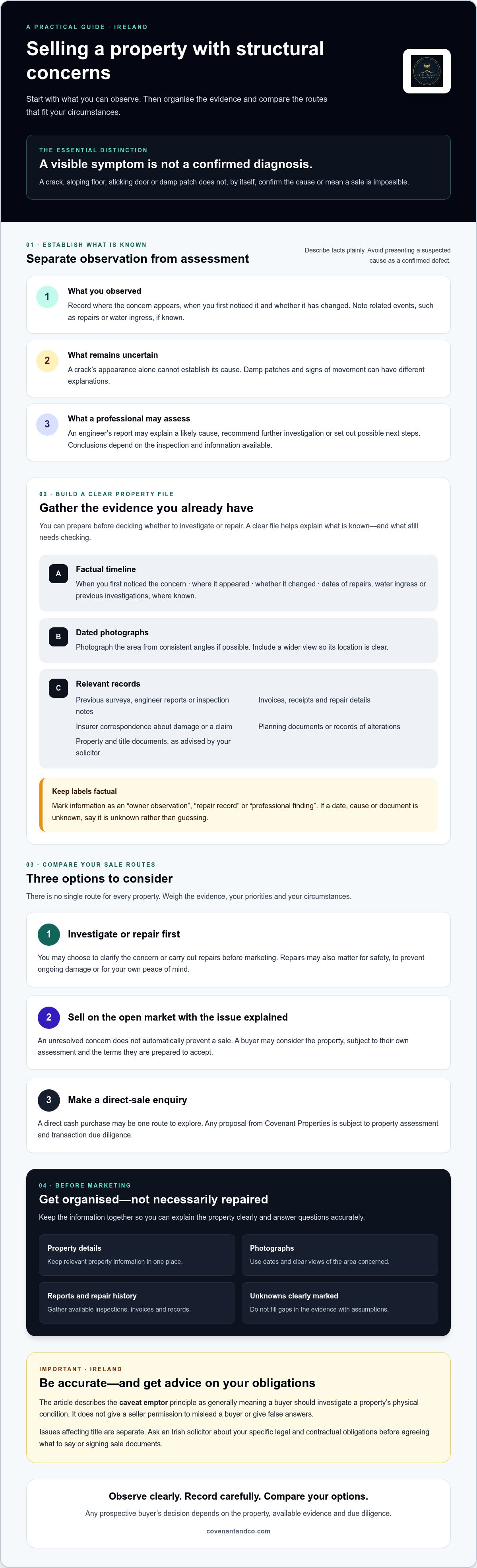
A clear file makes it easier to explain what you know and identify what still needs checking. Follow a simple sequence: record what you’ve observed, gather existing documents, consider professional advice, then compare your sale options. You don’t need every answer before you start organising the information.
What information should you gather?
Start a factual timeline. Note when you first noticed a concern, where it appeared and whether it has changed. Add dates for repairs, water ingress or previous investigations, where known. Dated photographs can show how an area looked at different points in time. Take them from consistent angles if possible, and include a wider view so the location is clear.
Bring together the records you already have. Depending on the property, these might include:
- Previous surveys, engineer reports or other inspection notes
- Invoices, receipts and details of repair work
- Correspondence with an insurer about damage or a claim
- Planning documents or records relating to alterations
- Relevant property and title documents, as advised by your solicitor
A folder of paperwork is not the same as a complete diagnosis. Label information clearly: “owner observation”, “repair record” or “professional finding”. If a date, cause or document is unknown, mark it as unknown rather than filling the gap with a guess. Ask your solicitor which title, planning or transaction documents are relevant to your property.
When should you seek an engineer’s assessment?
If you’re concerned about possible movement, damage or a change in the building, a suitably qualified structural professional can investigate suspected causes and recommend what to do next. The right assessment depends on the issue and the information already available. The Society of Chartered Surveyors Ireland provides information about surveying and property professionals in Ireland.
A visible symptom is an observation, not a confirmed structural diagnosis. A report may help distinguish between what was seen, what could be causing it and whether further investigation is recommended. Keep the original report, note its date and scope, and avoid presenting its findings as broader than they are.
With your observations and available records organised, you can discuss the property more clearly with prospective buyers or compare sale routes. If you’re considering a direct cash purchase, you can also share your property details and known concerns with Covenant Properties for consideration. Any proposed purchase depends on property assessment and transaction due diligence.
Repair First or Sell As-Is? Compare Your Property Sale Options
There isn’t one route that suits every owner. The right choice depends on what’s known about the concern, what you can manage and how you want to approach a sale. For a Property with structural issues sale Ireland, compare the practical demands of each option rather than assuming repairs will lead to a better result or an as-is sale will be simpler in every case.
| Route | Upfront work and evidence | Marketing, buyer checks and control |
|---|---|---|
| Repair first | Arrange appropriate advice and decide whether to undertake recommended work. Keep reports, invoices and records of what was done. | You can market the property after the work, but buyers may still carry out their own checks. You control whether to proceed with repairs, subject to professional advice and your circumstances. |
| Open-market sale with the issue explained | Organise available reports and be prepared to answer questions accurately. Repairs aren’t necessarily completed before marketing. | The property is exposed to open-market buyers. Their interest and due diligence will vary, and you’ll need to consider offers and any conditions proposed. |
| Direct-sale enquiry | Share property details and what you know about the concern. An initial enquiry doesn’t establish a diagnosis or guarantee a purchase. | There may be less reliance on public marketing, depending on the route agreed. The buyer will assess the property and carry out due diligence; any proposal depends on those steps. |
When might repairing before sale make sense?
Repairing first may suit owners who want to investigate and address a concern before inviting buyers to view the property. Consider professional recommendations, the likely disruption and whether you have the time and capacity to manage the work. Don’t assume repairs will increase the sale value or prevent further buyer questions. Ask an Irish solicitor about your position and the information relevant to your sale.
When might an as-is or direct sale be worth exploring?
If coordinating works or preparing for public marketing doesn’t fit your circumstances, an as-is route may be worth comparing. A direct acquisition is another option to enquire about, not a guaranteed outcome. Covenant Properties considers residential properties directly for cash, including complex buildings, subject to assessment and transaction due diligence. For broader context, read this guide to cash buyers for houses in Ireland.
Whichever route you consider, keep the facts and any answers to buyer questions accurate. The Competition and Consumer Protection Commission (CCPC) provides consumer information; for advice on your specific legal and contractual position, speak with your solicitor. To compare a direct enquiry with your other options, you can discuss your property with Covenant Properties.
How to Prepare a Structural-Issue Property for Sale in Ireland
You can prepare for a sale without completing repairs first. Focus on making the property information clear, organised and easy to check. For a Property with structural issues sale Ireland, that preparation can help agents, solicitors and prospective buyers understand what’s known and what remains uncertain.
Create one accessible file, either digital or on paper, and use it to keep key information together:
- Property details, including any alterations or relevant history you know about
- Dated photographs showing the areas of concern and their location
- Available surveys, professional reports, repair invoices and related correspondence
- A simple timeline of when concerns appeared, changes noticed and work undertaken
- A short list of unanswered questions or records you haven’t been able to find
Keep original documents where possible. Don’t describe a repair as resolving an issue unless you have a basis for that statement. If a report recommends further investigation, make that clear rather than presenting the cause as settled.
How should you explain the issue to prospective buyers?
Use specific, factual wording. For example: “A crack was noticed beside the upstairs window in May; I don’t have a professional assessment.” If you have a report, identify its date and what it assessed. Separate your observations from reported findings, and don’t conceal known concerns or turn a guess into a confirmed fact. Ask your Irish solicitor what applies to disclosure, enquiries and sale documents in your circumstances.
Consistency helps. Use the same organised notes when speaking with an agent, solicitor or prospective buyer, and update them if new information becomes available. For wider sale-preparation steps, see this fast-track property sale checklist.
Which professionals may be involved?
A structural professional may investigate a suspected cause and advise on next steps. A solicitor can guide you on title, transaction documents and your specific obligations. If you use an agent, they can help with marketing and buyer discussions. These roles differ, so don’t treat a report, legal opinion and marketing advice as interchangeable. You can check the Society of Chartered Surveyors Ireland and Engineers Ireland for relevant context when considering professional advice.
Once your information is assembled, you can decide how to discuss the property and compare sale routes. If a direct residential cash purchase is one option you’d like to explore, share your property details with Covenant Properties. Any proposed purchase depends on assessment and transaction due diligence.
How a Direct Property Sale with Covenant Properties Can Work
A direct sale is an alternative to arranging repairs and marketing through the open market. Covenant Properties purchases residential properties directly for cash across Ireland, including complex buildings. If you’re considering a Property with structural issues sale Ireland, an enquiry lets you explore whether this route may suit your circumstances. It doesn’t guarantee that the property will be purchased or that a transaction can proceed.
A useful starting point is to share the property details and explain what you know about the structural concern. You might have dated photographs, previous reports, repair records or only your own observations. Be clear about which information is documented and what remains uncertain. This gives the buyer context for considering the property without treating a visible symptom as a confirmed diagnosis.
What should you ask before considering a direct offer?
Ask what information is needed and how the concern will be assessed. You can also ask what further checks, conditions and documents may be involved, and what would need to happen before any proposal could be considered final. Assessment and transaction due diligence affect whether a purchase can proceed and on what terms. Take time to review any proposal and seek independent advice from an Irish solicitor before agreeing contractual terms.
Keep the conversation specific. If you have a report, ask how its findings will be considered. If you don’t, explain that. You can also ask what information is still needed, who is expected to provide it and how any outstanding questions could affect the proposed transaction. These questions help you understand the route without assuming the outcome in advance.
What happens after you make an enquiry?
The exact enquiry and assessment steps can vary, so confirm the current process directly with Covenant Properties rather than assuming a fixed sequence. In general, you can ask how to share property details, explain known concerns, discuss the assessment and understand what would follow if a proposal is made. The property’s circumstances and due diligence will inform whether a transaction is possible.
You remain responsible for deciding whether a proposed route works for you. Review the information carefully, clarify any conditions and compare it with your other sale options. An initial discussion does not commit you to sell.
If you’d like to explore whether a direct cash purchase could be appropriate for your property, discuss a property sale with Covenant Properties. An assessment and due diligence are required, and no purchase, valuation or completion date is guaranteed.
Choose Your Next Step with Confidence
A structural concern doesn’t automatically rule out a sale. Start by separating what you’ve observed from any professional findings, then gather available records and get advice where needed. From there, compare repair-first, open-market and direct-sale routes against your priorities. The best fit depends on the property, the evidence and your circumstances.
If you’re weighing a Property with structural issues sale Ireland, a direct cash purchase may be another route to explore. Covenant Properties buys residential properties directly for cash across Ireland and considers varied assets, including complex buildings. Any potential purchase depends on assessment and transaction due diligence, so an enquiry need not be a decision to sell.
To discuss your property and find out whether a direct-sale route may be suitable, discuss your property with Covenant Properties. Take it one step at a time. With clearer information, you can choose a path that feels right for you.
Frequently Asked Questions
Can I sell a house with structural issues in Ireland?
Yes, you can explore selling a house with structural concerns, but the options depend on the property, available evidence and a buyer’s assessment. A crack or other visible symptom doesn’t confirm its cause or establish a diagnosis. Gather reports, photographs and repair records you already have, and note what remains uncertain. Ask an Irish solicitor which obligations and documents apply to your particular transaction before agreeing terms.
Do I have to repair structural damage before selling a property in Ireland?
Repairs aren’t automatically the only route to explore. You could consider carrying out recommended work before marketing, or discuss selling the property as-is. Buyer expectations and professional findings vary, so a buyer may request further information or decide not to proceed. First, clarify what’s known about the issue and consider appropriate professional advice. Then weigh any recommended work, disruption and your own circumstances before choosing a sale route.
Should I get a structural survey before selling a property with cracks?
Not every crack has the same cause or significance, and its appearance alone can’t confirm either. A suitably qualified structural professional may be able to investigate the concern and document findings, depending on the circumstances. If you already have a report, keep it and check what it covers. Separate your own observations from professional conclusions, and don’t assume a particular survey is mandatory without advice relevant to your situation.
What documents should I gather when selling a structurally damaged house?
Collect any engineer or survey reports, dated photographs, repair invoices, insurance correspondence and a factual timeline of when you noticed changes or work was completed. Relevant property and title documents may also be needed during a sale. The useful records depend on the property and transaction, so don’t assume this list is complete. Ask your Irish solicitor which documents are appropriate and how to handle information or records you can’t locate.
Can I sell a property as-is if the structural problem has not been fully investigated?
You can enquire about an as-is sale, but an unresolved concern may affect a buyer’s assessment, questions and proposed terms. Describe accurately what you’ve observed, what reports say and what remains unconfirmed. Don’t present a suspected cause as established, or assume a buyer will proceed without further checks. If you need clarity about the condition or your position in the transaction, seek suitable professional and legal advice before deciding how to proceed.
Will a cash buyer purchase a property with structural issues in Ireland?
Some direct buyers may consider properties with complex concerns, but each buyer’s criteria and assessment differ. Covenant Properties purchases residential properties directly, including complex buildings, but that doesn’t mean every property or structural issue will be accepted. Share the information you have and ask how the property would be assessed and what checks may apply. Any proposed transaction depends on the buyer’s review and due diligence, so an enquiry isn’t a guarantee of purchase.
Does selling a house with structural issues affect its value?
There’s no fixed amount by which a structural concern affects a property’s value. The impact depends on the nature of the concern, the evidence available, the property itself and a buyer’s assessment. Avoid assuming that repairs will recover their cost or guarantee a particular sale result. Gather relevant reports and discuss valuation questions with appropriate professionals. You can then compare sale routes based on your circumstances, rather than relying on an assumed outcome.


