

An empty-looking house isn’t necessarily ready for handover. If you’re searching for “Sell property with vacant possession Ireland”, the key point is that vacant possession is a condition to agree for completion, not simply a tidy room or an empty hallway. The buyer must be able to take possession without an occupier or belongings that are not included in the sale.
It’s understandable to worry that a tenant, family member or items left behind could complicate a sale. In Ireland, the standard Law Society contract for sale provides for vacant possession on completion unless both parties agree otherwise. A sale with an occupier in place may be possible, but the arrangement needs to be agreed and recorded in the contract.
This guide explains what vacant possession means in practice, what to resolve before handover, and how an empty-property sale compares with selling to a buyer who accepts an occupier. It also sets out what to discuss with your solicitor, including tenancy arrangements that may affect your plans. Addressing these details early can help you choose a route that suits your circumstances.
Key Takeaways
- Learn what vacant possession means at handover and what to clarify with your solicitor.
- Compare a vacant sale with selling to a buyer who accepts an occupier.
- Understand which contract terms should set out the agreed handover position.
- Use a practical checklist to organise occupier communication, belongings, keys and access.
- Consider a direct purchase from Covenant Properties as an alternative to an open-market sale.
What Does Selling Property with Vacant Possession in Ireland Mean?
Vacant possession can sound like a straightforward instruction to empty the property before handing it over. In a sale, it is a condition to agree and meet at completion. A property might look empty during a viewing, but you still need to know exactly what the contract requires on the handover date.
In plain English, vacant possession means handing over the property so the buyer can take possession without someone else occupying it or belongings left behind that are not part of the sale. The term is also used in property law more generally; the Vacant Possession overview provides background, but it is not a substitute for advice on an Irish sale contract. Ask your solicitor to explain the legal effect and check that the contract wording reflects the arrangement you have agreed.
Does vacant possession simply mean an empty property?
Not necessarily. A property’s appearance at a viewing does not determine what must be delivered at completion. A tenant may be away, a relative may be staying elsewhere temporarily, or rooms may have been cleared for photographs. None of these circumstances, on its own, establishes that the buyer will receive vacant possession under the sale terms.
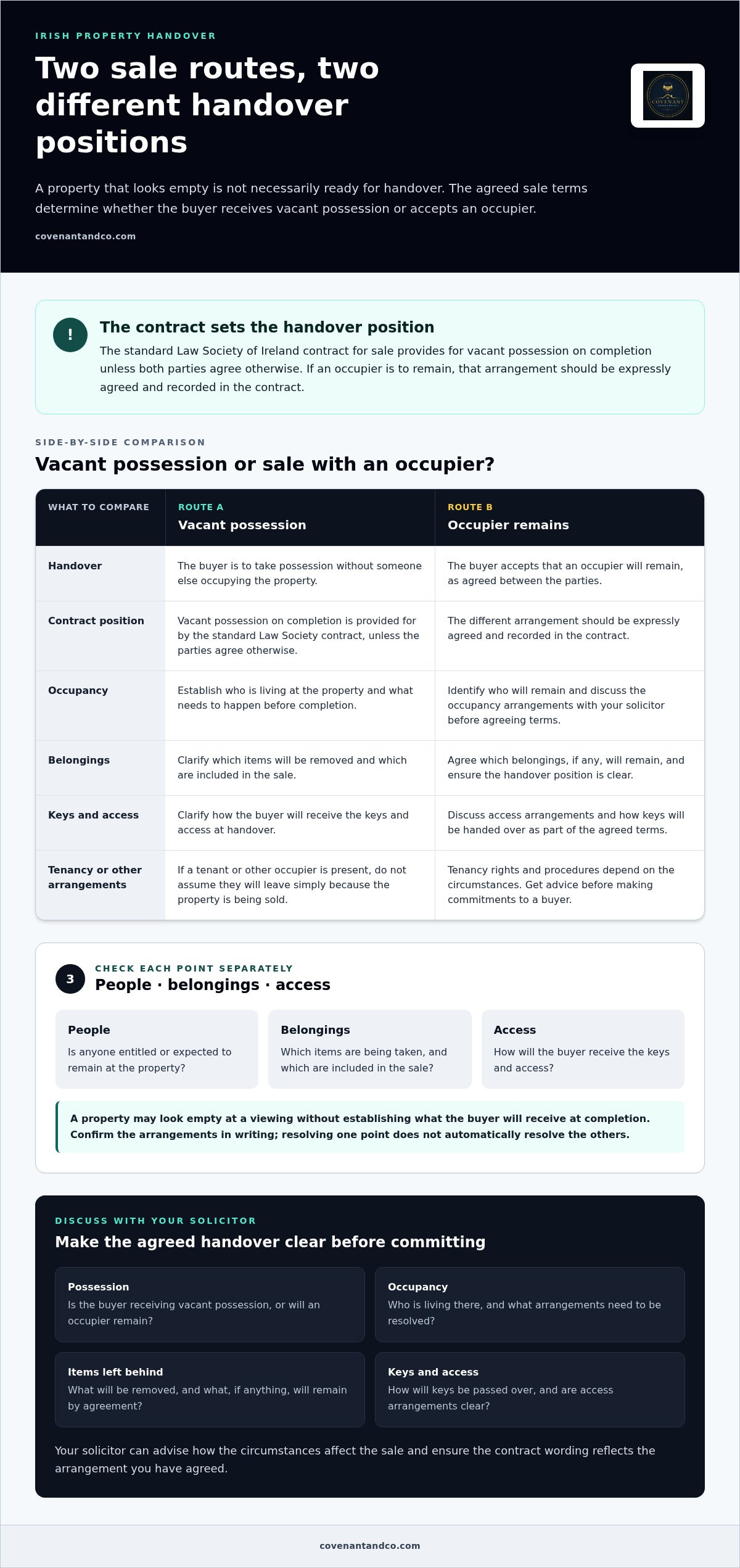
Check three separate practical points: people, belongings and access. Is anyone entitled or expected to remain? Which items are being taken, and which are included in the sale? How will the buyer receive the keys and access? These questions are related, but resolving one does not automatically answer the others. Your solicitor can advise how they apply to your contract and occupancy arrangements.
For example, a property might be empty of residents but still contain a former occupier’s furniture. Or everyone may have moved out, while the arrangements for keys and access remain unclear. Confirm what the buyer is to receive and how handover is described in writing. Do not rely on appearance alone.
When might vacant possession matter to an Irish seller?
It may become a key issue when selling a family home after moving elsewhere, preparing a property for a buyer who plans to live in it, or discussing a sale while a tenant or another occupier is still there. You may be planning a move around completion, while the buyer has their own plans for taking possession. Clear expectations help both sides coordinate.
The agreed sale terms determine the handover position. The standard Law Society of Ireland contract for sale provides for vacant possession on completion unless the parties agree otherwise. If an occupier is to remain, that is a different arrangement and should be expressly agreed and recorded in the contract. Do not assume a buyer will accept an occupier simply because the property was marketed that way.
A tenant, a family member staying temporarily, belongings stored in the property, or uncertainty about a planned move can all affect how handover is organised. If you are considering how to sell property with vacant possession in Ireland, discuss the occupancy details and proposed wording with your solicitor before committing to terms. Clarity early on helps everyone understand what completion is expected to deliver.
What Must Be Agreed Before a Vacant-Possession Property Sale?
Before committing to a sale, make sure you and the buyer understand the expected handover. The contract and agreed terms should state whether the buyer is to receive vacant possession or whether an occupier will remain. Agreeing expectations early gives everyone a clearer basis for planning.
Practical preparation and legal interpretation are separate tasks. You can identify who is living at the property, what needs to be removed and how keys will be passed over. Your solicitor can advise how those details affect the sale and ensure the contract wording matches the agreed arrangement. If you are considering how to sell property with vacant possession in Ireland, raise uncertainties early to reduce the risk of last-minute confusion.
How do occupiers affect a vacant-possession sale?
A tenant, family member or other occupier can affect whether and when you can deliver the agreed handover. Establish who is living at the property, what arrangements are in place and what needs to happen before completion. Do not assume an occupier will leave simply because you have decided to sell. Discuss the circumstances with your solicitor before agreeing the handover position or planning a move.
Tenancy arrangements can involve specific rights and procedures. Threshold’s Ending a Tenancy in Ireland guidance explains why ending a tenancy needs careful attention. The steps depend on the circumstances, so avoid relying on a general timeline or informal understanding. Get advice on your situation before making commitments to a buyer.
What should the sale contract and solicitor clarify?
Give your solicitor a clear account of the property and any occupancy arrangements. Discuss how the possession condition, access and handover should be reflected in the contract. The appropriate wording depends on the property and the parties’ circumstances, so a general template may not cover the details that matter in your sale.
- Possession: Is the buyer to receive vacant possession, or have you agreed that an occupier will remain?
- Occupancy: Who is living at the property, and what arrangements need to be resolved before handover?
- Belongings: Which items will be removed, and which, if any, are to remain by agreement with the buyer?
- Keys and access: How will keys be handed over, and are there access arrangements to resolve before completion?
These points can also help you organise conversations with the buyer and anyone living at the property. If plans change, tell your solicitor promptly rather than relying on an informal conversation to alter the agreed terms.
A direct purchase is another route to weigh against an open-market sale. You can discuss your property and circumstances with Covenant Properties. Whichever route you consider, keep the handover position clear and get legal advice before committing to contract terms.
Vacant Possession or Selling with an Occupier: Which Route Fits?
Neither route suits every seller. A vacant sale may fit if you can arrange a clear handover. Selling with an occupier in place may be possible where the buyer accepts that arrangement and it is properly agreed. Your decision depends on the property, who occupies it, your plans and the terms of the transaction.
| Consideration | Vacant possession | Occupier in place |
|---|---|---|
| Readiness | Prepare the property for the agreed handover. | Make sure the buyer understands and accepts the occupancy arrangements. |
| Coordination | Arrange any move, removal of belongings and transfer of access. | Coordinate with the occupier and agree the arrangement with the buyer. |
| Buyer considerations | May suit a buyer intending to move in or take control of the property. | May suit a buyer prepared to acquire a property with someone living there. |
| Timing control | Your plans depend on preparing the property for the agreed handover date. | Timing may depend on the existing occupancy arrangement and agreed terms. |
When could preparing for vacant possession make sense?
This route may be practical if the property is already unoccupied or you can organise a move before the agreed completion. It can also suit an owner who wants to hand over a home without an occupier remaining. However, clearing rooms, arranging removals and coordinating with other people takes planning. Vacant possession does not automatically increase the sale price or mean the sale will complete faster.
Consider what you can realistically arrange and how it fits with the buyer’s expectations. If an occupier is involved, do not treat their departure as a simple logistical task. Discuss the circumstances with your solicitor before settling on a handover plan.
Can a direct property sale suit a vacant-possession situation?
Covenant Properties purchases residential property directly for cash across Ireland. A direct discussion about your home and circumstances offers an alternative to publicly marketing the property and seeking a buyer on the open market. It is one route to consider, not a recommendation for every seller. The agreed terms, including the possession arrangement, still matter, and you should not assume a completion date or sale outcome.
If you are comparing options, our guide to cash buyers for houses in Ireland explains the direct-purchase route in more detail. If you are asking how to sell property with vacant possession in Ireland, weigh the preparation involved against the buyer and handover arrangements available. Your property, occupancy position and priorities should guide your decision.
How to Prepare for Vacant Possession: A Seller’s Practical Checklist
A clear handover is easier to organise when you turn the agreed position into practical tasks. Use this checklist as a starting point, adapting it to your property, the people involved and the sale terms. If you plan to sell property with vacant possession in Ireland, raise questions with your solicitor early rather than relying on assumptions.
- Confirm the agreed handover position. Check what the buyer expects to receive and when. Ask your solicitor to clarify how the arrangement is reflected in the sale documents.
- Speak with any occupiers. If a tenant, relative or another person lives at the property, discuss the arrangements calmly and early. Keep a record of relevant communication, and ask your solicitor about questions concerning their position.
- Plan what will be removed. Work through the house and any included areas, such as sheds or garages. Separate belongings to take away from items the buyer has agreed may remain.
- Keep sale information together. File useful documents and messages in one place, including sale communications, agreed item arrangements and notes for your solicitor. A clear record makes it easier to check details as plans progress.
- Arrange keys and access. List the keys and access devices you hold, and note any practical arrangements that need to be addressed. Confirm the agreed handover process with the relevant parties.
- Plan the final inspection. Set aside time to check the property against the agreed handover position. Look through rooms and storage areas, confirm agreed items are in place or removed, and note anything that needs attention.
What should sellers organise before the handover?
Keep relevant property documents, correspondence and agreed arrangements easy to find. This might include a record of what the buyer expects to remain, messages about access and a list of questions for your solicitor. A checklist is not a statement of your legal duties. The contract and your circumstances determine what applies, so ask your solicitor to address any uncertainty.
For broader sale preparation, the fast-track property sale checklist offers additional points to organise alongside the handover tasks here.
What if the property cannot be handed over as expected?
Plans can change. An occupier may need more time, belongings may not be removed as expected, or an access arrangement may prove difficult. Tell your solicitor promptly and communicate the change to the other party through the appropriate channel. Do not assume that a delay automatically cancels the sale or leads to a particular consequence. The contract and the facts will shape the next steps.
If you are considering a direct purchase as part of your sale planning, Covenant Properties purchases residential property directly for cash. Clear records and early communication can help keep practical arrangements aligned with the terms agreed for your sale.
Explore a Direct Sale with Covenant Properties
A direct property purchase is an alternative to publicly marketing a home and seeking a buyer on the open market. Covenant Properties purchases residential property directly for cash across Ireland. If you are considering how to sell property with vacant possession in Ireland, you can discuss your property and circumstances with the team, then decide whether this route fits your plans.
The handover still needs thought. Consider whether the property is occupied, what you expect to resolve before completion and what you need from the sale. Raise these details early, alongside any questions for your solicitor about the contract or your individual circumstances.
What happens when you discuss a property with Covenant Properties?
The starting point is a conversation about your residential property and your situation as the owner. Explain what you are planning, including any circumstances that may affect the proposed handover. Covenant Properties purchases residential properties directly, giving you an option to consider alongside an open-market sale. A discussion does not commit you to proceeding or establish a guaranteed offer or completion date.
It may help to have a clear outline of the property and its current occupancy. For example, note whether anyone is living there and whether you aim to hand it over vacant. You do not need to assume every detail is settled before speaking. Explain what you know and what remains uncertain, then consider any sale terms carefully before making a decision.
How can you choose your next step with confidence?
Compare the routes against your priorities, not just the labels. Think about whether you are comfortable preparing the property for vacant possession, whether an occupier affects your plans, and how much coordination a move or removal of belongings may involve. Also consider what the buyer is expected to receive and whether the proposed terms work for your circumstances.
- Your preferred sale route: Weigh a direct discussion against publicly marketing the property.
- Handover requirements: Be clear about occupancy, belongings and access arrangements.
- Your personal priorities: Consider your plans and the practical steps you can manage.
- Legal advice: Ask your solicitor to explain the contract wording and how it applies to your situation.
A direct purchase is an option, not a universal answer. Take time to understand the proposed terms and discuss legal questions with your solicitor before agreeing to a sale. If you would like to explore the route, you can discuss a property sale with Covenant Properties.
Choose the Sale Route That Fits Your Plans
Your next step does not need to be a final decision. Start by identifying what matters most: a particular handover arrangement, a manageable move, or a sale route that fits your wider plans. Take those priorities into discussions with your solicitor and any prospective buyer. Clear questions can help you compare options without feeling rushed.
If you are weighing up how to sell property with vacant possession in Ireland, keep your circumstances at the centre of the decision. The right route is the one whose terms and practical demands make sense for you. Covenant Properties purchases residential and commercial property, as well as land and development sites, directly across Ireland.
You can outline your situation, consider the information available and decide whether a direct sale suits your plans. To take the next step, discuss a direct purchase for your property with Covenant Properties.
Frequently Asked Questions
What does vacant possession mean when selling a property in Ireland?
It means the buyer is to receive the property without an occupier or belongings that prevent them from taking possession, subject to the agreed sale terms. A relative staying in one room or furniture stored in an outbuilding could raise handover questions even if the main rooms are clear. Ask your solicitor to explain the contract wording for your sale, as the agreed terms and circumstances matter.
Do I have to remove all furniture before selling with vacant possession?
Not necessarily. Agree what will be removed and what, if anything, will remain. A buyer might want certain appliances or furniture, while you may plan to take other items. Write down the agreed inclusions and removals, and share the list with your solicitor so it can be reflected appropriately in the sale arrangements. Do not rely on a viewing or verbal understanding to settle the inventory.
Can I sell my property with tenants living in it?
A sale with a tenant in place may be possible if the buyer accepts the arrangement and the contract records it. This differs from a sale requiring vacant possession. Give your solicitor the tenancy agreement and relevant correspondence so they can advise how the tenancy affects the proposed sale. Do not promise that a tenant will leave by a particular date or serve notice based on assumptions about the rules.
How do I make sure a property is ready for vacant possession?
Work from the agreed handover terms, not just the property’s appearance. Confirm who will be living there, arrange any move, and check each room and storage area for belongings that are not included in the sale. Keep agreed item lists and access details together. If you plan to sell property with vacant possession in Ireland, ask your solicitor to clarify uncertain requirements well before handover.
Can I sell a property without vacant possession in Ireland?
A sale without vacant possession may be possible if the buyer agrees to an occupier or another arrangement remaining in place, and the contract clearly records that position. Make sure the way the property is marketed matches the arrangement discussed with buyers. A buyer’s plans may depend on whether they can occupy or use the property, so be open about the situation and get your solicitor’s advice on the contract terms.
Is a direct sale suitable if I need to sell a property with vacant possession?
It may be an option to explore, but suitability depends on your property, circumstances and the terms agreed. When discussing a direct purchase with Covenant Properties, explain whether the property is occupied and what handover you are aiming for. Review any proposed terms carefully, and ask your solicitor to advise on the contract before you commit.
What should I do if I cannot provide vacant possession on the agreed date?
Contact your solicitor promptly and explain what has changed. Make sure the other party is informed through the appropriate channel rather than waiting until handover. For example, if a removal is delayed or an occupier’s plans change, keep a record of the updated circumstances and communications. The contract and the facts determine the appropriate next steps, so do not assume the sale is automatically cancelled or that a particular penalty applies.


