

Could an offer before auction day be worth considering, or might accepting it change your position sooner than you expect? If you’re searching “Sell property before auction Ireland”, you’re likely weighing a possible offer against auction deadlines, preparation and the uncertainty of waiting for bids.
It’s not always a simple choice. A pre-auction offer may be made under auction conditions, so it’s important to understand what accepting it could mean and what commitments already apply. In Ireland, an auction sale generally becomes binding when the hammer falls. Your solicitor can explain how the terms of your particular sale affect your options.
This guide compares a pre-auction sale with proceeding to auction, including the practical trade-offs and questions to resolve before changing course. It also explains how a direct cash purchase can be another route to consider. The aim is to help you weigh your circumstances and decide what to explore next.
Key Takeaways
- Sell property before auction Ireland: first understand what your existing auction arrangements allow before considering another route.
- Compare auction, private treaty and a direct purchase by looking at exposure, how offers are assessed, timing and conditions.
- Assess an offer on more than its amount. Its conditions, funding position and proposed completion arrangements matter too.
- Gather relevant property details, certificates and auction paperwork to help inform your decision.
- Consider whether a direct purchase from Covenant Properties suits your circumstances, whether you’re selling a home, commercial property, land or a development site.
Selling property before auction in Ireland: when might it make sense?
You may already have instructed an auctioneer, agreed a guide price or started preparing for auction day. Then circumstances change, or an offer arrives, and you begin to reconsider. Searching “Sell property before auction Ireland” is often about understanding whether another route better fits your priorities, not necessarily abandoning the plan outright.
A pre-auction sale means agreeing to sell by another route before the scheduled auction takes place. It differs from a completed auction sale, which generally becomes binding when the hammer falls. The terms of a pre-auction offer can depend on the arrangements already in place, so don’t assume it follows the same process as a private treaty sale.
There isn’t one answer that suits every seller. Consider the offer terms, proposed timing, the property’s circumstances and any commitments you’ve already made. The auction date alone won’t tell you what obligations apply. Your signed documents and the specific terms agreed with your auctioneer matter.
Why consider a sale before the auction date?
A change in circumstances may make a different timetable or more predictable terms appealing. You might also receive an offer that appears suitable for your needs. But don’t assume that an offer proves the auction won’t attract bidders. It’s one option to assess, not a prediction of what the auction would achieve.
Neither route guarantees a higher price or faster completion. Weigh what matters most, including the offer’s conditions and how certain the proposed arrangements appear. If you’re selling land, the History of Land Acts in Ireland provides historical context on land ownership, but your own sale terms need to be considered on their merits.
What should you establish before changing direction?
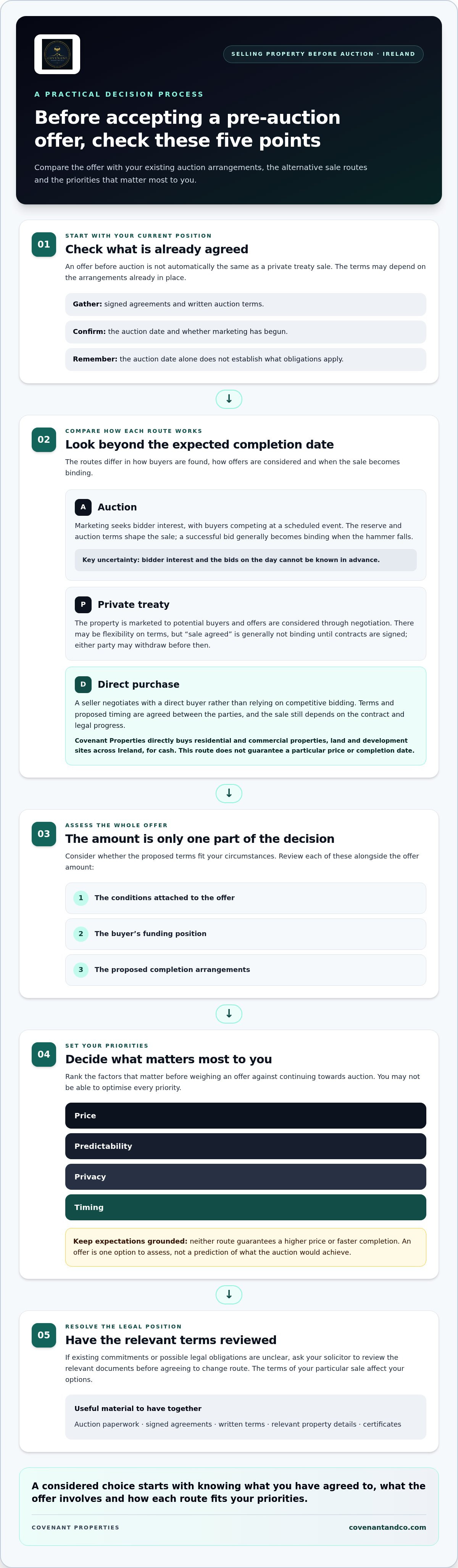
Start with the practical facts. Note the auction date, whether marketing has begun and what you’ve already signed or agreed to. Then rank your priorities: price, predictability, privacy or timing. You may not be able to optimise every one, so being clear about what matters most will help you compare an offer with continuing towards auction.
Review the offer as a whole, not just the figure. Conditions, the buyer’s funding position and proposed completion arrangements can all affect how well it fits your plans. If any existing terms or possible legal obligations are unclear, ask your solicitor to review the relevant documents before agreeing to change route.
- Check the paperwork. Gather signed agreements and written terms relating to the auction.
- Confirm the current position. Establish the auction date and the stage of the marketing.
- Define your priorities. Decide which factors matter most before weighing the offer.
A considered decision starts with knowing what you’ve agreed to and what the offer involves. With those details clear, you can compare the routes on practical terms rather than making a rushed choice based on the calendar alone.
Auction, private treaty or direct sale: compare your options before auction
If you’re weighing whether to Sell property before auction Ireland, compare the routes by how they find buyers and handle offers, not just by the date you hope to complete. Each has trade-offs. The right fit depends on the property, buyer interest, agreed terms and progress through the legal process.
| Route | Exposure and offers | Timing and conditions |
|---|---|---|
| Auction | Marketing seeks bidder interest; buyers compete at a scheduled event. | The auction date is planned in advance. The reserve and auction terms shape the sale, and a successful bid generally becomes binding when the hammer falls. |
| Private treaty | The property is marketed to potential buyers, with offers considered through negotiation. | There may be flexibility to negotiate terms, but “sale agreed” is generally not binding until contracts are signed. Either party may withdraw before then. |
| Direct purchase | A seller negotiates with a direct buyer rather than relying on competitive bidding. | Terms and proposed timing are agreed between the parties. The sale still depends on the contract and legal progress. |
What does proceeding to auction involve for the seller?
Auction marketing aims to bring the property to the attention of potential bidders before the planned event. The level of interest and the bids on the day can’t be known in advance. Before continuing, understand the reserve, auction conditions and any commitments in your agreement. This lets you weigh the potential of competitive bidding against the appeal of an offer already on the table.
How does a direct property sale differ?
A direct purchase is a negotiated sale to a buyer, rather than a contest between bidders at auction. Covenant Properties directly acquires residential and commercial properties across Ireland, as well as land and development sites. The company buys properties directly for cash, providing an alternative to traditional estate agent marketing and a lengthy listing process. This route may suit sellers who want to assess a direct offer, though it doesn’t guarantee a particular price or completion date. The cash buyers for houses guide explains this approach in more detail.
Private treaty can provide time to negotiate, but the period before contracts are signed can bring uncertainty. Auction offers a defined event, but the result depends on bidder interest and auction terms. A direct sale has no bidding event, so the negotiated offer and its conditions take centre stage. For wider context, the CSO’s Irish Residential Property Market Trends show how market conditions can inform a seller’s thinking, though national data can’t predict the result for an individual property.
To compare a direct offer with continuing towards auction, look at the full terms, not just the headline figure. If a direct purchase is one route you’re considering, read about selling directly to Covenant Properties as part of your comparison.
Can you accept an offer before auction? Check these decision points
An offer arriving before auction day can create pressure to respond quickly. Pause before agreeing to anything. Whether you can change course, and what that means, depends on the documents you’ve signed, the stage the sale has reached and the offer’s terms. If you’re considering whether to sell property before auction in Ireland, use a clear sequence to assess the decision rather than relying on a verbal conversation or headline figure.
- Review your existing arrangements. Find signed auction terms, any agreed fees and any notice requirements. Note the auction date and what has already happened in the marketing process.
- Assess the offer in full. Record the proposed price, conditions, buyer’s funding position and suggested completion arrangements together.
- Speak with your solicitor. Ask them to review the offer and existing documents if you’re unsure about their effect or any obligations.
- Decide against your priorities. Consider whether the full offer and its terms suit your circumstances better than continuing towards auction.
Review auction arrangements and legal commitments
The date in your diary is only one part of the picture. Read the documents you signed and gather written details about agreed fees or notice requirements. Don’t assume that a conversation with an auctioneer changes those terms, or that an offer automatically ends your existing arrangements. The position can depend on the individual agreement and how far the sale has progressed.
A verbal discussion can help clarify what a buyer is proposing, but it isn’t a substitute for understanding the formal sale documents. If the paperwork is unclear, have your solicitor explain what it means before you accept, reject or commit to a different route.
Assess the offer on its full terms
Put the details into one written summary. Include the amount offered, conditions attached, the buyer’s funding position and proposed timing. This makes it easier to compare like with like and spot points that need clarification. A higher figure may not suit your needs if its conditions or timing don’t work for you. Equally, a lower offer isn’t automatically the better choice just because it appears simpler.
Compare the whole offer and its conditions, not only the headline figure. Ask whether the terms support your priorities and take account of your property’s circumstances. A direct offer can be assessed on its own merits, but it can’t promise to match or exceed an auction result. Covenant Properties directly purchases residential and commercial property, and considers each property’s circumstances and transaction needs. If a direct purchase is among the options you’re weighing, you can read about a sale with Covenant Properties alongside the auction offer.
Once you understand the paperwork and have weighed the offer’s full terms, you can make a more considered decision. There’s no need to treat the first conversation as the final answer.
Preparing a property for a pre-auction sale in Ireland
Good preparation helps you discuss a possible change of sale route with clearer information to hand. It won’t remove the legal steps involved or guarantee a quicker transaction. The aim is to gather relevant details, identify unanswered questions and give your solicitor a useful starting point. Not every property or sale needs the same documents, so use this as a practical checklist rather than a fixed set of requirements.
Information to organise before discussing a sale
Start with what you know and can locate. Ownership details, property facts and existing auction paperwork can help clarify the position. Be accurate about condition, occupancy and known issues. If a detail is uncertain, flag it rather than guessing. Your solicitor can advise which documents apply to your circumstances and what further information may be needed.
- Gather ownership information. Collect available title or ownership details for your solicitor to review. If you have documents relating to a mortgage or other interest in the property, keep them together.
- Write down the property facts. Note the address, type of property, current occupancy and any known condition issues or constraints that could affect a sale. Include alterations or planning matters where relevant, and distinguish confirmed information from details you still need to establish.
- Collect relevant certificates and records. Set aside documents you already hold, such as a BER certificate, planning paperwork or compliance certificates. Which records are relevant can vary with the property and its history.
- Bring together auction material. Keep the signed terms, marketing details, written communications, agreed fees and information about the scheduled auction in one place. This gives you and your solicitor a clearer record of what has already been discussed or agreed.
- Record the offer in writing. Keep a note of the proposed amount, conditions, buyer’s funding position and suggested arrangements for completion. This makes it easier to review the complete proposal rather than relying on memory of a conversation.
Keep the legal and transaction steps clear
Before changing direction, ask your solicitor to explain how the existing auction arrangements affect your options. Don’t assume that preparation alone removes conveyancing requirements or prevents delays. Keep any revised offer and agreed next steps in writing, and make sure everyone involved is working from the same details. Clear records reduce avoidable confusion, but each transaction still has its own legal and practical steps.
If you’re looking for a wider preparation plan, the fast property sale checklist covers additional points to consider. Covenant Properties buys residential and commercial properties, as well as land and development sites. Read about a direct property sale with Covenant Properties as one option alongside your current auction plan.
A direct sale with Covenant Properties: a considered alternative before auction
If you’re still weighing whether to Sell property before auction Ireland, a direct purchase is another route to compare with proceeding to the scheduled auction. Covenant Properties buys residential and commercial property directly across Ireland, and also acquires land and development sites. Unlike auction marketing, this approach means discussing a potential sale directly with a buyer rather than inviting competing bids at an event.
That difference changes how you assess the options, but it doesn’t make one route right for everyone. An auction may suit a seller who wants to put the property before bidders. A direct sale may be worth exploring if you’d prefer to consider a negotiated offer. Your property, current sale arrangements, priorities and proposed terms all matter.
What a direct acquisition route may offer
A direct conversation can focus on the property’s circumstances and the terms that might work for the transaction. For example, the discussion may cover whether a residential property is occupied, what is known about its condition, or whether a site has planning permission. Clear information helps both sides understand what is being considered. It doesn’t determine an offer or guarantee a particular completion date or outcome.
Before comparing routes, decide what you need to understand. You might want to know how a proposed offer is structured, what conditions apply and how the suggested arrangements relate to your existing auction plan. Keep your solicitor involved, especially if you’ve signed auction documents or received a formal offer. A direct purchase remains a property transaction with terms to review, not a way to assume legal steps can be skipped.
If you’re also considering a private sale or other ways to market a home, this guide to selling without an estate agent offers a wider comparison. Use it to clarify which features matter most to you, then weigh those against the specific offer and auction arrangements in front of you.
How to take the next step without pressure
You can begin by setting out a few straightforward details: the property type and location, its current condition and occupancy, and where matters stand with the auction. Include what you’re hoping to achieve, such as greater predictability or a clearer understanding of another sale route. This gives the discussion a practical focus without committing you to change your plans.
Take time to review any proposed terms with your solicitor before making a decision. Compare them with your current arrangements and priorities, and ask for anything unclear to be explained. You don’t have to decide simply because you’ve started a conversation.
If a direct purchase sounds worth considering, share your property details with Covenant Properties and explain the next step you’re weighing. You can explore the option alongside your solicitor’s advice and existing auction plan, without committing to change your plans.
Choose the next step that fits your circumstances
There’s no need to treat an approaching auction date as a reason to make a rushed decision. If you’re considering whether to Sell property before auction Ireland, match your next step to what matters most to you, and keep your solicitor involved as you consider any change to your arrangements.
A direct purchase can be part of that comparison. Covenant Properties acquires residential and commercial properties, along with land and development sites, across Ireland. You can discuss your property and proposed terms, then consider this option alongside your current plan without pressure to decide immediately.
To explore a direct sale, discuss your property sale with Covenant Properties. Share where things stand and the next step you’re weighing, then consider the option at your own pace.
Frequently Asked Questions
Can I sell my property before the auction date in Ireland?
Yes, you can consider another sale route before the scheduled auction, but whether you can proceed depends on your auction agreement and any steps already taken. If you’re asking how to sell property before auction Ireland, start by checking the signed terms and asking your solicitor to explain them. A buyer’s interest alone doesn’t settle what you’re free to do or what needs to happen to the auction arrangements.
What happens if I receive an offer after signing an auction agreement?
Receiving an offer doesn’t by itself tell you whether you can accept it or change the sale plan. Your signed agreement may set out fees, notice requirements or other commitments, and the effect can depend on its wording and the progress of the sale. Keep the offer in writing, including its conditions and proposed arrangements, then ask your solicitor to review it alongside the auction paperwork before responding.
Does accepting an offer before auction automatically cancel the auction?
No, don’t assume that accepting an offer automatically removes the property from the auction or ends your agreement with the auctioneer. The offer may be made under particular auction conditions, and the consequences can depend on the documents and how it is accepted. Get the position and any change to the auction plan recorded clearly in writing, with your solicitor’s guidance, before treating the auction as cancelled.
Can I sell a property before auction if it is already being advertised?
Advertising doesn’t necessarily prevent you from considering an offer, but existing marketing arrangements may affect the next steps. For example, enquiries or viewings may already be scheduled, or the property may have appeared in auction materials. Keep a record of where and how it has been promoted, and check the terms you agreed before changing course. Make sure any revised plan is communicated clearly to the relevant parties.
What happens if my property does not sell at auction?
If there’s no successful sale, you can review what to do next rather than assuming the property must immediately go back to auction. Options may include discussing a further marketing plan, considering private treaty or assessing a direct purchase offer. Your next move will depend on your auction agreement, buyer interest and priorities. Ask your solicitor to clarify any continuing commitments before agreeing a new route.
Can I consider a direct cash offer while my property is listed for auction?
Yes, you can consider a direct cash offer, but being listed doesn’t remove the need to account for your auction arrangements. Share the current stage of the sale and the relevant paperwork when discussing the offer, so its proposed terms can be considered in context. Compare the offer’s conditions and proposed arrangements with your priorities, and don’t treat the word “cash” as a guarantee of a particular completion date.
Should I speak to my solicitor before accepting a pre-auction offer?
Yes. Ask your solicitor to review the proposed offer and your auction documents before you accept, particularly if the offer refers to auction conditions or requires a change to existing arrangements. A solicitor can explain what the written terms mean for your circumstances and help identify points that need clarification. This gives you a clearer basis for deciding, without relying only on a verbal discussion or an assumed understanding.


