

A faster commercial property sale rarely comes from skipping checks. It starts with a clear route and the right information ready. If you’re considering an expedited commercial property transaction in Ireland, you may be concerned that a traditional sale will drag on or that missing documents could bring progress to a halt.
Those concerns are understandable. Commercial sales involve several stages, from initial discussions and due diligence to agreeing terms and preparing for completion. Getting organised early can help avoid preventable delays, although every sale follows its own path.
This guide explains what can affect progress, which property and ownership details to prepare, and why a transaction may stall late in the process. It also compares direct acquisition with public marketing and repeated viewings. Covenant Properties directly purchases commercial property across Ireland, including office, retail and industrial assets. For some owners, this route may better suit their priorities for a clear, efficient disposal. By the end, you’ll have a practical basis for deciding which approach fits your property and circumstances.
Key Takeaways
- An expedited commercial property transaction in Ireland is a process-focused goal, not a promise of a fixed completion date.
- Understand the steps from sharing property details to completion, and how clear information can help keep discussions moving.
- Compare direct acquisition with an open-market sale to see how marketing, viewings and process control fit your priorities.
- Prepare relevant title records, plans, planning information, lease documents and property details, and note any unanswered questions.
- Covenant Properties directly purchases commercial property for cash, including offices, retail premises and industrial assets.
Expedited commercial property transactions in Ireland: what can make a sale faster?
An expedited commercial sale is a goal for how the transaction is organised, not a promise of a particular completion date. Owners may need to release capital, respond to changing business needs or make a portfolio decision. Whatever the reason, the practical question is the same: how can you keep each stage moving without overlooking important checks?
A faster route still requires appropriate review, clear legal documents and the steps needed to complete a sale. An expedited process removes avoidable delays; it does not bypass due diligence. Being ready to answer questions and share relevant information can make discussions more focused, although progress also depends on the property and the people involved.
What does an expedited commercial property transaction involve?
It means taking a direct, organised route from the first discussion through to the agreed transaction steps. The seller shares clear information about the asset, the buyer reviews it, and both parties discuss an offer. If they decide to proceed, they work through the necessary checks and documents. An Expedited commercial property transaction Ireland is therefore about creating momentum, not removing safeguards.
The pace can depend on the property’s ownership records, the documents available, questions raised during review and how promptly the parties make decisions. A straightforward asset with information ready to hand may involve fewer avoidable pauses than one where key details need to be found or clarified. Neither situation guarantees a particular timetable.
Irish ownership history provides context for why title information matters. The Land Acts (Ireland) form part of the country’s history of land ownership and tenancy. For a sale today, the practical point is to have the property’s own title records available for review.
Why can commercial sales take longer than expected?
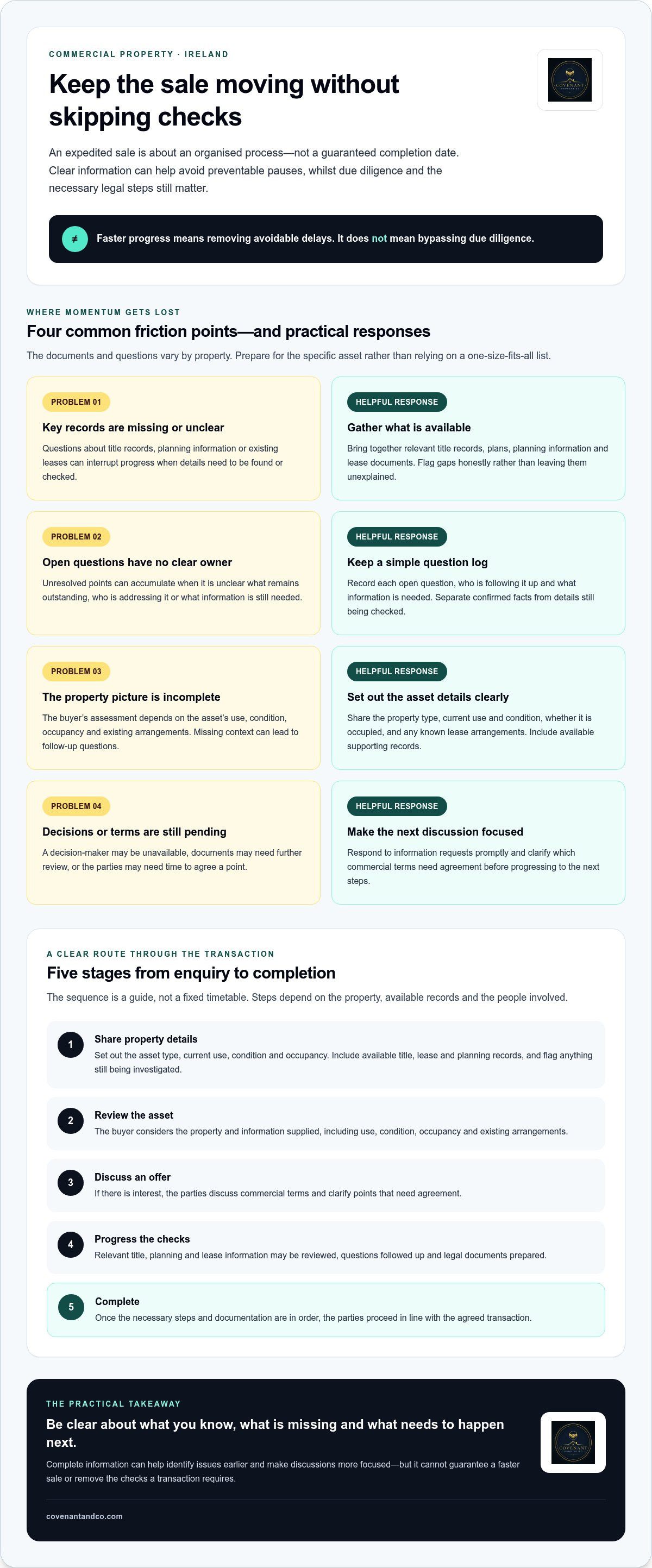
Questions often arise about title records, planning information or existing leases. A buyer, for example, may need clarification about an ownership detail, the status of a planning record or the terms affecting an occupied premises. If information is incomplete, finding and checking it can interrupt progress. The relevant documents vary by property, so prepare for the specific asset rather than relying on a one-size-fits-all list.
Unresolved questions are only part of the picture. A decision-maker may be unavailable, a document may need further review, or the parties may need time to agree a point before moving on. These pauses can accumulate, particularly if nobody is clear about what remains outstanding. Keep a simple record of open questions, who is addressing them and what information is still needed. This can make the next conversation more productive.
For a seller, a useful first step is to separate what you know from what still needs clarification. Gather available records, identify gaps honestly and respond to requests promptly. This won’t remove every complication, but it can reduce preventable back-and-forth and help everyone understand what needs to happen next.
How an expedited commercial property transaction progresses from enquiry to completion
A clear sequence helps you see what has been done and what still needs attention. The exact steps depend on the asset, the records available and the parties involved, but a direct commercial sale commonly moves through these stages:
- Share property details. Set out the type of asset, its current use, condition and occupancy. Include available title, lease and planning records, and flag anything you’re still investigating.
- Review the asset. The buyer considers the property and the information supplied. Use, condition, occupancy and existing arrangements all inform that assessment.
- Discuss an offer. If there is interest, the parties discuss commercial terms. Clarify any points that need agreement before progressing.
- Progress the checks. Relevant title, planning and lease information may be reviewed, questions followed up and legal documents prepared.
- Complete. Once the necessary steps and documentation are in order, the parties proceed to completion in line with the agreed transaction.
This is a guide, not a fixed timetable. Complete information can help identify issues earlier, but it can’t guarantee a faster sale. The Land and Conveyancing Law Reform Act 2009 is part of the Irish legal framework for property matters. The documents and checks relevant to a particular sale depend on its circumstances.
Initial property information and assessment
Before discussions, organise the facts you can readily provide: the property type, its current use and condition, whether it is occupied, and any known lease arrangements. Gather available title records, plans and planning information. You don’t need to resolve every open question before starting. Separating confirmed details from matters still being checked helps you give an accurate picture.
For example, if a premises is let, sharing the lease information early can bring occupancy terms into the conversation. If planning records are incomplete, flag that rather than leaving a gap unexplained. An Expedited commercial property transaction Ireland depends on the specific asset and the information available, so the assessment and next steps are not identical for every seller.
Due diligence, contracts and completion
Agreeing commercial terms is one milestone, not the finish line. Title, planning position and existing leases may need review, and the parties then progress the legal documentation towards completion. Tax and other applicable regulatory details depend on the property and transaction, so arrange current professional review rather than relying on assumptions. Keep questions, responses and outstanding documents organised to avoid confusion between agreeing terms and completing the sale.
If you’re considering a direct sale, Covenant Properties’ commercial property purchase offers an alternative to public marketing for owners of commercial assets across Ireland.
Direct acquisition or open-market sale: which route better fits your priorities?
The route you choose affects how the property is presented, who sees it and how much the process depends on public marketing. An open-market sale aims to reach prospective buyers through wider exposure. Direct acquisition starts with a conversation between the owner and a buyer. Neither is automatically better. Your priorities, the property and the offer all matter.
| Factor | Direct acquisition | Open-market sale |
|---|---|---|
| Route | Direct discussions with a potential buyer about the asset and a possible offer. | The property is presented to the market to attract interest from prospective buyers. |
| Marketing | Can avoid public marketing, which may suit an owner who values discretion. | Uses market exposure to reach a broader pool of potential buyers. |
| Viewings | May reduce reliance on repeated public viewings; any visits depend on the transaction. | Marketing may involve coordinating viewings with interested parties. |
| Process control | A direct conversation can provide a clear route for discussing terms and next steps. | The sale process may involve managing market interest and enquiries as they arise. |
| Trade-offs | The offer and terms need to fit the seller’s priorities; less public exposure may not suit every owner. | Wider exposure may attract interest, but requires time and effort to market and manage viewings. |
When a direct commercial property sale may suit
A direct route may appeal if you want to speak with a potential buyer without first preparing for public marketing and multiple viewings. It can also suit owners who value discretion or want to explore a defined way to dispose of an asset. Covenant Properties directly purchases commercial property for cash across Ireland, including office, retail and industrial properties. This offers sellers an alternative to open-market marketing, though the fit depends on the property, the offer and your circumstances.
When weighing an Expedited commercial property transaction Ireland, consider what matters most: public exposure, privacy, the effort of managing enquiries or the terms available. A direct offer and an open-market result aren’t directly interchangeable. They come through different routes, so compare how each aligns with your aims and the outcome offered.
What to weigh against an open-market sale
Open-market exposure may matter if reaching a wide range of potential buyers is your priority. In return, you may need to allow for marketing preparation, enquiries and arranging access for viewings. A direct sale can reduce reliance on those public-facing steps, although it still involves reviewing the asset and progressing the transaction. Every sale differs, and neither route removes the need to consider the property and proposed terms carefully.
Think through your preferred balance of exposure, discretion and process demands before deciding. The commercial property direct-sale guide provides more detail on the direct route. Whether a direct purchase suits you depends on the offer and your reasons for selling, not speed alone.
How to prepare a commercial property for a more efficient sale
Preparation doesn’t mean producing a standard pack for every asset. It means gathering what’s relevant, making the information easy to follow and being open about anything unresolved. This can reduce repeated requests and give a buyer a clearer starting point. The documents needed depend on the property, its ownership and whether it’s occupied.
Start with a simple physical or digital folder. Keep copies together, label them clearly and note when a record is missing or needs checking. Accurate information matters more than presenting an incomplete detail as certain.
- Title and ownership records: collect the records available to you and note any ownership details that may need explanation.
- Plans and property details: gather available plans and summarise the asset’s type, use, condition and occupancy.
- Planning information: locate permissions and related records relevant to the property, where available.
- Lease and occupancy documents: assemble current leases, variations and other relevant occupancy information.
- Open questions: write down what’s known, what’s uncertain and what may need further review.
Organise title, planning and property information
Ownership records and plans are useful starting points because they help describe the asset and the interest being discussed. Set aside the versions you have rather than delaying an initial conversation while trying to create a complete file. Gather available planning permissions and related records, and identify any gaps clearly. Requirements vary with the property and circumstances, so check applicable Irish planning and conveyancing details against current guidance as the transaction progresses.
For an Expedited commercial property transaction Ireland, a concise summary can make early discussions more productive. State the property’s present use and condition, and distinguish documented facts from estimates or questions. If a plan or record is unavailable, say so plainly. This avoids confusion and gives any follow-up request a clear purpose.
Prepare lease and occupancy details
If the property is let or otherwise occupied, collect current lease documents and any variations you hold. You can also prepare a brief summary of the rent, lease term and responsibilities, but only where those details are accurate and supported by the documents. Don’t assume what a lease means for a sale or infer tenant rights from a short summary. Mark points that need review and keep the source document with the note.
Share material information promptly and consistently. If an answer changes after checking a document, update your summary so discussions don’t rely on an earlier version. A fast-track property sale checklist can also help organise general preparation. For a direct commercial sale, Covenant Properties provides a way to discuss your property.
Explore a direct commercial property transaction with Covenant Properties
Covenant Properties purchases commercial property directly for cash. For owners considering a sale, this offers a route to discuss the asset with a potential buyer without relying on public marketing. The discussion can focus on understanding the property and your priorities, then considering whether a direct transaction may suit your circumstances.
The firm purchases offices, retail premises and industrial property across Ireland. Each asset is different. An occupied retail unit, for example, raises different questions from a vacant industrial property or an office building with several tenants. Sharing the known details early helps make the discussion relevant to the property, rather than relying on general assumptions about how a sale should proceed.
A direct route can support an Expedited commercial property transaction Ireland by reducing reliance on open-market marketing and viewings. It doesn’t remove the need for appropriate checks or guarantee a particular outcome. Timing, terms and progress depend on the specific transaction, the information available and the decisions made by those involved.
What a direct discussion can cover
Start with a straightforward outline of the asset: its type, use, condition and whether it is occupied. If tenants are in place, note the relevant lease information you hold. You can also explain why you’re considering a sale, such as a change in business needs or a portfolio decision. These details help shape a discussion around the specific property and distinguish established facts from points that may need further review.
You don’t need every answer before an initial discussion. Be open about missing records or unresolved questions. A clear account of what you know gives the conversation a practical starting point without suggesting that any particular offer or timetable is assured.
Decide whether a direct sale is the right next step
Consider what matters most to you: a defined route to discuss a sale, less public exposure, fewer marketing activities or the opportunity to reach a wider pool of prospective buyers. A direct purchase may suit an owner who values a direct conversation and discretion. Open-market marketing may better match a seller whose priority is broad exposure. Neither route is automatically right for every property or owner.
Compare the actual offer and proposed terms with your practical needs, rather than assumptions about what either route will deliver. Consider how much time and effort you can give to marketing and viewings, how important discretion is, and whether the proposed process fits your plans. Let the property’s details and your circumstances guide the decision.
If a direct discussion feels like a sensible next step, discuss your commercial property sale with Covenant Properties. Outline the asset and your priorities, then consider the route based on the specific transaction. Speed is not the only measure of a suitable sale; clarity, appropriate checks and workable terms matter too.
Take the next step with a clear priority
Before deciding how to sell, identify what a workable outcome means for you. Is it less public exposure, a clear route through the process or the flexibility to make a broader market approach? Knowing your priority helps you assess an offer on more than speed alone and gives a direct conversation a useful starting point.
An expedited commercial property transaction in Ireland is best approached with realistic expectations and an open view of what the specific property may require. Begin by outlining your asset, your reason for considering a sale and any practical factors that matter to your decision. You don’t need every detail resolved before exploring your options.
Covenant Properties purchases commercial property directly for cash across Ireland, including office, retail and industrial assets. To discuss whether a direct route fits your circumstances, contact Covenant Properties about your commercial property sale.
Frequently Asked Questions
How quickly can a commercial property transaction complete in Ireland?
There’s no standard completion period for an expedited commercial property transaction in Ireland. The pace depends on factors such as the property’s title, the parties’ decisions and whether relevant information is readily available. An ownership query or a delay agreeing contract details, for example, may affect progress. Treat any proposed date as dependent on the transaction’s requirements. A direct route does not guarantee completion by a particular time.
Can I sell a tenanted commercial property through a direct transaction?
Yes, a tenanted commercial property can be considered for a direct sale. The lease and occupancy arrangements are relevant to understanding the asset, so gather the current lease and any variations you hold. If a tenant has agreed a change that isn’t reflected in the paperwork, flag it for review rather than presenting it as settled. The buyer’s assessment and the transaction steps depend on the property and its circumstances.
Does an expedited commercial property sale skip due diligence?
No. Seeking an organised or faster process doesn’t mean skipping appropriate checks. Due diligence helps clarify the property being sold and can include examining ownership records, planning information and relevant leases. If a question arises, it may need an answer before the parties can progress. You can help by sharing accurate records and distinguishing confirmed details from points that still need checking, but preparation is not a substitute for review.
Can a company sell a commercial property it owns?
A company can consider selling a commercial property it owns, subject to its authority to proceed and the transaction’s requirements. Start by checking that the ownership records identify the correct company and that the people involved have the appropriate internal approval to discuss a sale. If the property is held through a different entity or ownership structure, make that clear early. The company’s advisers can address specific corporate, legal or tax questions.
Can a commercial property sale proceed if planning information is incomplete?
Possibly, but missing planning information may lead to questions and affect how the property is assessed. Gather the permissions and related records available to you, then list what’s missing or uncertain. For instance, if you can’t locate a document relating to a past alteration, say so rather than assuming the work had a particular status. The parties can then identify what needs review and whether the gap affects the proposed transaction.
Is a direct cash sale the same as a guaranteed sale?
No. “Cash” describes the direct purchase route, not a guarantee that a sale will proceed or complete. An offer still needs to be considered, terms agreed and relevant transaction steps progressed. Circumstances can change, and a property may raise questions that need attention. Assess any proposal on its actual terms and how they fit your priorities. A direct discussion can clarify whether the route suits you without promising a particular outcome.


