

A short lease doesn’t automatically make a property impossible to sell, but it can narrow the pool of buyers. If you’re searching for “Short leasehold property sale Ireland”, start by confirming how much time remains and what the title documents say.
It’s understandable to worry that a buyer or mortgage lender may say no. Lender requirements can affect who is able to proceed, while the lease terms may influence the price and sale process. There’s no single point at which every lease becomes “short”, so the details of your property and transaction matter.
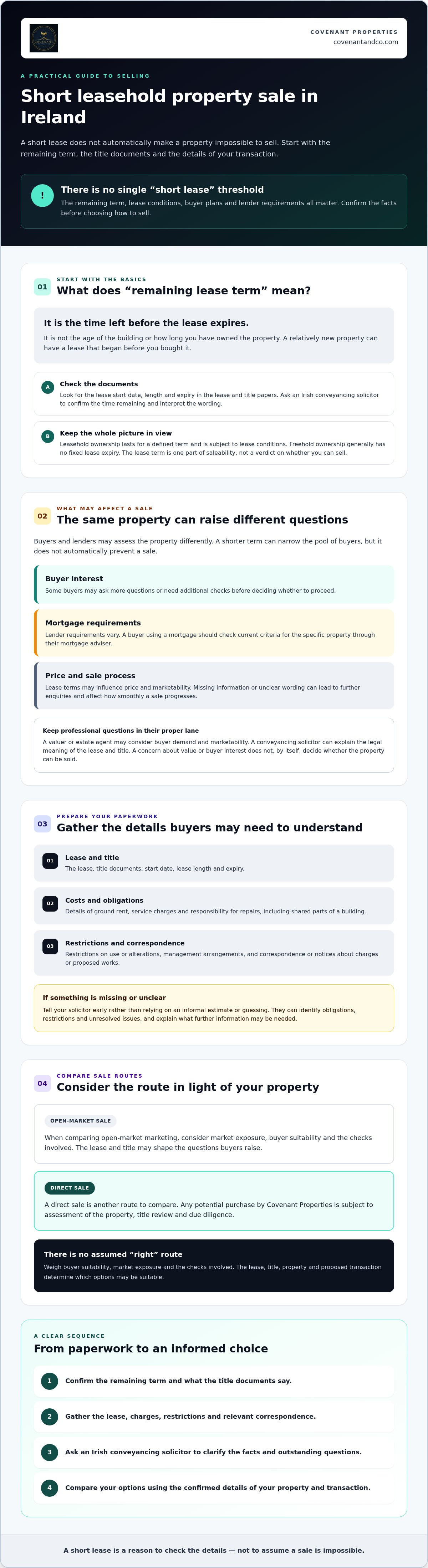
This guide explains what to check, which documents to gather and how an Irish conveyancing solicitor can help clarify your options. It also compares a conventional sale with a direct sale, without assuming either route is right for everyone. Covenant Properties buys residential property directly, subject to assessment of the property, title review and due diligence. The aim is to help you understand the next steps before choosing how to sell.
Key Takeaways
- “Short” depends on the property and transaction. Confirm the remaining term and lease conditions before deciding how to sell.
- For a Short leasehold property sale Ireland, buyers may review the lease, obligations and title documents. Mortgage requirements vary between lenders.
- Compare open-market marketing with a direct sale by weighing buyer suitability, market exposure and the checks involved.
- Gather the lease and title papers, along with clear details of charges, restrictions, notices and management arrangements.
- Ask an Irish conveyancing solicitor to clarify the facts, then compare your options before choosing a route.
What does a short leasehold property sale in Ireland involve?
A short leasehold property sale in Ireland involves selling your remaining rights to a property under a lease, where the time left or the lease conditions may affect a buyer’s interest. Unlike freehold ownership, which generally has no fixed lease expiry, leasehold ownership lasts for a defined term and is subject to the lease’s conditions. These may include payments or obligations connected with the property. For background on one common term, see understanding ground rent.
There’s no single lease length that makes a property “short” in every situation. A buyer’s plans, lender requirements and the lease itself can all affect how the remaining term is viewed. Saleability also depends on the title, property and proposed transaction. The lease term is one part of the picture, not a verdict on whether you can sell.
What does the remaining lease term tell a seller?
The remaining term is the time left before the lease expires. It isn’t the age of the building or the number of years you’ve owned the property. A property can be relatively new but have a lease that began well before you bought it.
Check the lease and title documents for the lease’s start date, length and expiry. Ask an Irish conveyancing solicitor to confirm how much time remains and explain how the wording should be interpreted. If dates or terms are unclear, don’t rely on an informal estimate.
Is a short lease the same as an unsellable property?
No. A shorter remaining term doesn’t automatically prevent a sale. Some buyers may ask more questions or seek additional checks before deciding whether to proceed. A buyer using a mortgage may also need to confirm that the property meets their lender’s requirements, which can vary.
Your practical options depend on the lease, title and buyer. A solicitor can clarify what the documents say and identify questions that need answering. Only a review of your property and transaction details can show which sale routes may be suitable. Start with the paperwork, then make decisions based on confirmed information rather than assuming the lease rules out a sale.
How can a short lease affect buyers, finance, and the sale process?
A buyer will usually need to understand more than the time left on the lease. They may also review lease obligations, title documents and any costs or restrictions attached to the property. Missing information or unclear wording can lead to further enquiries and affect how smoothly the sale progresses.
Lease terms can narrow the buyer pool because buyers and lenders may assess the same property differently. Lender requirements aren’t universal, and a buyer’s circumstances matter too. For a Short leasehold property sale Ireland, the buyer should check current lending criteria through their mortgage adviser rather than relying on a general rule.
Keep valuation questions separate from legal conclusions. A valuer or estate agent may consider how the lease affects buyer demand and marketability. A conveyancing solicitor can explain the legal meaning of the lease and title. A perceived impact on price, or a buyer’s concern, doesn’t by itself determine whether the property can be sold.
Why might a buyer or lender ask for more information?
They may need to establish the remaining term and understand ground rent, service charges, restrictions on use or alterations, and responsibility for repairs. For example, uncertainty about who maintains a shared part of a building could prompt follow-up questions. Buyers and lenders may weigh these details differently, so the buyer should confirm the lender’s current requirements for the specific property.
Which lease and title details need professional review?
Gather the lease, title documents, service-charge information and relevant correspondence, including notices about charges or proposed works. Ask an Irish conveyancing solicitor to identify the obligations, restrictions and unresolved issues that could affect a sale. Don’t assume a lease extension or variation is available, necessary or financially worthwhile. That depends on the documents and your circumstances.
Clear paperwork helps everyone understand what is being sold and what questions remain. If something is missing, tell your solicitor early rather than guessing. They can explain what further information may be needed and distinguish legal issues from questions about buyer interest or value that may need input from another professional.
If you’re comparing an open-market sale with a direct route, you can review Covenant Properties’ direct property acquisition as one option. Any potential purchase depends on the property details, title review and due diligence, so provide accurate information when making an enquiry.
Which sale route suits a short leasehold property in Ireland?
There’s no single best route for every short leasehold property sale in Ireland. An open-market sale can expose the property to a range of potential buyers, while a direct sale gives you another route to assess. Neither guarantees a particular price, buyer or completion date. Compare them against your priorities, the lease and title information, and the interest each route attracts.
What should you weigh before choosing an open-market sale?
Marketing through an estate agent may help you reach different types of buyers, but the response depends on market interest and the property details. Consider the preparation involved, arranging viewings and responding to offers subject to finance or other checks. Questions about the lease may lead to further enquiries or negotiation, so clear documents help prospective buyers understand the position.
If you’re considering managing the process yourself, read a guide to selling a house without an estate agent alongside your solicitor’s advice. Consider the time and coordination involved, and how you’ll give prospective buyers accurate information about the lease.
When might a direct property sale be worth exploring?
A direct discussion can help you find out whether your property may suit a particular buyer, without relying solely on open-market interest. It can be useful when comparing routes before you decide how to proceed. Ask what information is needed to assess the property, including lease and title details, and how any interest would be reviewed.
A direct buyer still needs to assess the property and carry out due diligence. Any interest, offer or proposed terms depend on that review. Covenant Properties purchases residential property directly, but not every short-leasehold property will necessarily be suitable. A conversation is one way to explore the possibility, not a promise of a purchase or a faster outcome.
Compare the routes against what matters most to you:
- Exposure: Open-market marketing may reach a broader set of buyers, although actual interest can vary.
- Buyer suitability: Check whether interested buyers understand the lease and can meet their own requirements.
- Process: Consider viewings, enquiries, title checks and any conditions attached to an offer.
- Certainty: Compare the information and proposed terms available to you, without treating either route as guaranteed.
For another point of comparison, you can discuss your property with Covenant Properties. Share accurate lease and title details so the property can be assessed. Any potential purchase is subject to review and due diligence.
How should you prepare a short leasehold property for sale?
A clear document trail helps buyers understand what they’d be taking on and gives your solicitor a useful starting point. For a Short leasehold property sale Ireland, organise the lease and title information first, then collect records explaining the property’s ongoing costs, rules and management.
Start with the lease and title records, then gather service-charge statements and relevant management correspondence. Keep the documents together and note any gaps or questions. Don’t try to resolve unclear legal wording yourself. Flag it for your Irish conveyancing solicitor.
What documents should you gather before speaking to buyers?
Use this checklist as a starting point. Your solicitor can confirm what applies to your property and whether anything else is needed.
- Lease and title records: Collect the lease and available documents showing how the property is held and describing its terms.
- Charges and management: Gather service-charge statements and correspondence explaining management arrangements, charges or proposed changes.
- Restrictions and notices: Note rules, restrictions or notices relating to the property, and keep copies of relevant letters or emails.
- Alterations and consents: Find records of changes made to the property and any related permissions or consents, where available.
Ask for clear information about who manages the property, what the charges cover, and who is responsible for repairs or upkeep. If a detail is uncertain, record it as a question rather than making an assumption. Early solicitor review can identify missing information and potential issues before buyer enquiries or negotiations progress.
Should you investigate changing or extending the lease?
Possibly, but don’t assume an extension, variation or other remedy is available or would suit your plans. Ask an Irish solicitor to review the lease and explain whether an option may apply to your circumstances. If it could, discuss eligibility, the steps involved, likely timing and financial implications before deciding whether to pursue it.
Weigh that advice against your preferred sale route and personal circumstances. The cost, time and practical effect of changing the lease may matter differently depending on whether you’re considering open-market marketing or a direct sale. A solicitor can explain the legal position, while a buyer’s assessment may raise separate questions about suitability and value.
Once your documents are organised, you may also choose to discuss a direct property assessment with Covenant Properties. Any potential purchase depends on the property details, title review and due diligence. Provide accurate information and treat the discussion as one route to assess, not a guaranteed outcome.
What are the next steps for selling a short leasehold property?
Keep the process orderly: establish the lease facts, get advice from an Irish conveyancing solicitor, then compare the sale routes available to you. This gives you a clearer basis for speaking with buyers and assessing proposals. For a Short leasehold property sale Ireland, accurate information about the property and title helps others decide whether they may be able to proceed.
- Confirm the lease details: Gather the lease and title records, and ask your solicitor to clarify the remaining term and any obligations or restrictions.
- Get legal advice: Ask about unclear wording, missing documents and issues that may need attention before a sale progresses.
- Compare routes: Consider open-market marketing and a direct sale in light of your circumstances, priorities and the likely requirements of interested buyers.
Share the documents you have and be clear about anything you haven’t been able to confirm. Don’t estimate dates, charges or responsibilities if the paperwork doesn’t support them. Your solicitor can advise what further information may be needed.
How can you compare proposals fairly?
Look beyond the headline figure. Compare the proposed terms, conditions, due-diligence steps and expected process. Ask who is responsible for relevant costs and which conditions could affect whether or when the sale completes. Even a proposal that appears straightforward may depend on checks or information that still need to be resolved.
Take time to understand what’s being proposed. Ask your solicitor to review any offer and sale agreement before you accept, so you understand the terms and the commitments involved.
What should you ask a potential direct buyer?
Ask whether the buyer has reviewed the lease and title information, what further checks may be needed, and what conditions apply. Request a clear explanation of the basis for any proposal and the next steps if you decide to continue. This helps you compare the route with other options without assuming that initial interest means a purchase will proceed.
Covenant Properties buys residential property directly, but any interest in a particular short-leasehold property must be confirmed individually. A potential purchase depends on the property details, title review and due diligence. You can contact Covenant Properties about your property to discuss whether it may be suitable for assessment. Making an enquiry doesn’t commit you to selling.
Take the next step with clear information
A short lease doesn’t automatically rule out a sale. The remaining term, lease obligations and title documents all help shape a buyer’s assessment, so start by confirming the facts with an Irish conveyancing solicitor. Then compare an open-market sale with a direct sale based on your circumstances, proposed terms and the checks involved.
For a Short leasehold property sale Ireland, provide accurate property and title information when asking about possible options. Covenant Properties acquires residential and commercial property directly across Ireland and also considers land and development-site opportunities, subject to assessment. Whether a particular short-leasehold property may suit a direct purchase must be confirmed individually following review and due diligence.
If you’d like to explore that route, discuss your property with Covenant Properties. An enquiry doesn’t commit you to selling. With the right information and advice, you can decide on your next step with greater confidence.
Frequently Asked Questions
Can I sell a short leasehold property in Ireland?
Yes, a short lease doesn’t automatically prevent a sale. The phrase “Short leasehold property sale Ireland” covers situations where the lease term, title, obligations, buyer’s circumstances or lender requirements may shape the available options. Ask an Irish conveyancing solicitor to review the lease and title first. Once you understand the property’s position, compare an open-market sale with any suitable direct-sale proposal, and have your solicitor review the terms.
What counts as a short lease in Ireland?
There isn’t one lease length that defines “short” for every Irish property sale. Its practical significance can depend on the lease wording, property, buyer and any lender involved. Ask a solicitor to confirm the unexpired term and explain how it may affect your sale. Don’t rely on a general threshold without checking whether it applies to your property and transaction.
Will a bank provide a mortgage on a short leasehold property?
Possibly, but the decision depends on the lender’s current criteria and the property and lease details. A shorter remaining term may prompt further questions or affect the finance available, but it doesn’t determine the outcome for every buyer. The buyer should check directly with their lender or mortgage adviser. You can help by providing accurate lease and title information through your solicitor.
Should I extend the lease before selling?
Not necessarily. Whether an extension or another change is available, appropriate or worthwhile depends on the lease and your circumstances. Ask an Irish solicitor to explain the legal route, likely process, timing and financial implications before committing. Then compare that advice with selling under the existing lease. Likely interest from different buyers may also inform your decision, but it doesn’t replace legal advice.
What documents do I need to sell a leasehold property?
Start with the lease and title documents. Then gather available service-charge information, management correspondence, notices and records of relevant alterations or consents. The exact paperwork depends on the property and sale. A conveyancing solicitor can identify gaps and explain what a buyer’s solicitor may request. Raising missing documents early can help address questions before they hold up negotiations.
Can I sell a short leasehold property directly to a cash buyer?
A direct sale may be one route to explore, but the buyer needs to assess the specific property and review its lease and title. A cash purchase doesn’t remove the need for legal checks, and not every buyer will consider every short-leasehold property. Ask what information is needed, clarify any conditions and have your solicitor review proposed terms. Covenant Properties buys residential property directly, but suitability must be confirmed individually.


