

An expedited land sale process in Ireland can move quickly, but the ownership transfer still takes time. Land Registry transfers take an average of 6 to 8 weeks, while the wider conveyancing process typically takes 3 to 6 months. Having paperwork ready can help avoid preventable delays.
If you’re selling land, it’s natural to want a clear completion date. The timeline can feel uncertain when deeds, title details or previous property work need attention. Preparing these details early helps keep the sale moving and makes it easier to see what remains.
This guide explains the typical transfer timeline and practical ways to prepare, from appointing a solicitor early to locating deeds and understanding your sale options. It also covers when a direct land sale may suit you as an alternative to selling on the open market. The aim is to clarify what can help move the process along, what may take longer and how to plan your next steps.
Key Takeaways
- Gather your deeds and organise legal support early so title or paperwork issues can be addressed before they hold up a sale.
- Understand that the ownership transfer and the wider conveyancing process are separate stages, and plan for both.
- Assess land value by considering its title, planning position, access and development potential, as these can affect buyer interest.
- Compare auction and private treaty against your priorities, including how you want to market the land and manage the sale process.
Appointing a solicitor early and obtaining property deeds
Start preparing title documents before a buyer is ready to proceed. In Ireland, a residential property sale typically takes four to five months on average, while conveyancing commonly takes 3 to 6 months. Early preparation can help identify issues before contracts are issued.
The Republic of Ireland has its own property-sale and land-registration procedures. The process depends on where the land is located, so establish the applicable jurisdiction before preparing the sale documents.
Planning permission and zoning can affect a buyer’s view of land. Review the planning history, relevant permissions and local zoning information; a planning search typically takes 1 week.
Selling quickly can leave less time to identify title restrictions, missing paperwork or planning issues. Review the documents and sale terms carefully before committing.
- Appoint a solicitor early. Arranging a solicitor typically takes 1 week. Ask them to review the title and identify documents needed before issuing contracts. The solicitor can also explain the Section 150 Notice of Costs, which sets out fees, VAT and anticipated outlays.
- Locate the deeds and title documents. Gather the deeds, title details and records of building work or permissions. For work undertaken since 2014, you may need a Statutory Certificate of Compliance. Finding this early gives your solicitor time to address gaps.
- Prepare the sale pack. Organise property documents before contracts are issued, including relevant planning records and details of alterations. For example, provide permission documents alongside records of completed work, rather than waiting for a buyer’s solicitor to request them.
- Confirm the registration position. Registration begins after the sale agreement is concluded. A first-registration application may include Form 1; after successful registration, a Title Certificate serves as legal proof of ownership. Ask your solicitor which steps apply to your title.
- Explain any urgent deadline. Tell your solicitor why timing matters, such as a linked transaction or a fixed completion date. They can identify the documents and outstanding issues affecting progress. A clear reason helps focus the work, but urgency doesn’t replace complete title paperwork.
Typical ownership transfer processing time
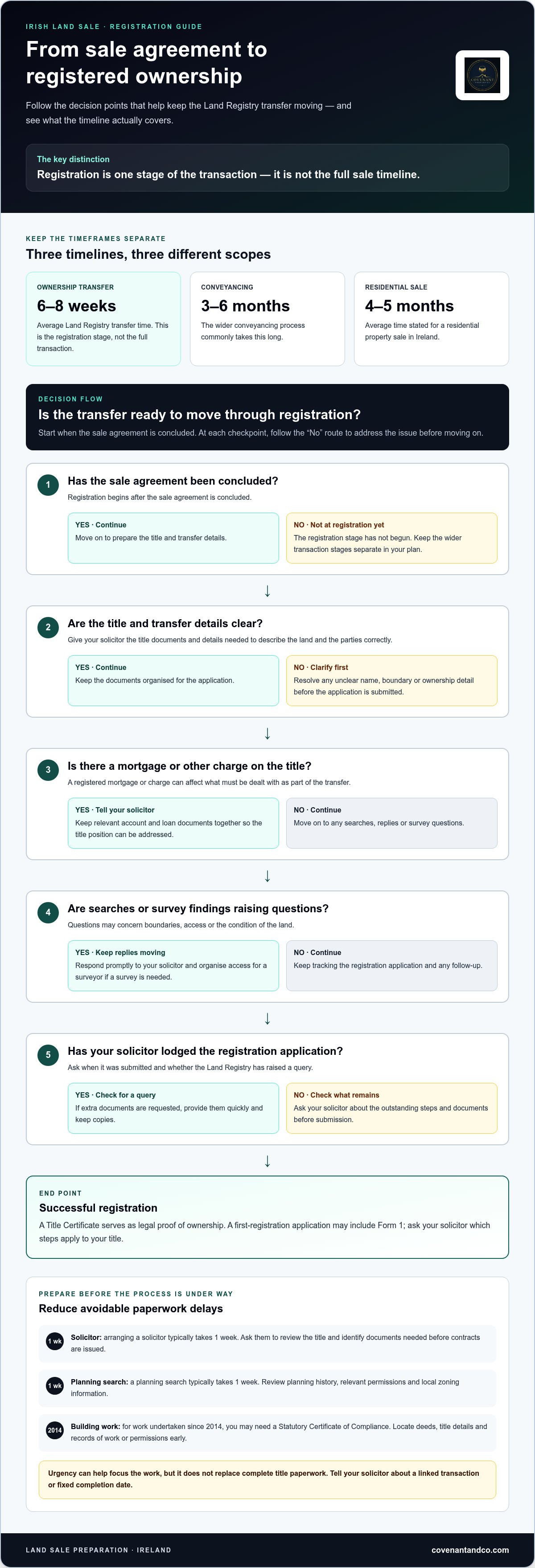
An ownership transfer in Ireland’s Land Registry takes an average of 6 to 8 weeks. That is the registration stage, not the full property transaction. Use these steps to keep documents moving and understand where a delay may arise.
- Ask your solicitor to map the stages. Separate the sale agreement, completion and register update in your plan. The 6 to 8 week average relates to the ownership transfer, so avoid treating it as the full period from accepting an offer. A clear sequence helps you track what is finished and what remains.
- Prepare title and transfer documents. Give your solicitor the title documents and details needed to describe the land and parties correctly. If a name, boundary or ownership detail needs clarification, resolve it before the application is submitted. Accurate paperwork reduces avoidable queries during the registration process.
- Resolve any mortgage or charge issue. Tell your solicitor about a mortgage or other charge registered against the title. These entries can affect what must be dealt with as part of the transfer. Keep relevant account and loan documents together, so the solicitor can address the title position during the transaction.
- Keep searches and replies progressing. Respond promptly when your solicitor requests information, and organise access for a surveyor if a survey is needed. Searches and survey findings can raise questions about boundaries, access or condition. A prompt, complete reply helps the parties deal with each issue without leaving documents unanswered.
- Track submission and follow-up. Ask your solicitor when the registration application has been lodged and whether the Land Registry has raised a query. If extra documents are requested, provide them quickly and keep copies. The seller can then distinguish registration progress from other transaction steps, such as completing mortgage arrangements.
How is land valued for a quick sale in Ireland?
Build a practical valuation using evidence rather than relying on a single headline figure. Work through these steps before setting an asking price or considering an offer.
- Define the land being valued. Match the title map to the area on the ground, and note boundaries, access points and any rights of way. A mismatch between the mapped parcel and the land marketed can affect what a buyer believes they are acquiring.
- Review planning and zoning. Gather planning decisions and identify the land’s current zoning in the relevant local development plan. Separate existing permission from possible future use. Development potential may influence buyer interest, but it depends on the site and applicable planning requirements.
- Compare relevant sales. Look for evidence from land with similar location, access, size and permitted use. A nearby parcel with road frontage may not be a sound comparison for land without direct access. Record the differences rather than relying on an unadjusted asking price.
- Assess services and site conditions. Note whether water, drainage and electricity serve the land, and identify any known constraints. For example, a site requiring new service connections presents a different proposition from one with services already available. Clear information helps buyers assess the work involved.
- Prepare a transparent valuation brief. Give the estate agent or valuer the title map, planning history, zoning details and comparable evidence. State whether you prioritise a faster sale or a higher asking price. A clear brief makes the assumptions behind the valuation easier to understand and discuss.
Can Irish land be sold at auction or by private treaty, and which is faster?
Auction and private treaty are both used to sell land in Ireland. An auction provides a defined bidding event, while private treaty allows offers and terms to be negotiated. Neither route removes the legal work required to complete the sale.
- Choose a route around your priority. Select auction if a fixed public sale event and competitive bidding suit your plans. Choose private treaty if you prefer to consider individual offers and negotiate directly. Your land’s appeal, documentation and likely buyer interest affect how each route works.
- Prepare the auction information. Assemble title details, planning history, maps and access information before marketing begins. An auction catalogue needs an accurate description so bidders can assess what is being offered. Missing or unclear details can make buyers cautious, even with a sale date set.
- Set clear auction terms. Agree the reserve and sale conditions with the relevant professionals before the auction. The reserve sets the minimum acceptable bid; it should reflect your valuation and selling priorities. If bidding does not reach it, the auction may not produce a sale.
- Manage private treaty offers. Review each offer alongside its conditions, proposed timing and the buyer’s readiness to proceed. For example, an offer requiring further planning information may need additional steps before contracts can progress. Keep replies organised and communicate decisions promptly.
- Compare the full route to completion. An auction may identify a buyer at the event, but the property transaction still requires legal completion. A private treaty sale can progress promptly when the buyer, title documents and agreed terms are ready. Compare the likely preparation, negotiation and conveyancing stages, not just the time to receive an offer.
If a direct sale better suits your plans than auction or private treaty, review a direct land sale option as another route to consider.
Covenant Properties: Residential Property Cash Purchase
Covenant Properties offers Land and Site Acquisition for owners considering a direct sale of land or a development site. If auction or private treaty does not suit your plans, a direct cash purchase offers another route. Covenant Properties also buys residential and commercial property directly for cash.
A direct sale to Covenant Properties may suit you if you prefer not to market the land to multiple potential buyers. Your title, site details and circumstances all matter to the transaction. The usual legal transfer steps still apply, so discuss the documents and process with your solicitor.
Contact Covenant Properties to discuss your land or site.
Choose the next step that fits your plans
An expedited land sale process in Ireland starts with a clear decision about what matters most to you: timing, certainty or the terms of the sale. Use that priority to choose whether to continue with an open-market route or consider a direct purchase from Covenant Properties. Keep your solicitor involved so the legal steps remain clear.
Before moving ahead, write down the details that shape your choice: your preferred timing, the land’s current status and any unanswered questions. This gives you a practical starting point for a focused conversation, without committing you to a route before you understand it.
If a direct sale is worth exploring, contact Covenant Properties to discuss your options. A clear conversation can help you decide what works for your circumstances and move forward with confidence.
Frequently Asked Questions
How long does Land Registry take to transfer ownership in Ireland?
The Land Registry ownership transfer takes an average of 6 to 8 weeks in Ireland. This is the registration stage, not the full sale timeline. If the land needs first registration, the application may include Form 1. Ask your solicitor which registration route applies to the title and what supporting documents are needed, so you know what to prepare.
What does an expedited land sale process in Ireland involve?
An expedited land sale process in Ireland begins with preparing information early and keeping decisions moving. Set out your preferred sale route, gather relevant land records and respond promptly to questions from your solicitor or buyer. For example, clarifying a boundary map or planning record early can help prevent delays at a later stage.
How long does it take to sell land in Ireland through an expedited process?
There’s no single fixed timeframe for an expedited land sale. The overall Irish conveyancing process typically takes 3 to 6 months, while a typical residential sale averages four to five months. Land sales can involve different checks and buyer requirements. Timing depends on the title, available information, chosen sale method and how quickly the parties resolve outstanding queries.
What legal documents and searches are required to sell land in Ireland?
The documents and searches depend on the land and its title. A solicitor uses title records and relevant planning information to prepare the transaction. Planning permission records may need checking back to 1964. For work undertaken since 2014, a Statutory Certificate of Compliance may be needed. A planning search typically takes 1 week, with some searches taking longer.
How do Irish land registration and title issues affect a fast sale?
Title issues can slow a sale if registered ownership, boundaries or supporting documents need clarification. Registration begins after the sale agreement is concluded, and a first-registration application may include Form 1. After successful registration, a Title Certificate serves as legal proof of ownership. Clear title information helps the solicitor prepare the transfer and respond to registration queries.
What taxes and legal fees apply when selling land in Ireland?
Potential property-related charges include Local Property Tax, the Household Charge, Residential Zoned Land Tax and the Fair Deal scheme. Which apply depends on the property and seller’s circumstances. A solicitor’s Section 150 Notice of Costs sets out fees, VAT and anticipated outlays. Ask your solicitor to explain any relevant charge and how it affects the sale documents or proceeds.


