

Finding the owner is only the first step. For direct land acquisition in Ireland, the project’s Book of Reference and Railway Order drawings can identify affected parties, and project teams may contact owners directly. DART+ West’s formal land acquisition process covered 206 directly impacted landowners. A compulsory purchase order is a separate route that can allow a statutory body to acquire land for a project in the public interest.
It’s understandable to want clarity before approaching a landowner or responding to an acquisition process. The decision-maker may be an owner, an organisation or someone authorised to act for them, and the route matters: a voluntary sale is not the same as compulsory acquisition. This article explains how to identify Irish landowners and decision-makers, what project documents and notices can tell you, and which legal exceptions may affect an acquisition. It also explains when a direct sale of land or a development site may suit both parties.
Key Takeaways
- Use land records and project documents to trace the registered owner and identify other parties with a decision-making interest.
- Plan a direct purchase in stages, from approaching the owner and agreeing terms to completing the legal transfer.
- Understand how title, planning status and other property details can affect the checks needed before a purchase proceeds.
- Examine maps, access rights and easements alongside the title so you can spot issues that may affect how the land can be used.
Identifying landowners and decision-makers
A Book of Reference is a project document identifying parties affected by proposed works. Iarnród Éireann included affected-party details in the Book of Reference and Railway Order drawings submitted with its Railway Order application. For land beside a proposed railway, compare the mapped plot with the parcels identified in those documents. This can help distinguish land directly affected by the project from nearby property.
A decision-maker is the person or organisation with authority to discuss a sale or acquisition. For a voluntary purchase, establish who owns the land and whether another party has an interest or authority to act. Match the plot’s location and boundaries to the relevant title information, then approach the correct person or organisation. If an organisation owns the land, identify its authorised representative rather than assuming a site user can agree to a sale.
A compulsory purchase order (CPO) is a legal mechanism allowing statutory bodies to acquire land for a qualifying public project. In the DART+ West process, Iarnród Éireann began formal acquisition for 206 directly impacted landowners. The project contacts affected land and property owners directly. That shows why identifying each affected party matters: a notice or project communication relates to specific land and interests.
A Notice to Treat is a formal notice in the CPO process that precedes a compensation claim. For DART+ West, CIÉ serves these notices, after which recipients can lodge claims. If you receive one, establish which land or interest it concerns and who is named. It is not an invitation to agree a voluntary sale.
Use a clear sequence to trace the right contact:
- Pinpoint the parcel using its location and mapped boundaries.
- Compare it with Railway Order drawings and the Book of Reference for a project.
- Identify the owner and any other named affected parties.
- Separate a voluntary sale discussion from a CPO notice or compensation process.
For example, DART+ West documents can help identify affected parties along the route, while the project’s direct contact process clarifies who is being approached. Keep the parcel, named party and type of communication aligned. This gives owners and prospective purchasers a more reliable starting point for next steps.
What are the steps to buy land directly from a landowner in Ireland?
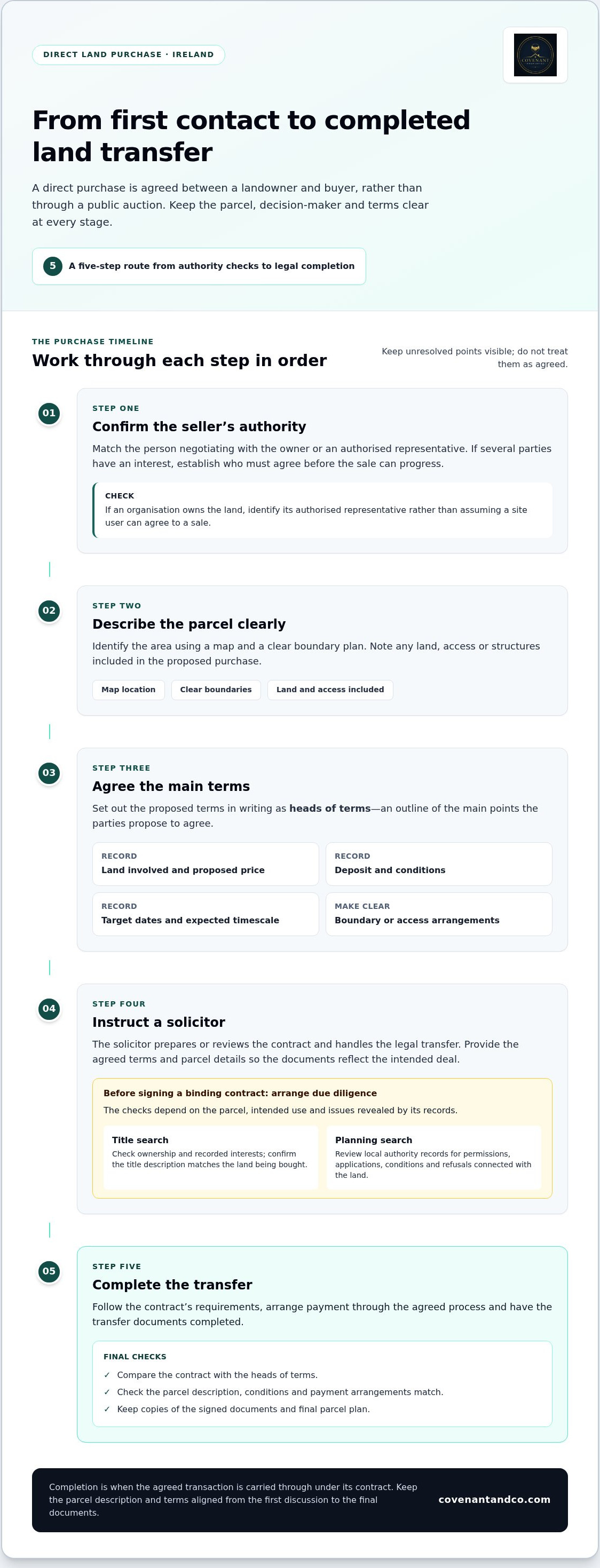
A direct purchase is a sale agreed between a landowner and buyer, rather than through a public auction. Start by identifying the parcel and contacting the person authorised to discuss it. Explain which land you mean, why it interests you and how you propose to proceed. Refer to a map or site address, for example, rather than relying only on a townland name.
Heads of terms are a written outline of the main points the parties propose to agree. They can record the land involved, proposed price, deposit, conditions and target dates. Explain each point clearly, especially if the proposal includes a boundary or access route. This gives both parties a shared basis for further discussion.
- Confirm the seller’s authority. Match the person negotiating with the owner or authorised representative. If several parties have an interest, establish who must agree before the sale can progress.
- Describe the parcel. Identify the area using a map and a clear boundary plan. Note any land, access or structures included in the proposed purchase.
- Agree the main terms. Record the proposed price, deposit arrangements, conditions and expected timescale in the heads of terms. Keep unresolved points visible rather than treating them as settled.
- Instruct a solicitor. The solicitor prepares or reviews the contract and handles the legal transfer. Provide the agreed terms and parcel details so the documents reflect the intended deal.
- Complete the transfer. Follow the contract’s requirements, arrange payment through the agreed process and have the transfer documents completed. Keep copies of the signed documents and final parcel plan.
Completion is when the agreed transaction is carried through under its contract. Before signing, compare the contract with the heads of terms and check that the parcel description, conditions and payment arrangements match. A development site, for example, may need its access area clearly shown, not just the main field.
If you’re considering a sale rather than a purchase, a direct land purchase route may suit your plans. Keep the proposed parcel and terms clear from the first discussion.
What legal checks and searches are required before buying land in Ireland?
Due diligence means checking legal and practical details that could affect a land purchase. For an Irish field or development site, arrange the checks before signing a binding contract. The precise searches depend on the parcel, its intended use and any issues revealed by its records.
A title search examines the ownership record and interests recorded against the land. Ask your solicitor to compare the seller’s details with the title and proposed sale documents. Check that the land description matches the parcel you intend to buy. If the title refers to a larger holding, clarify exactly which portion the contract covers.
A planning search reviews planning information relevant to the site. Check the local authority’s planning records for permissions, applications, conditions and refusals connected with the land. Permission for a neighbouring plot does not apply to your parcel. Assess whether the proposed use fits the land’s planning position instead of assuming it can be developed.
Property searches look for recorded matters or public-project proposals that may affect the purchase. Ask whether road, railway or other infrastructure plans include the land. Proposed road-scheme acquisitions under section 47 of the Roads Act 1993, or railway works subject to a Railway Order, are incorporated in the relevant application. Compare any identified scheme boundary with the parcel being purchased.
Environmental and site checks examine physical conditions that could affect how the land can be used. For a former commercial site, investigate its past use and any signs of contamination. For agricultural land, note drainage, watercourses and existing structures. These findings can affect the site’s suitability and the work needed for its intended use.
Before proceeding, organise the checks around your intended use:
- Match the title and contract description to the exact parcel.
- Review planning records against the proposed use.
- Compare public-project documents with the land boundary.
- Record site issues that could change suitability or development potential.
Certain planning designations, development-plan reservations or special amenity orders may be disregarded when assessing compulsory-acquisition compensation if legislation requires it. This compensation exception is distinct from ordinary purchase due diligence. Treat the title, planning position and physical condition as separate questions, then consider how each affects the specific site.
How can buyers check Irish land title, boundaries, access rights and easements?
Title is the legal record showing ownership and interests affecting land. Ask your solicitor to review the relevant folio or deeds and compare the owner’s details with the proposed sale contract. Check that the description identifies the intended parcel, not just a larger farm or holding. If the sale covers part of a holding, ensure the documents clearly identify the portion being transferred.
A boundary is the line separating the land being purchased from neighbouring property. Compare the title map with the sale plan, visible features and the land itself. A hedge, ditch or fence can help locate a boundary, but should not be treated as proof on its own. Walk the perimeter with the plan and note discrepancies, such as a gateway or track crossing the mapped line.
A right of way is a right to pass over land to reach another place. Check how the parcel connects to a public road and whether the route crosses someone else’s land. Ask your solicitor to locate any documented access right in the title material. For a field reached by a shared lane, establish which route serves the parcel and whether the purchase includes any relevant rights.
An easement is a right over one parcel that benefits another, such as a right of way. Review the title documents for easements affecting or benefiting the land. A recorded route may cross the site, while a right benefiting the parcel may run over neighbouring land. Note its position and purpose, then consider how it could affect access or the planned use.
Use a practical comparison before agreeing the final parcel description:
- Match the title record to the seller and contract.
- Compare the mapped boundary with the site and sale plan.
- Trace every access route from the parcel to the public road.
- Mark easements that cross or benefit the land.
Section 12(2) of the Act defines land to include water, interests in land or water, and easements or rights in, to, or over land or water. Keep these interests in view when reviewing the documents. If the parcel suits your plans, discuss a direct land or site purchase.
Covenant Properties: Residential Property Cash Purchase
Covenant Properties offers Land and Site Acquisition for owners considering a direct sale of land or a development site. This may be a suitable next step once you have identified the land, clarified who can make decisions and reviewed the title and boundaries. Covenant Properties also purchases residential and commercial property directly, with options suited to different property types.
If you own land and are weighing a sale, consider whether a direct purchase fits your plans and circumstances. Clear parcel details and an understanding of the interests affecting the property can help shape the conversation. To discuss selling land, a development site or other Irish property, visit covenantandco.com and speak with Covenant Properties.
Choose the next step that fits your plans
Before moving ahead, decide what a good outcome looks like for you. You might prioritise a straightforward sale, certainty about a particular parcel or the freedom to move on without managing a wider process. Being clear about your aim can help you weigh direct land acquisition in Ireland against other options and explain your priorities in an initial conversation.
Covenant Properties offers Land and Site Acquisition, alongside direct cash purchases of residential and commercial property. If you’re considering selling land or a development site, you can discuss the property and your circumstances directly with the company. A direct sale will not suit every owner, so take time to consider your plans and the terms that matter to you.
Contact Covenant Properties about land to start a conversation. A clear next step can make a complex decision feel more manageable.
Frequently Asked Questions
What does direct land acquisition mean in Ireland, and how does it differ from buying through an agent?
Direct land acquisition in Ireland means the buyer and landowner discuss a sale without an agent acting as an intermediary. The parties can communicate their priorities directly, including which parcel is involved and any conditions they want considered. An agent may instead represent a seller in marketing and negotiating a property. In either case, the buyer still needs proper legal advice and a completed transfer.
How can buyers find landowners selling directly in Ireland?
Start with a defined search area and clear criteria, such as access, intended use and nearby services. Look for parcels that fit, then use public property notices, local networks and direct introductions to identify owners open to a conversation. A concise approach should identify the land, explain your interest and invite the owner to discuss a possible sale. Do not assume an unadvertised parcel is available.


